
Olympiad Practice Test & Exam Prep | India
$69.00
- Buy to unlock unlimited access to all Quiz questions.
- After purchase you can print a PDF of the whole quiz at any point. The PDF will contain the questions and the correct answers.
About this Exam
Olympiads in India are prestigious competitive examinations designed for school-going students to test and evaluate their conceptual understanding, analytical thinking, and problem-solving skills across various subjects. These rigorous assessments typically cover Science, Mathematics, Cyber Security, English, General Knowledge, and more, extending beyond the standard school curriculum. Designed to nurture talent and identify bright minds from an early age, participating in these exams provides students with invaluable exposure to national and international competition, fostering a spirit of academic excellence.
Ready to test your knowledge?
Buy Now to Access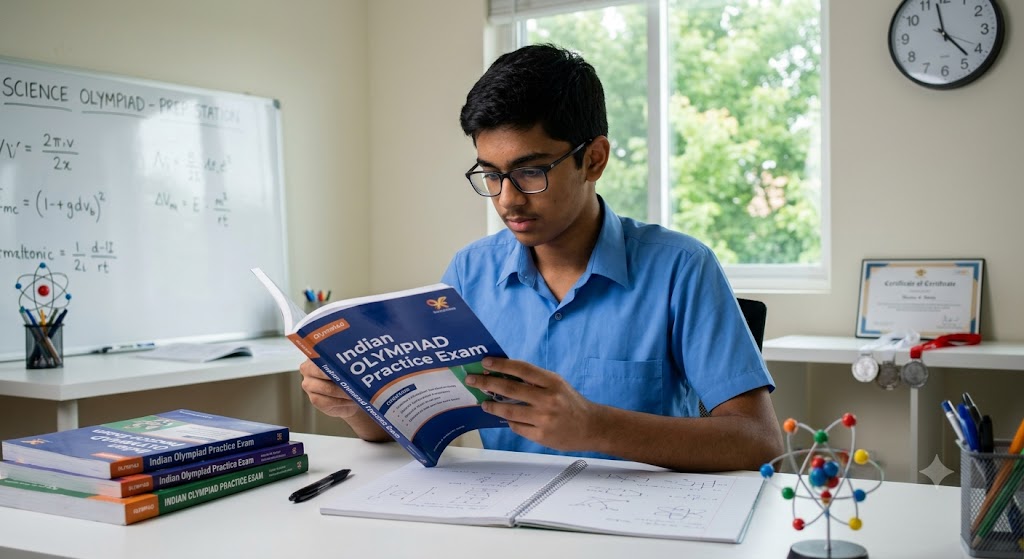
Additional Information
What the Course Entails and Exam Details
Olympiad preparation programs focus heavily on deepening fundamental concepts and their diverse applications. The syllabus varies based on the specific organizing body (such as SOF, Unified Council, HBCSE, etc.) and the chosen subject and class level, which can span from Class 1 up to Class 12. Students can expect complex problems requiring logical reasoning, critical thinking, and the application of theoretical knowledge to real-world scenarios, rather than mere factual recall. The duration of intense preparation varies widely depending on individual goals, often spanning several months to over a year of consistent study.
What to Expect in the Final Exam
The actual Olympiad examination usually follows a strict Multiple Choice Question (MCQ) format with a fixed duration, typically ranging from one to two hours. The total number of questions and marks varies significantly by the level (Level 1, Level 2, or State/National Levels) and the specific Olympiad type. Most lower-level exams utilize OMR sheets for marking answers, necessitating precise bubbling with a pencil or blue/black pen. There is typically no single passing score; success is measured through ranking, percentiles, or qualifying for subsequent competitive stages, with top performers receiving medals, certificates, and recognition.
How to Study and Exam Centers
Effective preparation for Olympiads requires a strategic approach beyond regular schoolwork. Focus should be on conceptual clarity using reference books, and consistently solving previous years' question papers and taking mock tests to improve speed and accuracy. Time management and analyzing practice results are crucial for identifying and strengthening weak areas. The actual examination is predominantly organized within registered schools for initial stages, with students taking the test in their own school environment under invigilation. Higher levels or specific competitions might be conducted at designated centers or even online, depending entirely on the organizers.
Job Opportunities from the Course
Succeeding in Olympiads builds a stellar foundation for numerous future career paths and opens doors to various prestigious opportunities rather than direct employment roles:
Academic Distinction: Highly beneficial for building an impressive profile for future higher education applications and scholarship opportunities in India and abroad.
Competitive Edge in Entrance Exams: Develops crucial problem-solving skills and mental stamina required for succeeding in major national entrance tests like JEE, NEET, CLAT, NDA, etc.
Research and Academia: Fosters a passion and aptness for deep subject knowledge, paving the way for careers in advanced research, teaching, or becoming subject-matter experts.
Analytical and Critical Roles: Sharpens logical reasoning and complex analytical skills valued in fields such as data science, strategy consulting, engineering, and technology development.
Stronger Foundations: Enhances fundamental understanding in core subjects, providing a significant advantage in engineering, medical sciences, pure mathematics, and computer sciences studies.
Frequently Asked Questions
Reviews
5.0
Based on 0 reviews
Leave a Review
No reviews yet. Be the first to review!