
Offsec Practice Test & Exam Prep
Unlock the full practice quiz
Get complete access to the questions, explanations and printable quiz resources.
About this Exam
OffSec certifications are widely respected and rigorously technical within the cybersecurity industry. Designed primarily for penetration testers, ethical hackers, and security professionals, these hands-on certifications prove your practical ability to identify vulnerabilities and secure systems. An OffSec-style exam or preparation program like the one discussed here isn't just about passing a test; it’s about mastering a sophisticated, real-world skill set crucial for modern cybersecurity.
Ready to test your knowledge?
Buy Now to Access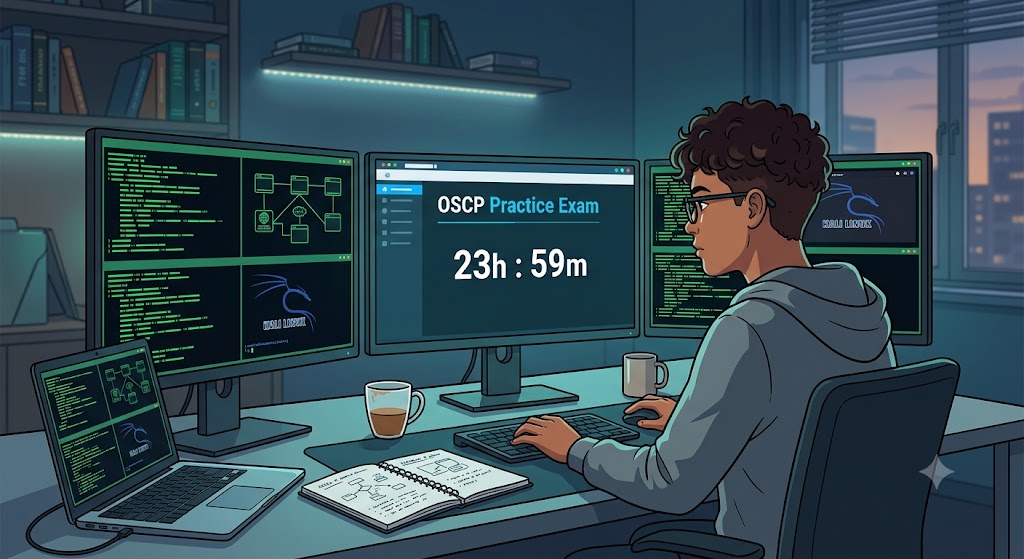
Additional Information
What the Course Entails and Exam Details
The coursework dives deep into practical methodologies, going far beyond theory. Candidates typically cover advanced scanning techniques, meticulous enumeration strategies to discover system details, sophisticated exploitation of known vulnerabilities, intricate privilege escalation methods on both Windows and Linux, and complex pivoting maneuvers to navigate networks seamlessly. You won’t just read about tools; you will learn how to wield them effectively, understanding the underlying principles of each attack vector and corresponding defensive measure. Expect practical lab environments mirroring diverse, real-world scenarios that challenge your problem-solving abilities at every turn.
What to Expect in the Final Exam
OffSec is famous for its intensive, practical exams, often spanning a full 24 hours of simulated real-world penetration testing against a closed target network. Candidates are typically evaluated not on multiple-choice questions, but on their ability to demonstrate practical skill by obtaining specific flags or achieving tangible outcomes across multiple systems. Passing generally requires a high level of practical skill application, culminating in a detailed, professional penetration test report submitted shortly after the exam period, documenting all findings, methodologies, and remediation recommendations clearly. Time management and meticulous reporting are just as crucial to success as your technical prowess.
How to Study and Exam Centers
Engage with Practical Labs: The single most critical strategy is getting hands-on. Dedicate significant time to working through various lab scenarios, practicing reconnaissance, exploitation, and reporting iteratively until it becomes second nature.
Utilize Official Resources: Review all official training materials thoroughly, ensuring a deep understanding of each module, recommended tool, and methodology. Take advantage of any structured learning paths.
Take Mock Tests and Practice Exams: Leverage available practice exams, sample targets, and structured scenarios specifically designed to simulate the unique pressure and technical challenges of the actual exam environment. This builds crucial technical stamina and reporting confidence.
Develop a Reporting Template: Practice writing clear, detailed technical reports efficiently. The report is the primary exam output for many practical certifications, so refine this skill early and consistently.
Accessing the Exam: The vast majority of OffSec's offerings are conducted exclusively online through their dedicated, secure exam portals. Unlike many standard IT certifications, you generally won't find specific physical testing centers for these rigorous practical exams. Instead, you'll schedule and launch your practical examination session remotely via the official website, connecting to a strictly controlled, individual testing environment with your own equipment.
Job Opportunities from the Course
Obtaining a highly-regarded practical cybersecurity certification can open doors to numerous lucrative and challenging career paths, including:
Penetration Tester: Conduct authorized simulations of cyberattacks to identify security weaknesses before malicious actors can.
Security Analyst: Monitor systems and networks, analyze potential threats, and respond proactively to security incidents.
Red Teamer: Conduct adversarial attack simulations to test an organization's people, processes, and technology, evaluating overall defensive capabilities comprehensively.
Ethical Hacker: Use hacking skills for legal and protective purposes, often working internally or on consulting engagements.
Security Engineer: Build, design, and maintain secure IT systems and network architectures from the ground up.
Cybersecurity Consultant: Provide expert security advice and practical assessments to a diverse range of client organizations.
SOC Analyst (Security Operations Center): Monitor network traffic for suspicious activity, often a fantastic starting point for more practical cybersecurity roles.
Information Security Manager: Oversee and manage an organization's overall information security posture, including strategy, policies, and teams.
Frequently Asked Questions
Reviews
5.0
Based on 0 reviews
Leave a Review
No reviews yet. Be the first to review!