
NREMT Airway, Respiration & Ventilation Practice Test 2026
$69.00
- Buy to unlock unlimited access to all Quiz questions.
- After purchase you can print a PDF of the whole quiz at any point. The PDF will contain the questions and the correct answers.
About this Exam
The NREMT Airway, Respiration & Ventilation module is a crucial component of the National Registry of Emergency Medical Technicians certification process. This exam assesses a candidate's competency in foundational and advanced techniques required to secure and manage a patient's airway, and to provide effective ventilation and oxygenation in emergency scenarios. It is designed specifically for aspiring EMTs, Advanced EMTs (AEMTs), and Paramedics, ensuring they possess the critical life-saving skills necessary for prehospital care. Mastering this area is non-negotiable for anyone seeking a career in emergency medical services, as airway management is often the single most critical intervention in any high-stakes medical or trauma call.
Ready to test your knowledge?
Buy Now to Access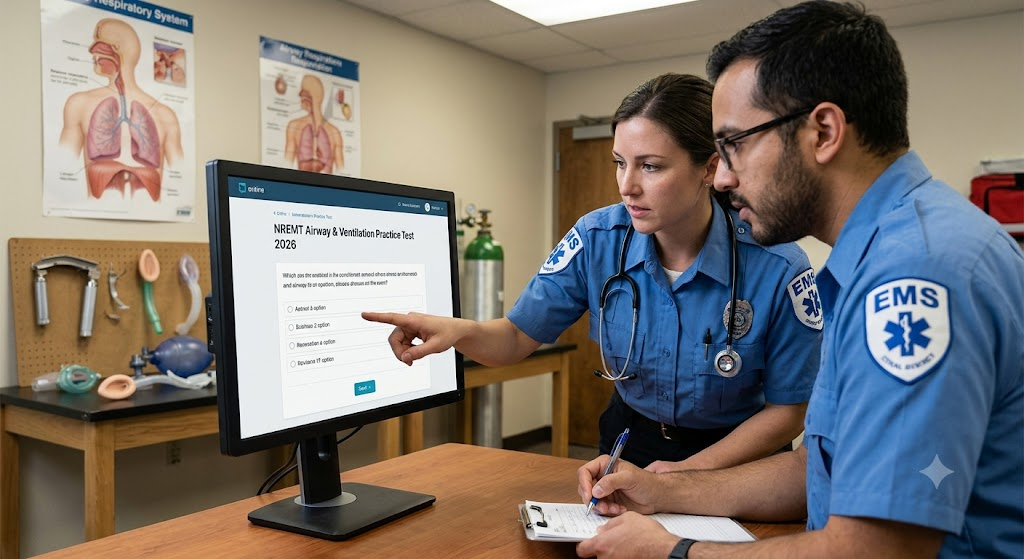
Additional Information
What the Course Entails and Exam Details
This specialized curriculum, and the subsequent practice tests, dives deep into the anatomy, physiology, and pathology of the respiratory system. The course details will cover a broad spectrum of procedures ranging from Basic Life Support (BLS) interventions to Advanced Life Support (ALS) techniques. You can expect questions focused on recognizing and managing various respiratory compromises such as apnea, hypoxia, airway obstructions, and respiratory arrest. Key topics include the proper usage of Oropharyngeal and Nasopharyngeal Airways (OPAs/NPAs), Bag-Valve Masks (BVMs), oxygen delivery systems, and various advanced airway devices like supraglottic airways (e.g., King LT, i-gel) or endotracheal intubation. The exam also emphasizes the crucial assessment skills needed to determine the adequacy of ventilation and the patient’s overall respiratory status.
What to Expect in the Final Exam
While individual modules like this one form part of the broader NREMT cognitive exam, you should anticipate a challenging series of computer-based multiple-choice questions. These questions go beyond simple recall; they are designed to test your clinical judgment and decision-making capabilities using real-world scenarios. In a high-stress emergency, you must determine which treatment modality is most appropriate. The actual NREMT certification exam is often a computer-adaptive test (CAT), meaning the difficulty level adjusts based on your performance, and the number of questions, while variable (often ranging between 70 to 120 items for EMT level, and up to 150 for Paramedic), will include a significant portion dedicated exclusively to Airway, Respiration & Ventilation. Although specific raw scores required for passing are confidential, the test focuses on determining if you meet a standardized level of competency for entry-level practice.
How to Study and Exam Centers
Effective preparation for this critical module involves a multifaceted study plan. While standard NREMT prep materials are an excellent starting point, dedicate focused time to this specific subject area. Leverage reputable textbooks (such as those by AAOS or Brady), utilize comprehensive review courses that specialize in NREMT preparation, and prioritize taking targeted practice tests like the NREMT Airway & Ventilation Practice Test 2026. Creating detailed flashcards for anatomical structures, key procedures, oxygen delivery protocols, and drug dosages is highly effective for retention. Consider form review groups with colleagues to discuss clinical case scenarios. The actual cognitive examination is administered at authorized physical testing centers, typically through global providers like Pearson VUE, which have locations across North America and select international sites. Secure, proctored online testing options may also be available in specific situations, but a physical center is the standard testing method.
Job Opportunities from the Course
Successfully mastering the concepts in this module is essential for achieving overall NREMT certification. Achieving your NREMT certification unlocks numerous exciting career paths within emergency medical services and related fields. Proficiency in airway management is a non-negotiable requirement for all of these positions. Key career opportunities unlocked by your NREMT certification, supported by the foundational knowledge of airway management, include:
Emergency Medical Technician (EMT-Basic)
Advanced Emergency Medical Technician (AEMT)
Paramedic
Firefighter/EMT or Firefighter/Paramedic
Flight Paramedic
Industrial Emergency Medical Technician
Emergency Room Technician
Frequently Asked Questions
Reviews
5.0
Based on 0 reviews
Leave a Review
No reviews yet. Be the first to review!