
NNAAP CNA Practice Test 2017 (Nurse Aide Written Test)
$69.00
- Buy to unlock unlimited access to all Quiz questions.
- After purchase you can print a PDF of the whole quiz at any point. The PDF will contain the questions and the correct answers.
About this Exam
The NNAAP (National Nurse Aide Assessment Program) CNA certification exam is the nationally recognized standard for validating the knowledge and skills necessary for nurse aides to provide safe and competent care. This exam, which has been crucial to the healthcare industry since its inception, including the standard-setting 2017 version, is designed for individuals seeking to become Certified Nurse Aides and work in long-term care facilities, hospitals, and home health agencies.
Successfully passing this examination is a requirement for placement on the state nurse aide registry, demonstrating to employers that you have met the competency standards essential for this vital healthcare role.
Sample Questions
Explanation:
Explanation:
Explanation:
Explanation:
Explanation:
Ready to test your knowledge?
Buy Now to Access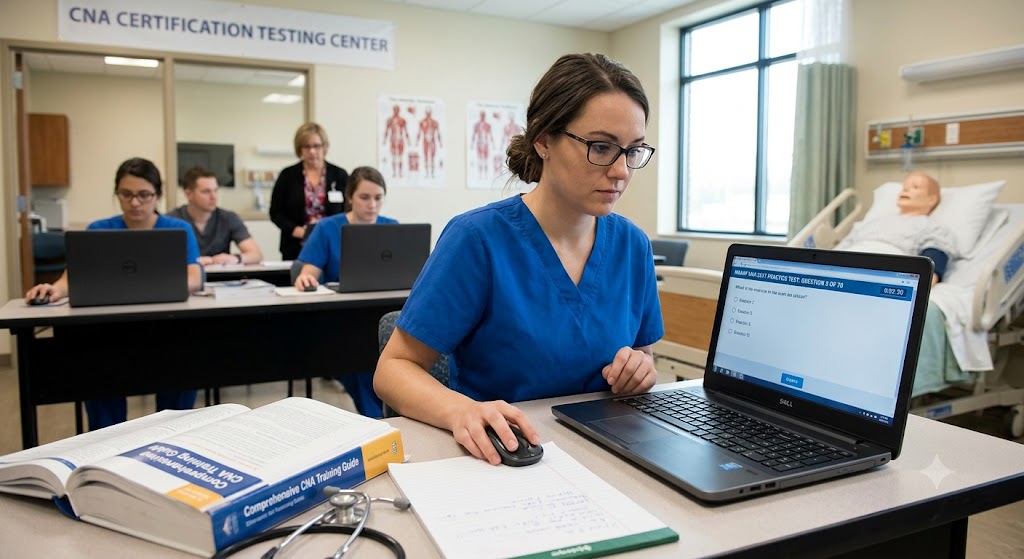
Additional Information
What the Course Entails and Exam Details
CNA training courses provide a comprehensive foundation in fundamental nursing concepts and hands-on clinical skills. The curriculum is designed to prepare you for the real-world challenges of patient care.
Key topics covered include:
Basic Nursing Skills: Measuring vital signs, height, and weight; proper positioning and transfer techniques; and recognizing abnormal observations.
Personal Care Skills: Assisting with bathing, dressing, grooming, eating, and toileting while maintaining patient dignity.
Resident Rights and Communication: Understanding patient autonomy, privacy, confidentiality, and developing effective therapeutic communication skills.
Safety and Emergency Procedures: Infection control practices, CPR and first aid concepts, and responding to emergency situations.
Mental Health and Social Service Needs: Modifying care to meet the unique needs of residents with cognitive impairments and managing challenging behaviors.
Basic Restorative Services: Assisting with range of motion exercises and other restorative care plans.
The complete training program typically includes both a required number of classroom hours and mandatory supervised clinical hours in a healthcare facility.
What to Expect in the Final Exam
The NNAAP CNA exam consists of two mandatory parts: the Written (or Oral) Examination and the Skills Evaluation. Candidates must pass both components to achieve certification.
The Written Examination:
This portion is a multiple-choice exam, typically with 70 questions covering all areas of the CNA curriculum. It is a timed test, usually allowing around 1.5 to 2 hours for completion, and is conducted in a proctored environment.
The Skills Evaluation:
This is a practical assessment where candidates are required to perform five randomly selected nurse aide skills from a standardized list. You will be evaluated by a trained Nurse Aide Evaluator on your ability to perform these skills safely and accurately, paying close attention to critical safety steps. Common skills include handwashing, taking blood pressure, and performing an occupied bed change.
While specific passing scores may vary by state, you must demonstrate competency in both knowledge and clinical skill performance to be placed on your state's registry.
How to Study and Exam Centers
Effective preparation is key to succeeding on the NNAAP CNA exam. A combination of reviewing course material and hands-on practice is essential.
Study Strategies:
Take NNAAP CNA Practice Tests 2017: Regularly practicing with sample tests modeled on the 2017 specifications will help you understand the question format, time constraints, and types of scenarios you will face.
Review Class Notes and Textbooks: Revisit your training materials, focusing on infection control, resident rights, and medical terminology.
Practice Skills Repeatedly: Utilize a study partner or medical manikin to practice each skill until you can perform it fluidly and safely without needing to prompt yourself on the steps.
Focus on 'Critical Elements': Ensure you understand which steps in each skill are considered critical safety measures and must be completed correctly to pass the Skills Evaluation.
Exam Centers:
NNAAP exams are typically administered by state-approved testing agencies such as Pearson VUE, Prometric, or Credentia. Testing locations can include:
Authorized community and technical colleges.
Dedicated testing centers like Pearson VUE locations.
Approved vocational and nursing schools.
Some large long-term care facilities that are approved testing sites.
You can register for the exam through your state’s nurse aide registry website or the designated testing agency's portal once you have completed your training hours.
Job Opportunities from the Course
Earning your NNAAP CNA certification is the first step toward a fulfilling and stable career in healthcare, with a wide range of job titles available in multiple medical settings.
Job Titles and Career Paths:
Certified Nurse Aide (CNA)
Certified Nursing Assistant (CNA)
Patient Care Technician (PCT)
Home Health Aide (HHA)
Hospice Aide
Geriatric Nursing Assistant (GNA)
Long-Term Care Aide
Restorative Nurse Aide
Frequently Asked Questions
Reviews
5.0
Based on 0 reviews
Leave a Review
No reviews yet. Be the first to review!