
Nita Automotive Practice Test & Exam Prep | Kenya
$69.00
- Buy to unlock unlimited access to all Quiz questions.
- After purchase you can print a PDF of the whole quiz at any point. The PDF will contain the questions and the correct answers.
About this Exam
The NITA Automotive Trade Test, administered by the National Industrial Training Authority in Kenya, is the definitive skill evaluation for artisans, apprentices, and experienced mechanics in the thriving automotive sector. This national certification formally validates a candidate's hands-on competencies and technical knowledge, offering recognition of prior learning or providing a crucial graduation step for trainees. Designed for individuals seeking to officially launch or advance their careers, NITA certification is the gold standard for quality and efficiency in Kenya’s industrial landscape.
Ready to test your knowledge?
Buy Now to Access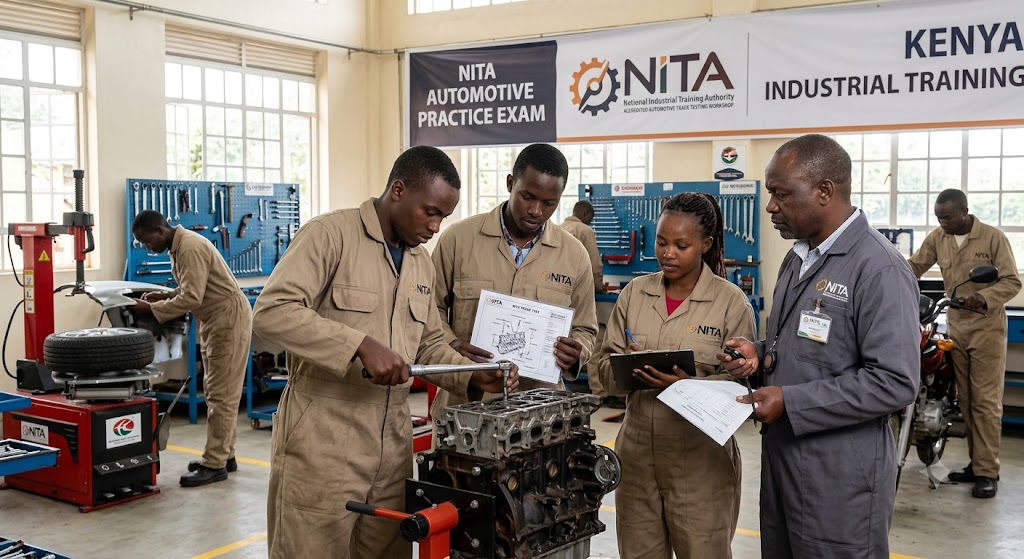
Additional Information
What the Course Entails and Exam Details
This comprehensive assessment covers multiple specialization areas within the automotive field, with specific paths for Light Vehicle Mechanic, Vehicle Body Builder, Power Generation Mechanic, Earth Moving Plant Operator, Lifting Plant Operator, Motorcycle Mechanics, Motor Vehicle Assembler, Plant Mechanic, Panel Beater, Spray Painter, and Motor Vehicle Electrician. Depending on the chosen trade, the curriculum and subsequent exam validate a wide range of critical skills. These include essential competencies like engine mechanics and bodywork, braking system assessment, front spring servicing, technical drawing interpretation, and general vehicle maintenance. The NITA trades are structured across multiple levels, from Level 2 up to Level 5 and beyond for partial qualifications, each building upon the complexity of the previous grade to ensure complete industrial readiness.
What to Expect in the Final Exam
Prepare yourself for a dynamic and focused evaluation that primarily centers on Practical Skills Assessment. The final exam is designed to simulate real-world workshop scenarios where you must demonstrate technical proficiency, efficiency, and adherence to safety protocols. A critical portion will involve specific, timed practical tasks, such as removing and servicing automotive components like springs or inspecting braking systems, often conducted in English. Depending on the grade level, the exam can take hours or even span multiple days to complete a comprehensive trade piece. While the practical is paramount, some levels may include supporting theory, including the interpretation of a working technical drawing. The passing score is based on proving your actual ability to complete these industrial tasks to a set quality standard, ensuring you have the exact skills employers demand. Results are verified by the examiner and submitted to NITA for final processing and certification.
How to Study and Exam Centers
Actionable preparation is the key to success. Focus your efforts on intensive, hands-on practice in a real or simulated workshop environment, making sure to repeat common tasks until you are proficient and efficient. Study technical drawings and manufacturer manuals to build your theoretical understanding, and seek out past NITA automotive exam papers and practice guidelines to familiarize yourself with the structure and types of tasks you will face. When you are ready, registration must be done using the prescribed booking form available at NITA booking outlets across the country or through the NITA online services on the eCitizen platform. Testing occurs in specific annual series, typically April, August, and December. The exams are held in over 500 accredited and approved Testing Centers across Kenya, including NITA’s five core institutions: NITA Nairobi, NITA Kisumu, NITA Mombasa, NITA Athi River, and the NITA Textile Training Institute (N-TTI), which also offers multidisciplinary fields.
Job Opportunities from the Course
A NITA automotive certification is highly valued by Kenyan employers, directly opening doors to various clear career paths within the private and public sectors. The specific job titles you can unlock depend on your trade specialization, but include: Light Vehicle Mechanic, Vehicle Body Builder, Power Generation Mechanic, Earth Moving Plant Operator, Lifting Plant Operator, Motorcycle Mechanic, Motor Vehicle Assembler, Plant Mechanic, Panel Beater, Spray Painter, Motor Vehicle Electrician, Motor Vehicle Inspector, and Rating Motorman. Beyond these direct roles, Grade I certification further prepares individuals for supervisory positions, including Senior Artisan roles within government or private organizations.
Frequently Asked Questions
Reviews
5.0
Based on 0 reviews
Leave a Review
No reviews yet. Be the first to review!