
NISOA Soccer Rules Practice Test
$69.00
- Buy to unlock unlimited access to all Quiz questions.
- After purchase you can print a PDF of the whole quiz at any point. The PDF will contain the questions and the correct answers.
About this Exam
The NISOA Soccer Rules Practice Test is an essential tool designed for aspiring and current soccer referees who aim to officiate at the collegiate level in the United States. NISOA (National Intercollegiate Soccer Officials Association) represents officials who work games for NCAA, NAIA, and NJCAA member institutions. Passing the official NISOA Qualifying Exam is a core requirement for membership. This practice test is a crucial stepping stone, allowing candidates to assess their understanding of the unique rules and interpretations that govern college soccer, which differ from youth, high school, and professional rules (IFAB). If you are an experienced referee looking to take the next step in your career and become a respected voice on the college pitch, this guide and the accompanying practice materials are for you.
Ready to test your knowledge?
Buy Now to Access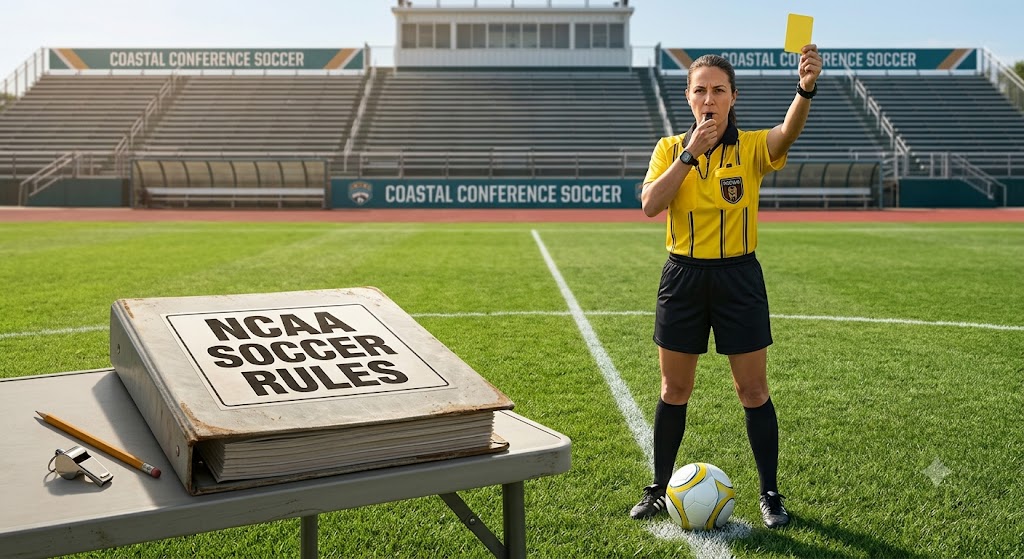
Additional Information
What the Course Entails and Exam Details
The focus of this practice test, and the official exam it
prepares you for, is the current year’s NCAA Soccer Rules and
Interpretations. It entails a deep and practical understanding of how these
rules apply in a dynamic game environment. Key areas of focus typically
include:
- Differences
Between NCAA, IFAB, and NFHS (High School) Rules: This is the most
critical area. You must master the specific differences in substitution
rules, timing, game termination, protest procedures, and disciplinary
actions (e.g., the use of the "soft red" and different
accumulation points).
- Fouls
and Misconduct: Interpreting "careless,"
"reckless," and "using excessive force" within the
college game's context, especially involving challenges on the goalkeeper
and dynamic play.
- Offside:
Applying the offside rule to complex, multi-player scenarios common in
high-level play.
- Penalty
Kick Procedure and Encroachment: Specific rules regarding kicker,
goalkeeper, and other players’ behavior.
- The
Referee’s Powers and Duties: Understanding the specific scope of
authority before, during, and after a collegiate match, including
reporting requirements.
- Field
of Play and Equipment Standards: Rules regarding markings, player
equipment, and safety.
The actual official NISOA entry exam is usually a rigorous,
written assessment. This practice test is structured to mirror the types of
questions and complexity you will encounter.
What to Expect in
the Final Exam
While exact parameters can vary slightly depending on how a
local chapter administers the test, the general structure for the official
NISOA Qualifying Exam is as follows:
- Format:
A written exam. You should expect a combination of multiple-choice
questions, true/false questions, and, most importantly, scenario-based
questions that require you to apply the rules to make the correct ruling.
Some versions of the test, administered by chapters, may be administered
as an "open-book" format using the official PDF of the rules,
emphasizing application over rote memorization.
- Passing
Score Requirements: To pass the official NISOA Qualifying Exam,
candidates must typically achieve a minimum score of at least 75%.
- Time
Limits: There is often no explicit, strict time limit for the written
rules component of the NISOA exam process, as the goal is a comprehensive
demonstration of rules knowledge and the ability to find the correct
application. Candidates are encouraged to be thorough. However, it is
always best to confirm the specific testing procedures with your local
NISOA chapter, as they administer the local process.
- Other
Requirements: Note that the written exam is only one part of the entry
process. Candidates must also pass a physical fitness test, receive
satisfactory field assessments, and meet specific game experience
requirements.
How to Study and
Exam Centers
Effective preparation is key to success on both the practice
test and the official exam.
Study Strategies:
Download the Official NCAA
Rule Book: This is your primary study text. Get the latest PDF version and
study it cover to cover.
Master "Ctrl+F" (If
Applicable): If your local chapter administers an open-book test, the
ability to rapidly search for keywords within the PDF is a critical skill.
Don't just find the word; read the entire relevant rule and any associated
interpretations.
Practice Scenario Application:
Do not just memorize rules; apply them. Create "what if" scenarios or
find existing referee training materials (videos, articles) and decide on the
correct call, then verify it with the NCAA rule.
Join and Engage with your
Local NISOA Chapter: Your local chapter is an invaluable resource. They
often provide study groups, review sessions, and mentorship programs for new
candidates. Connecting with experienced collegiate officials is the best way to
understand the practical nuances of the college game.
Watch Matches with a
"Referee’s Eye": While watching NCAA games, focus on the
officiating. Pause the action during key incidents and determine what your call
would be, what rule applies, and how you would communicate the decision.
Use a Practice Test
Methodically: When taking a practice test, treat it seriously. Research
every answer you are unsure of. The goal is not just to get a good score, but
to ensure you truly grasp the material.
Exam Centers:
The official NISOA Qualifying Exam is not taken at
generalized testing centers like Pearson VUE. It is a proprietary exam
administered through NISOA’s local chapter network. The process to take
the exam is:Submit an "Expression of Interest" form on the official
NISOA website.
Your local chapter will contact
you.
The chapter will guide you
through the process, which includes scheduling and taking the written exam, the
physical fitness test, and scheduling field assessments.
Job Opportunities
from the Course
Becoming a certified NISOA member and passing the rules exam
unlocks officiating opportunities at various levels of collegiate soccer. The
specific career paths include:
- NCAA
Division I, II, and III Soccer Referee
- NCAA
Division I, II, and III Assistant Referee
- NAIA
Soccer Referee/Assistant Referee
- NJCAA
(Junior College) Soccer Referee/Assistant Referee
- NCCAA
Soccer Referee/Assistant Referee
- Collegiate
Postseason Tournament Official (with experience and high-level
certification)
- NISOA
National Referee status (the top tier of collegiate officiating, allowing
for major conference and national championship assignments)
Frequently Asked Questions
Reviews
5.0
Based on 0 reviews
Leave a Review
No reviews yet. Be the first to review!