
NCLEX Physiological Adaptation Questions Answers
$69.00
- Buy to unlock unlimited access to all Quiz questions.
- After purchase you can print a PDF of the whole quiz at any point. The PDF will contain the questions and the correct answers.
About this Exam
Physiological Adaptation is a critical client needs category within the NCLEX (National Council Licensure Examination), the standardized test required for nursing licensure in the United States and Canada. This section evaluates a candidate's ability to provide care for clients with acute, chronic, or life-threatening physical health conditions. It focuses on the nurse's role in managing complications, performing assessments, and implementing interventions to promote recovery and maintain physiological stability. This exam is designed for graduates of accredited nursing programs seeking to become Registered Nurses (RNs) or Licensed Practical/Vocational Nurses (LPNs/LVNs).
Ready to test your knowledge?
Buy Now to Access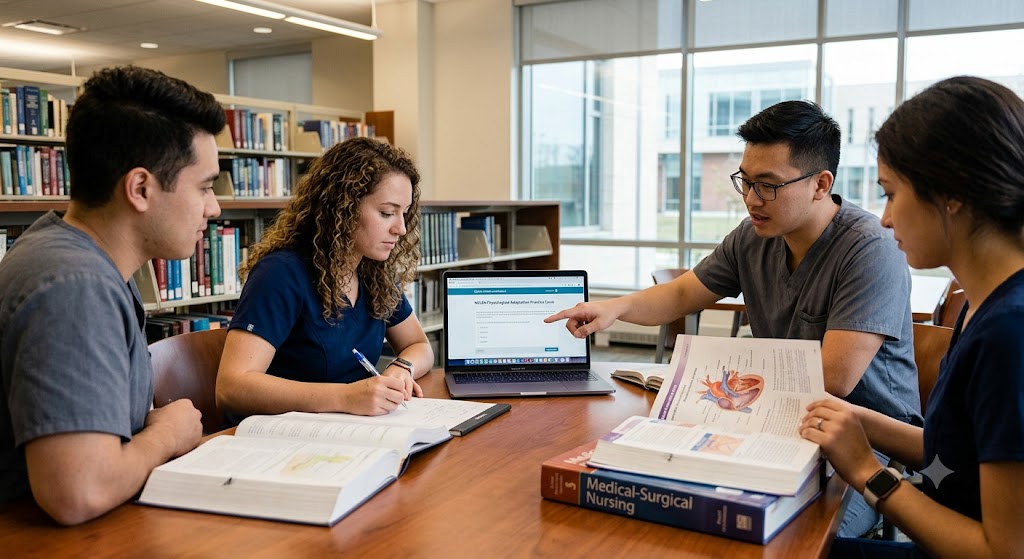
Additional Information
What the Course Entails and Exam Details
The Physiological Adaptation category covers a broad range of adult medical-surgical nursing topics. Students must demonstrate knowledge and clinical judgment in areas such as:
Fluid and electrolyte imbalances
Hemodynamic monitoring and management
Pathophysiology of major body systems (cardiovascular, respiratory, renal, etc.)
Infectious diseases and transmission precautions
Medical emergencies and life-threatening conditions (e.g., shock, cardiac arrest)
Pre- and post-operative nursing care
Management of clients with chronic illnesses (e.g., diabetes, hypertension)
Radiation therapy and chemotherapy care
Unexpected responses to therapies and interventions
What to Expect in the Final Exam
The NCLEX exam is administered using Computerized Adaptive Testing (CAT). This means the difficulty of the questions adjusts based on your previous answers. The number of questions can vary, ranging from 85 to 150 for RN candidates, and slightly fewer for LPN/LVN candidates. There is a 5-hour time limit which includes all tutorials and breaks. The exam includes multiple-choice questions, select-all-that-apply, fill-in-the-blank, and hotspot items. Physiological Adaptation questions typically make up approximately 11% to 17% of the total exam content.
How to Study and Exam Centers
Effective preparation requires a combination of content review and test-taking practice. Focus on understanding the rationales behind physiological processes and interventions rather than simple memorization. Utilize comprehensive NCLEX review books, online question banks, and complete full-length practice exams to build stamina and improve timing. Study groups can also be beneficial for discussing complex concepts. When you are ready, you must register for the exam with the National Council of State Boards of Nursing (NCSBN) and then schedule your appointment at a Pearson VUE testing center. These centers are located globally, and you will need proper identification and your Authorization to Test (ATT) letter on exam day.
Job Opportunities from the Course
Successfully passing the NCLEX grants you nursing licensure, opening doors to diverse career paths in healthcare. With your RN or LPN license, you can pursue job opportunities such as:
Medical-Surgical Nurse
Critical Care/ICU Nurse
Emergency Room (ER) Nurse
Operating Room (OR) Nurse
Pediatric Nurse
Geriatric Nurse
Home Health Nurse
Public Health Nurse
Telemetry Nurse
Oncology Nurse
Frequently Asked Questions
Reviews
5.0
Based on 0 reviews
Leave a Review
No reviews yet. Be the first to review!