
NCE Practice Test – Chapter 1 Questions and Answers
$69.00
- Buy to unlock unlimited access to all Quiz questions.
- After purchase you can print a PDF of the whole quiz at any point. The PDF will contain the questions and the correct answers.
About this Exam
The National Counselor Examination (NCE) is a fundamental stepping stone for professionals seeking to become Licensed Professional Counselors (LPCs) in many states. This rigorous exam assesses an individual's knowledge, skills, and abilities essential for effective counseling practice. It is specifically designed to evaluate the core areas of counselor preparation programs. For students and graduates from accredited counseling programs, passing the NCE is often a critical requirement for obtaining licensure and starting their careers in mental health. Our NCE Practice Test, specifically for Chapter 1, provides an invaluable resource for early preparation and diagnostic assessment.
Ready to test your knowledge?
Buy Now to Access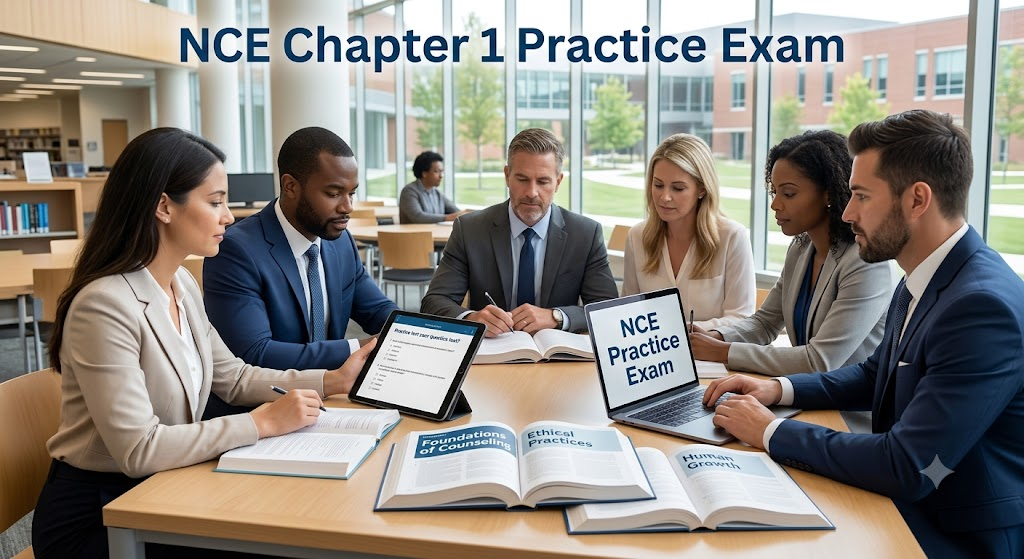
Additional Information
What the Course Entails and Exam Details
The NCE is comprehensive, covering eight core areas established by the Council for Accreditation of Counseling and Related Educational Programs (CACREP). These key domains form the foundation of counselor education and include: Human Growth and Development; Social and Cultural Diversity; Counseling and Helping Relationships; Group Counseling and Group Work; Career Counseling; Assessment and Testing; Research and Program Evaluation; and Professional Orientation and Ethical Practice.
A single practice test, particularly one focusing on Chapter 1, usually zeroes in on foundational concepts that introduce students to the broader field of counseling. Early chapters often cover the history of the profession, professional orientation, ethical principles, and an overview of basic counseling theories. It serves as a building block for mastering the more complex material covered in subsequent sections and ultimately on the final exam.
What to Expect in the Final Exam
The actual NCE is a computerized, multiple-choice examination. It consists of 200 questions, administered over a 3 hour and 45 minute period. The questions are designed to measure knowledge application and clinical problem-solving, not just rote memorization. Among the 200 questions, 160 are scored, while 40 are unscored "pretest" items that do not count toward your final grade but are used by the test developers for future forms.
The passing score for the NCE is set by a panel of experts through a process called standard setting, specifically using a modified Angoff procedure. This means that a predetermined level of competence is required, and the passing point varies slightly between test forms to maintain fairness. It is crucial to check with your state licensing board for specific requirements and updates.
How to Study and Exam Centers
Effective studying requires a structured approach. We highly recommend utilizing a combination of officially endorsed NCE study guides, practice exams, and CACREP-based textbooks. Dedicate consistent time each week to reviewing core material and taking practice tests to build stamina and identify weak areas. Forming study groups with fellow students can provide motivation and clarify complex concepts. Online portals and specialized review courses are also excellent tools.
The NCE is administered by the National Board for Certified Counselors (NBCC) in partnership with Pearson VUE. Candidates must register through the NBCC and can then schedule their testing appointment at any authorized Pearson VUE professional test center, which are located throughout the United States and globally. Ensure you arrive with proper identification as specified in your confirmation materials.
Job Opportunities from the Course
Passing the NCE and subsequently obtaining your LPC licensure opens doors to a diverse and rewarding range of career paths in various counseling settings. Licensed counselors are in high demand and play a vital role in supporting mental health and wellness across different populations.
Here are specific job opportunities and career paths unlocked by this achievement:
Licensed Professional Counselor (LPC) in private practice, providing therapy to individuals, couples, and families.
Mental Health Counselor in community health agencies or non-profit organizations.
Substance Abuse or Addiction Counselor in specialized treatment centers.
Rehabilitation Counselor, helping people with disabilities achieve their personal and professional goals.
Career Counselor in universities, colleges, or private organizations.
School Counselor (with appropriate state-specific education credentials).
Clinical Supervisor (after gaining significant post-licensure experience), mentoring new counselors in the field.
Counselor in hospital or residential treatment settings.
Frequently Asked Questions
Reviews
5.0
Based on 0 reviews
Leave a Review
No reviews yet. Be the first to review!