
Ncaa Practice Test & Exam Prep | Nigeria
$69.00
- Buy to unlock unlimited access to all Quiz questions.
- After purchase you can print a PDF of the whole quiz at any point. The PDF will contain the questions and the correct answers.
About this Exam
The Nigerian Civil Aviation Authority (NCAA) licensing exams are the mandatory pathway for anyone aspiring to a professional career in Nigeria's vibrant aviation industry. These rigorous examinations ensure that all personnel—from the pilots navigating the skies to the engineers maintaining the aircraft—possess the critical knowledge and safety skills required to operate within Nigerian airspace. These certifications are essential for individuals seeking roles such as Commercial Pilots, Private Pilots, Cabin Crew members, Aircraft Maintenance Engineers, and Air Traffic Controllers. Achieving an NCAA license guarantees that you have met the stringent international and national safety standards required for operational duty.
Ready to test your knowledge?
Buy Now to Access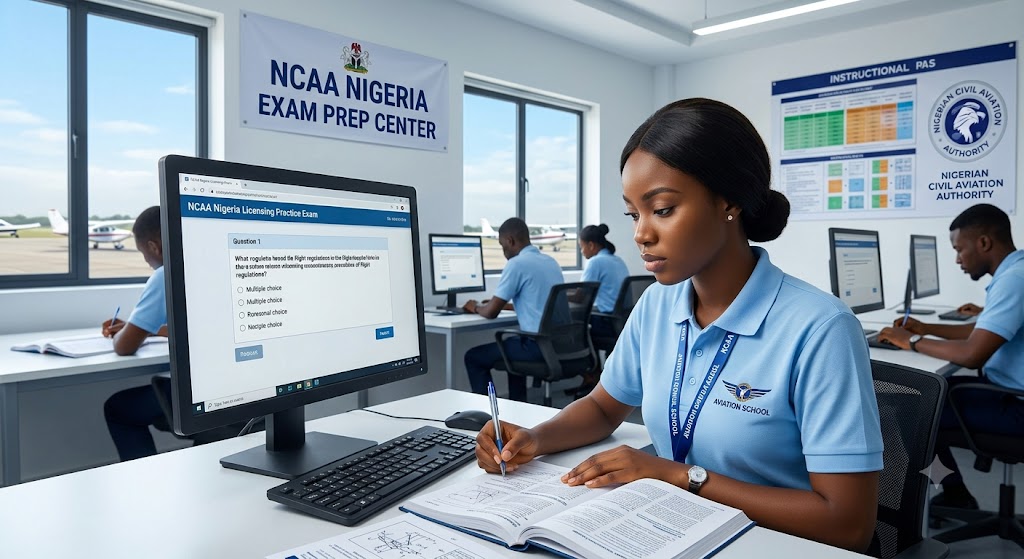
Additional Information
What the Course Entails and Exam Details
Preparing for the NCAA licensing exams requires a comprehensive understanding of diverse aviation subjects, tailored specifically to the license category you are pursuing. While the specific syllabus varies slightly between roles (e.g., Pilot vs. Engineer), the core curriculum generally covers:
Nigeria Civil Aviation Regulations (Nig. CARs): Essential knowledge of the legal framework governing aviation operations in Nigeria.
Air Law and ATC Procedures: International and national rules of the air and air traffic control communication protocols.
Meteorology: Understanding weather theory, interpretation of aviation weather reports, and forecasts critical for flight safety.
Navigation: Principles of terrestrial navigation, flight planning, and the use of aeronautical charts and navigation systems.
Aircraft General Knowledge: Technical knowledge of aircraft structures, systems, engines, and instruments (specific to pilot or engineer categories).
Human Performance: Understanding the physiological and psychological factors affecting human performance in aviation environments.
What to Expect in the Final Exam
The NCAA final licensing exams are typically conducted as Computer-Based Tests (CBT), providing a standardized and efficient testing environment. Candidates should expect the following format details:
Format: Primarily multiple-choice questions designed to test both theoretical knowledge and practical application of aviation principles.
Passing Score: The standard passing score for most NCAA knowledge tests is 70%.
Time Limits: Each exam section is strictly timed, varying depending on the complexity and number of questions in the subject area.
Strict Regulations: The exams are held under supervised conditions. Candidates must present valid identification and are not permitted to bring unauthorized materials into the testing center.
Sitting Requirements: Depending on the license, candidates may need to pass all required subject parts within a specific timeframe (e.g., 18 months).
How to Study and Exam Centers
Success in the NCAA exams demands disciplined preparation and the right resources. Here are actionable study strategies:
Utilize Official Materials: Focus your study on the official Nigeria Civil Aviation Regulations (Nig. CARs) and recommended aviation textbooks.
Enroll in an Approved Training Organization (ATO): Structured ground school courses at NCAA-authorized aviation colleges are highly recommended to gain a deep understanding of the syllabus.
Practice with Mock Tests: Regularly taking timed practice exams is crucial for familiarizing yourself with the CBT format, improving time management, and identifying knowledge gaps.
Form Study Groups: Collaborating with fellow students can help clarify complex topics and provide mutual support.
NCAA exams are administered at designated testing locations across Nigeria. Most written knowledge tests are taken at NCAA Regional Offices equipped with CBT centers, located in major cities including Lagos, Abuja, Kano, and Port Harcourt. Registration and scheduling are usually managed through your Approved Training Organization or directly with the NCAA Licensing Department.
Job Opportunities from the Course
Earning an NCAA license unlocks numerous prestigious and rewarding career opportunities within the Nigerian and international aviation sectors. Specific career paths include:
Airline Pilot (Commercial or Airline Transport Pilot License required)
Charter Pilot or Corporate Aviator
Flight Instructor
Cabin Crew Member / Flight Attendant
Aircraft Maintenance Engineer (AME - Licensed Avionics or Airframe/Powerplant)
Air Traffic Controller
Flight Dispatcher
Aviation Safety Inspector (requires significant experience)
Frequently Asked Questions
Reviews
5.0
Based on 0 reviews
Leave a Review
No reviews yet. Be the first to review!