
NASM Chapter 4 Practice Test – Behavioral Coaching
$69.00
- Buy to unlock unlimited access to all Quiz questions.
- After purchase you can print a PDF of the whole quiz at any point. The PDF will contain the questions and the correct answers.
About this Exam
Mastering the technical aspect of fitness is only half the battle. To true succeed as a health and fitness professional, you must master the art of behavior change. The NASM Behavioral Coaching knowledge area focuses on equipping you with the psychological tools and communication strategies needed to help clients break through mental barriers, build sustainable habits, and achieve long-term wellness. This specialization is designed for certified personal trainers, group fitness instructors, coaches, and health professionals who want to move beyond simply prescribing exercises and start facilitating genuine, lasting lifestyle transformation.
Ready to test your knowledge?
Buy Now to Access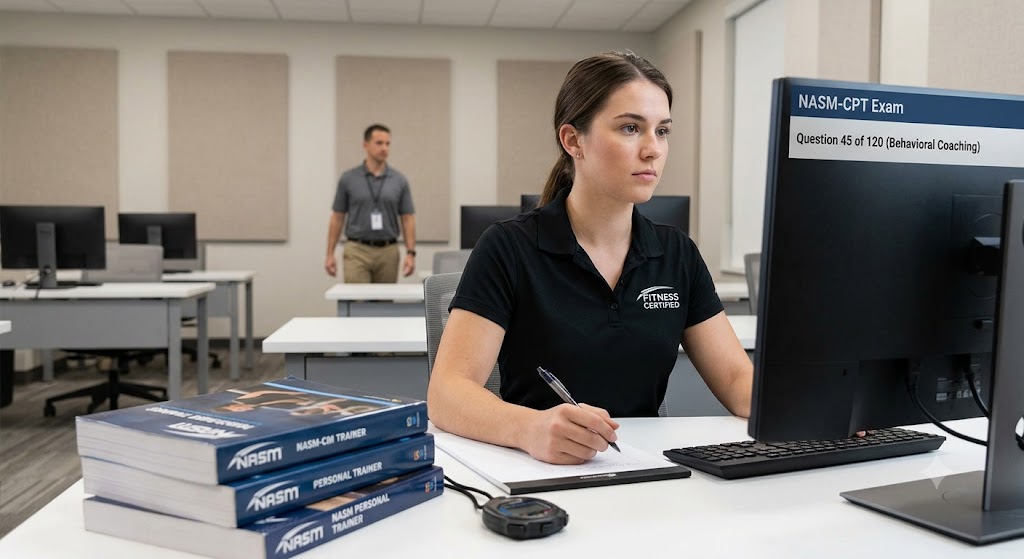
Additional Information
What the Course Entails and Exam Details
The behavioral coaching section, particularly highlighted in NASM CPT Chapter 4, is not about anatomy or physiology. Instead, it delves into the psychology of exercise and motivation. You will learn to navigate the complexities of human behavior, understanding why clients stick to programs and why they quit. This domain entails mastering the stages of change model (Transtheoretical Model), identifying common barriers to exercise, and applying proven behavior change techniques. The core focus is on enhancing your ability to communicate effectively, build trust, and develop personalized motivation strategies that empower clients to take ownership of their health journey.
What to Expect in the Final Exam
While you are preparing for a specific section, it is vital to know how it fits into the broader official examination. The official NASM Certified Personal Trainer (CPT) exam, accredited by the NCCA, is a rigorously proctored test. It typically consists of 120 multiple-choice questions, which includes 100 scored items and 20 unscored pretest items used for future test development. You will be allotted a strict two-hour time limit to complete the exam. To achieve a passing score, candidates must receive a scaled score of 70 or higher. The behavioral coaching domain specifically accounts for approximately 15% of the total exam content, meaning roughly 18 scored questions will directly test your knowledge of these psychological and coaching principles.
How to Study and Exam Centers
A passive approach will not work for this material. Effective study strategies require active engagement with the psychological concepts. We highly recommend using a multi-faceted method. Start by creating detailed flashcards for key terms, such as the Stages of Change (Preconsideration, Contemplation, Preparation, Action, Maintenance), SMART goals, and specific motivational techniques like Motivational Interviewing. Practice application by walking through hypothetical client scenarios: how would you coach a client in the contemplation stage versus the action stage? Leverage official NASM practice tests specifically targeting Behavioral Coaching to identify your weak areas. When you are ready to take the full NCCA-Accredited CPT exam, you must schedule your proctored session. You have two main options: you can take the exam in-person at an authorized PSI testing center, which are located in many cities, or you can opt for Live Remote Proctoring (LRP), which allows you to take the exam from your home computer while being monitored via webcam.
Job Opportunities from the Course
Unlocking expertise in behavioral coaching significantly expands your career horizons within the wellness industry. This skillset is highly valued by employers because it directly correlates to higher client retention rates and improved success outcomes. By mastering behavior change, you position yourself for these specific job titles:
Behavioral Change Specialist
Wellness Coach
Certified Personal Trainer (with a differentiation in client psychology)
Health Coach
Fitness Director (requiring strong staff and client management psychology)
Lifestyle Medicine Coach
Group Fitness Instructor (enhancing participant motivation)
Frequently Asked Questions
Reviews
5.0
Based on 0 reviews
Leave a Review
No reviews yet. Be the first to review!