
NASM Chapter 3 Practice Test – Psychology of Exercise
$69.00
- Buy to unlock unlimited access to all Quiz questions.
- After purchase you can print a PDF of the whole quiz at any point. The PDF will contain the questions and the correct answers.
About this Exam
Mastering the psychology of exercise is critical for any aspiring personal trainer. This certification, specifically the material within the National Academy of Sports Medicine (NASM) curriculum, focuses on behavior change, motivation, and the psychological benefits of physical activity. It is designed for fitness professionals who want to understand how to help clients overcome mental barriers and build lasting healthy habits.
Ready to test your knowledge?
Buy Now to Access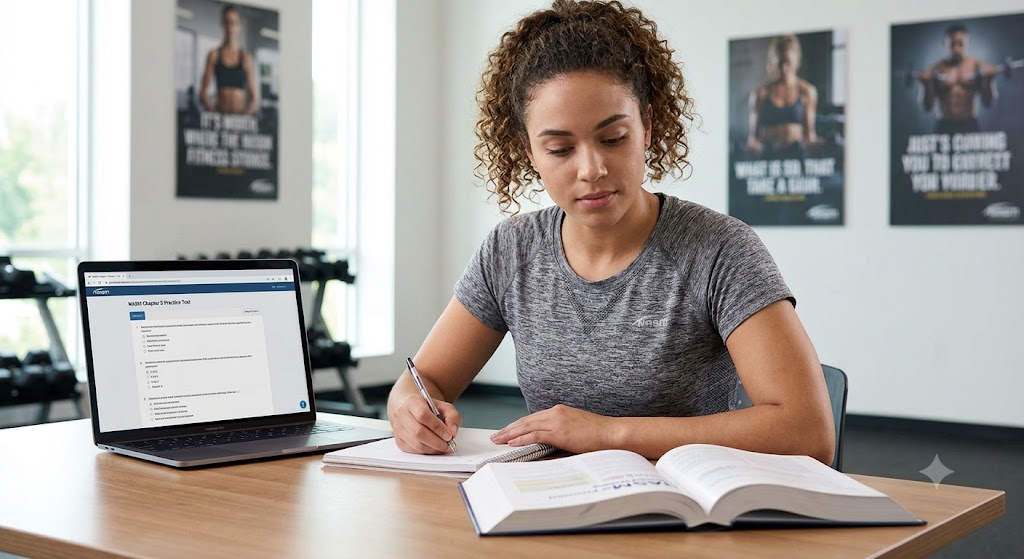
Additional Information
What the Course Entails and Exam Details
The Psychology of Exercise course, covered in Chapter 3 of the NASM syllabus, teaches fitness professionals how to assess and influence client behavior. You will study key topics such as the Stages of Change model, understanding intrinsic versus extrinsic motivation, goal-setting strategies (using the SMART goal framework), communication skills like motivational interviewing, and identifying potential barriers that prevent clients from adhering to their exercise programs.
What to Expect in the Final Exam
While this practice resource focuses specifically on the Chapter 3 content, the actual NASM-CPT final exam is a comprehensive assessment. The final exam consists of 120 multiple-choice questions, covering all domains of the personal training curriculum. Candidates are typically given a 2-hour time limit. To pass, you must achieve a scaled score of at least 70%. The exam requires a strong understanding of how to apply these concepts in a practical setting.
How to Study and Exam Centers
Effective preparation is key. First, thoroughly read the NASM textbook material for Chapter 3. Utilize this practice test repeatedly to familiarize yourself with the question formatting and identify weak points. Create flashcards for critical concepts like the Transtheoretical Model. The official NASM-CPT final exam is administered by PSI, a leading testing provider. You can choose to take the exam via a live remote-proctored online option or visit an authorized PSI testing center in person.
Job Opportunities from the Course
A strong grasp of the psychology of exercise enhances your value as a fitness professional, unlocking numerous career opportunities upon completing your full CPT certification:
Certified Personal Trainer (CPT)
Health and Wellness Coach
Fitness Instructor
Gym Manager or Director
Online Fitness Coach
Performance Enhancement Specialist (with further qualification)
Frequently Asked Questions
Reviews
5.0
Based on 0 reviews
Leave a Review
No reviews yet. Be the first to review!