
Louisiana CDL Pre-Trip Practice Test
$69.00
- Buy to unlock unlimited access to all Quiz questions.
- After purchase you can print a PDF of the whole quiz at any point. The PDF will contain the questions and the correct answers.
About this Exam
The Louisiana CDL Pre-Trip Inspection Test is a critical, practical component of obtaining your Commercial Driver’s License (CDL) in the Bayou State. It is not a written test but a hands-on examination designed for aspiring commercial drivers who need to demonstrate their ability to thoroughly inspect their vehicle before hitting the road. This exam ensures that every new commercial driver possesses the essential skills to identify potential mechanical failures, ensuring their safety, the safety of their cargo, and the safety of everyone sharing the road. Whether you are aiming for a Class A, B, or C license, mastering this inspection is your first major step toward a professional driving career in Louisiana.
Ready to test your knowledge?
Buy Now to Access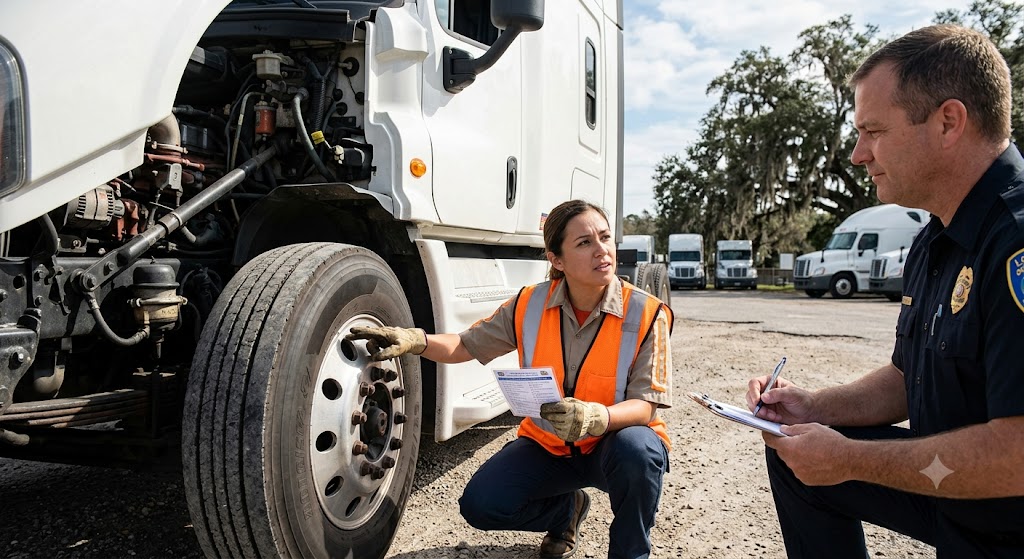
Additional Information
What the Course Entails and Exam Details
This examination does not follow a strict academic syllabus but requires comprehensive knowledge of the official Louisiana CDL Manual’s vehicle inspection section. Your "course" of study is the manual and hands-on practice. The test requires you to physically point to and touch various components of a commercial vehicle while explaining to an examiner what you are checking for and why.
The core areas you must master include:
Engine Compartment: Checking levels of all essential fluids (oil, coolant, power steering, washer), inspecting belts for tension and wear, and checking for leaks.
Steering and Suspension: Inspecting the steering box, hoses, linkage, spring mounts, leaf springs, and shock absorbers for damage or security issues.
Braking System: Thoroughly checking slack adjusters, brake chambers, hoses, lines, drums, and linings. For vehicles equipped with air brakes, this includes a mandatory, multi-step air brake test that must be performed perfectly.
Wheels and Tires: Inspecting tread depth, inflation pressure, sidewalls, lug nuts, and rims.
Vehicle External: Checking the condition and operation of lights, reflectors, mirrors, doors, and fuel tanks.
Coupling System (Class A only): Inspecting the fifth wheel, mounting, and connecting lines if you are testing for a tractor-trailer license.
Inside the Cab: Testing the horn, windshield wipers, heater/defroster, gauges, and safety equipment.
What to Expect in the Final Exam
The final Louisiana Pre-Trip Inspection is a practical, on-site exam conducted with a certified examiner from the Louisiana Office of Motor Vehicles (OMV) or an authorized third-party testing facility. You will be asked to perform a comprehensive, walk-around inspection of the specific type of vehicle you intend to be licensed for.
Key details include:
Format: This is a purely practical and verbal exam. You will perform the inspection while explaining your actions.
Scoring: You are graded on your ability to correctly identify and inspect all required items and explain the criteria for a pass/fail condition. In Louisiana, and federally, the Air Brake Check is a critical, mandatory section. Failing to perform any single step of the air brake check correctly is an automatic failure of the entire pre-trip inspection, regardless of your performance on other sections.
Time Limit: While examiners generally give adequate time for a thorough inspection, the exam is not untimed. You must demonstrate proficiency within a reasonable period, typically between 30 to 50 minutes.
Rules: You must use the vehicle provided for the test, which must be in safe operating condition and free of labeled or marked components that might assist your memory. You are generally allowed to use a memory aid (like a checklist from the CDL manual) but cannot read from it directly during the inspection.
How to Study and Exam Centers
Studying for this test requires a combination of rote memorization and hands-on muscle memory.
Download the Louisiana CDL Manual: Your primary source material is the free manual provided by the Louisiana OMV. Study the Pre-Trip Inspection section extensively.
Create Checklists: Break down the inspection by zone (e.g., Engine Compartment, Driver Side, Coupling Area).
Hands-on Practice is Key: Get access to a commercial vehicle identical to the one you will use for the test. Practice the inspection repeatedly, touching every part you name. Say your check criteria out loud, exactly as you will do during the exam (e.g., "This belt is not frayed, cracked, and has no more than 3/4 inch of play").
Practice the Air Brake Check Perfectly: This is the most critical component. Memorize the sequence of the static leak test, low air warning check, and parking/service brake tests. Perform this sequence flawlessly every single time you practice.
Use Practice Tests: Online practice tests can help you memorize the terminology and sequence of the check before you apply it to a real vehicle.
Where to Take the Exam:
Once you have completed your classroom instruction and hold a valid Commercial Learner's Permit (CLP) for at least 14 days, you can schedule your skills test, which includes the Pre-Trip Inspection. The skills tests are administered at dedicated:
Louisiana Office of Motor Vehicles (OMV) Skills Test Centers: Specific full-service locations throughout Louisiana are authorized to conduct CDL skills testing.
Authorized Third-Party Testing Facilities: Louisiana utilizes certified third-party examiners to manage the high volume of CDL applicants. You must make an appointment with one of these authorized examiners, who provide the testing service for a fee. You can obtain a list of authorized third-party examiners from any OMV location or on the official OMV website.
Job Opportunities from the Course
Successfully passing the Louisiana Pre-Trip Inspection Test is the gateway to finalizing your CDL. Once you hold your full Class A, B, or C license, a vast array of specialized job opportunities opens up across the state:
OTR (Over-the-Road) Truck Driver: Hauling freight across the country.
Regional or Dedicated Route Driver: Transporting goods within Louisiana or neighboring states.
Local Delivery Driver: Driving specialized delivery trucks for food service, retail, or local businesses.
Concrete Mixer Driver: A critical role in Louisiana's construction sector.
Dump Truck Operator: Working on infrastructure and construction projects.
Bus Driver: Transporting passengers for school systems, regional transit, or private tour companies.
Waste Management Driver: Operating collection and disposal vehicles.
Tanker Truck Driver: Specializing in the transport of liquids or hazardous materials (requires further endorsements).
Flatbed Driver: Hauling large or irregularly shaped loads.
Expedited Freight Driver: Operating smaller commercial vehicles for time-sensitive deliveries.
Towing and Recovery Operator: Handling large vehicle towing.
Frequently Asked Questions
Reviews
5.0
Based on 0 reviews
Leave a Review
No reviews yet. Be the first to review!