
Infectious Diseases Practice Questions Answers Updated
$69.00
- Buy to unlock unlimited access to all Quiz questions.
- After purchase you can print a PDF of the whole quiz at any point. The PDF will contain the questions and the correct answers.
About this Exam
The Infectious Diseases Board Review examination is a critical milestone for physicians seeking subspecialty certification in the complex and rapidly evolving field of infectious diseases.
This certification, typically offered by boards such as the American Board of Internal Medicine (ABIM), validates a physician's specialized knowledge, clinical judgment, and commitment to providing high-quality care for patients with infectious conditions.
Ready to test your knowledge?
Buy Now to Access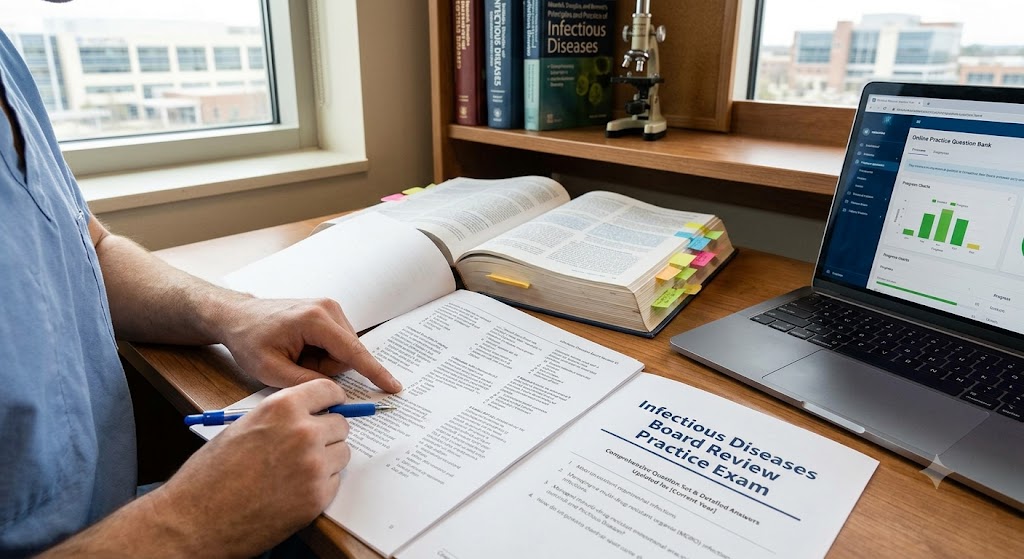
Additional Information
What the Course Entails and Exam Details
The curriculum and subsequent exam cover a comprehensive spectrum of clinical infectious diseases. Key areas of focus include the pathophysiology, epidemiology, diagnosis, and management of infections caused by bacteria, viruses, fungi, and parasites.
Candidates are expected to demonstrate expertise in antimicrobial stewardship, infection prevention and control, public health principles, and the management of infections in immunocompromised hosts.
What to Expect in the Final Exam
The final board exam is typically a rigorous, computer-based test administered at secure testing centers. It consists of multiple-choice questions, many of which are case-based clinical vignettes. These vignettes require candidates to synthesize patient information, interpret diagnostic data, and determine the most appropriate management plan.
The exam usually lasts several hours and is divided into distinct sessions. A passing score is determined using standardized psychometric methods, and specific details regarding the passing threshold and number of questions are provided by the certifying board.
How to Study and Exam Centers
Preparation for this exam requires disciplined study and the use of diverse resources. Effective strategies include a systematic review of comprehensive infectious disease textbooks, active participation in board review courses, and extensive practice with question banks specifically designed for board preparation.
Focused study on epidemiology, diagnostic testing algorithms, and current antimicrobial guidelines is crucial. Group study and discussing complex cases with peers can also enhance understanding.
The examination is typically administered at authorized, secure computer-based testing centers nationwide, such as Pearson VUE or Prometric centers. Candidates must schedule their exam directly through the certifying board's official portal and select their preferred testing location.
Job Opportunities from the Course
Obtaining board certification in infectious diseases significantly enhances professional credibility and opens doors to numerous rewarding career opportunities in various settings. Potential career paths include:
Infectious Disease Specialist in hospital or private practice
Hospital Epidemiologist or Medical Director of Infection Prevention
Public Health Officer or Medical Epidemiologist (local, state, or federal level)
Antimicrobial Stewardship Program Director
Clinical or Academic Researcher in infectious diseases
Faculty member in medical schools and residency programs
Frequently Asked Questions
Reviews
5.0
Based on 0 reviews
Leave a Review
No reviews yet. Be the first to review!