
IAHCSMM CRCST Practice Test – Chapter 11 Complex Surgical Instruments
$69.00
- Buy to unlock unlimited access to all Quiz questions.
- After purchase you can print a PDF of the whole quiz at any point. The PDF will contain the questions and the correct answers.
About this Exam
The Certified Registered Central Service Technician (CRCST) certification is the premier credential for sterile processing professionals globally, validating the essential knowledge and skills required to ensure patient safety through the proper sterilization and management of medical devices. This specialized practice test focuses specifically on Chapter 11 of the curriculum: Complex Surgical Instruments. This guide and its associated practice questions are expertly designed for aspiring sterile processing technicians and existing professionals preparing for the extensive full CRCST certification exam, providing a targeted assessment of their understanding of the complex instrumentation encountered in modern surgical settings.
Ready to test your knowledge?
Buy Now to Access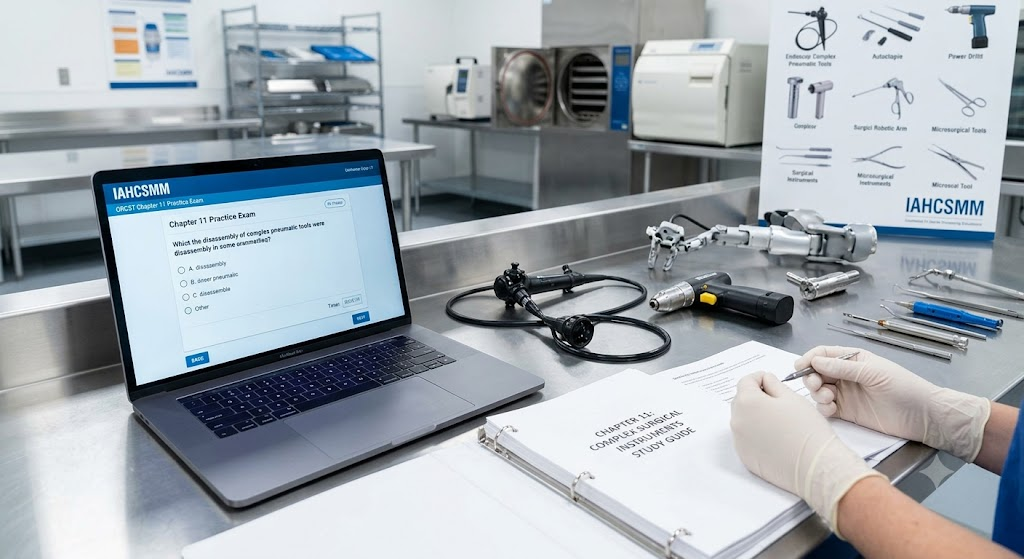
Additional Information
What the Course Entails and Exam Details
Chapter 11 of the Central Service technical manual, and this dedicated practice exam, delve deeply into the unique challenges and meticulous procedures required for complex surgical instruments. The material covers devices that often require specialized handling, disassembly, and processing beyond standard surgical tools. Core topics include the safe handling, cleaning, disinfection, and sterilization of advanced power equipment (both electric and pneumatic); diverse endoscopic instruments (including rigid and flexible scopes); complex robotic surgical devices; microsurgical tools; and a wide variety of heat- or moisture-sensitive instruments. Mastery of manufacturer Instructions for Use (IFU) is a critical theme.
What to Expect in the Final Exam
While this practice test is focused on Chapter 11, the comprehensive Certified Registered Central Service Technician (CRCST) final certification exam is a computer-based, multiple-choice assessment. The full exam consists of approximately 150 questions that span the entire range of sterile processing responsibilities. Candidates are typically given three hours to complete the examination. A passing score generally falls around 70-75%, though exact requirements can vary. Expect questions to be practical and scenario-based, requiring you to apply your knowledge of sterilization, decontamination, anatomy, and instrumentation—including the intricate details of complex devices covered here—to real-world situations.
How to Study and Exam Centers
Effective study for the Chapter 11 material demands a combination of textbook review and practical application. We recommend starting with the official IAHCSMM (HSPA) Central Service Technical Manual and Workbook. Pay exceptionally close attention to the visual guides and specific IFU examples provided in the complex instruments chapter. Utilize this practice exam multiple times to identify areas of weakness, then revisit those sections in the text. Creating flashcards for different instrument categories (e.g., rigid vs. flexible endoscopes) can reinforce critical care and handling differences. The final, official CRCST exam is proctored and typically administered at authorized Prometric testing centers worldwide. Candidates must register and receive eligibility approval before scheduling their exam. Some authorized educational institutions may also offer on-site testing.
Job Opportunities from the Course
Earning the CRCST certification significantly enhances career opportunities in the healthcare sector, as hospitals and surgical centers prioritize hiring certified professionals to manage their complex inventory and ensure patient safety. Successful certification unlocks numerous career paths, including:
Certified Registered Central Service Technician (CRCST)
Sterile Processing Technician
Central Service Technician
Instrument Technician / Instrument Specialist
Sterile Processing Team Lead
Sterile Processing Supervisor
Sterile Processing Manager
Healthcare Materiel Manager
Operating Room / Sterile Processing Liaison
Frequently Asked Questions
Reviews
5.0
Based on 0 reviews
Leave a Review
No reviews yet. Be the first to review!