
IAHCSMM CRCST Practice Test – Chapter 10 Surgical Instrumentation
$69.00
- Buy to unlock unlimited access to all Quiz questions.
- After purchase you can print a PDF of the whole quiz at any point. The PDF will contain the questions and the correct answers.
About this Exam
The Certified Registered Central Service Technician (CRCST) certification is the cornerstone credential for professionals working in the sterile processing and central service departments of medical facilities. This certification validates that an individual possesses the critical knowledge and skills necessary to manage the decontamination, inspection, assembly, sterilization, and distribution of medical instruments and equipment. Designed for individuals seeking to start or advance their careers in healthcare support, the CRCST program ensures technicians maintain the highest standards of patient safety by preventing healthcare-associated infections. Earning this designation demonstrates a strong commitment to quality, detail, and professional growth within the dynamic healthcare environment.
Ready to test your knowledge?
Buy Now to Access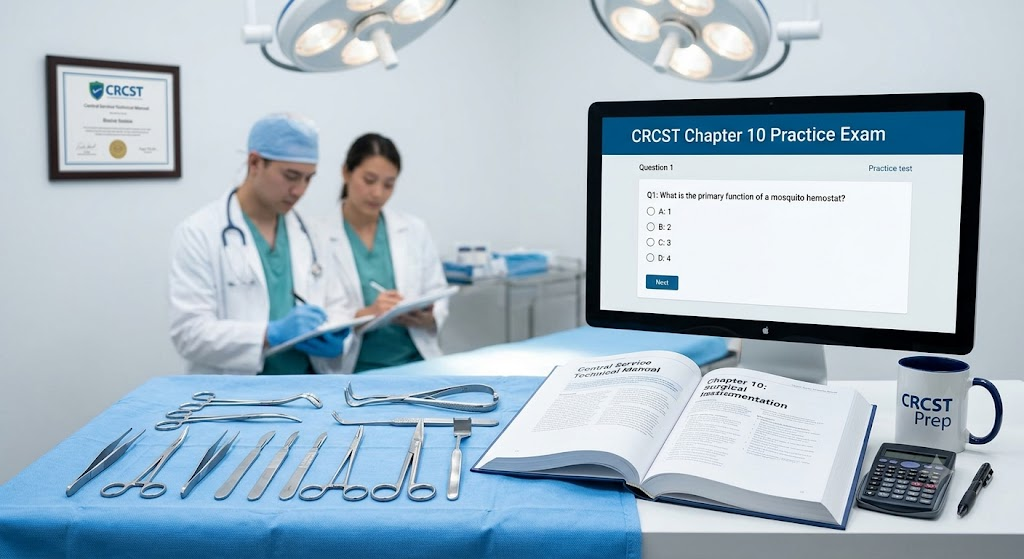
Additional Information
What the Course Entails and Exam Details
The CRCST curriculum covers the entire spectrum of sterile processing operations. While the general course is comprehensive, the study material for Surgical Instrumentation specifically targets the visual identification, care, and handling of various surgical tools. This critical area entails the mastery of a vast array of instruments. Students must learn to identify instruments by their proper names, understand their specific functions in various surgical procedures, and know the correct methods for their inspection and preparation for sterilization. The focus includes learning the anatomical parts of instruments (such as the jaws, box lock, shank, and rings), material composition (like stainless steel, titanium, or tungsten carbide), and critical inspection points for ensuring the tool is functional and safe for use.
What to Expect in the Final Exam
The official IAHCSMM CRCST certification exam is a computer-based, comprehensive assessment. The exam consists of 150 multiple-choice questions designed to test both theoretical knowledge and practical application across all areas of sterile processing. Candidates are given three hours (180 minutes) to complete the examination. To achieve certification, test-takers must achieve a passing score, which is set at a 70%. The questions related to Surgical Instrumentation are heavily emphasized, as instrument identification and inspection are considered core competencies for any practicing technician. It is important to manage your time effectively and ensure you are thoroughly prepared for visual identification questions that are common in this section.
How to Study and Exam Centers
Successful preparation for the CRCST exam requires a diligent and multifaceted study approach. Start by thoroughly reading and summarizing the designated chapters in the official Technical Manual. Utilize practice tests like this one repeatedly to get comfortable with the question formatting and to identify your weak areas. Flashcards are exceptionally effective for memorizing instrument names, categories, and inspection criteria. Focus significantly on visual learning; actively look at diagrams and, if possible, get hands-on experience by shadowing a technician or volunteering in a sterile processing department. When you are ready to take the official exam, testing is typically administered through authorized professional testing centers, such as Prometric. Candidates must first register for the exam through the organization and receive an authorization-to-test notice before scheduling their appointment at a physical testing center.
Job Opportunities from the Course
Obtaining the CRCST certification opens the door to several key roles within the healthcare sector.
Sterile Processing Technician
Certified Registered Central Service Technician (CRCST)
Central Service (CS) Technician
Decontamination Technician
Surgical Instrument Processor
Operating Room (OR) Supply Technician
Medical Device Reprocessing Technician
Central Processing Supervisor (often requires subsequent experience)
Frequently Asked Questions
Reviews
5.0
Based on 0 reviews
Leave a Review
No reviews yet. Be the first to review!