
Forensic Science Practice Test & Exam Prep
$69.00
- Buy to unlock unlimited access to all Quiz questions.
- After purchase you can print a PDF of the whole quiz at any point. The PDF will contain the questions and the correct answers.
About this Exam
Forensic science represents the crucial intersection of rigorous science and criminal justice. A Forensic Science Certification is a significant achievement, validating proficiency for professionals working or aspiring to work in diverse fields such as crime scene investigation, law enforcement, private detection, and laboratory analysis. This comprehensive preparation guide is designed to help students and professionals navigate the journey toward mastering the complex knowledge and skills required for success in generalized forensic science certification examinations.
Ready to test your knowledge?
Buy Now to Access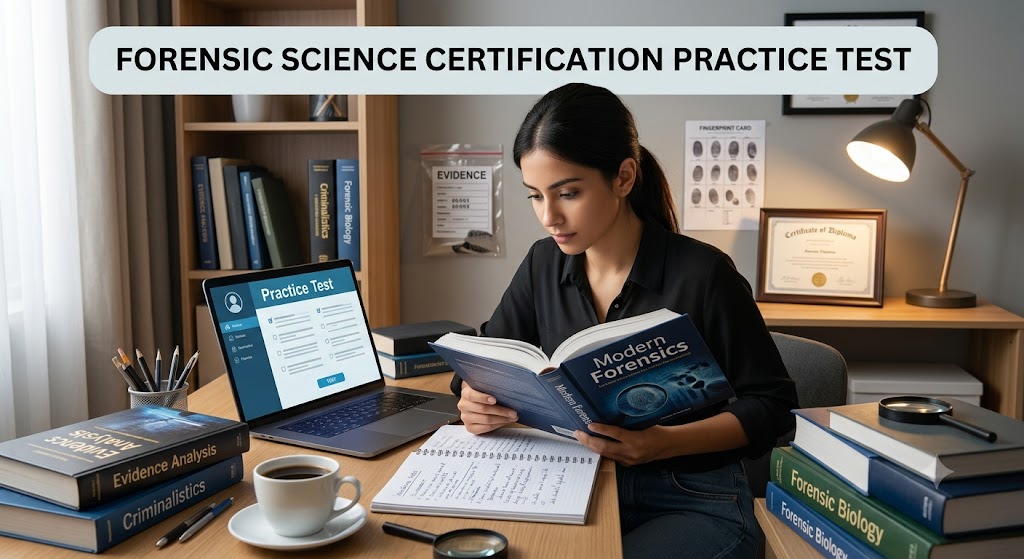
Additional Information
What the Course Entails and Exam Details
The corresponding educational pathways or preparation
courses typically cover an extensive syllabus, ensuring a well-rounded
foundation in multiple disciplines. Students can expect to engage with core
topics including crime scene management and evidence preservation, standard
collection protocols, forensic biology and DNA analysis, forensic chemistry and
toxicology, trace evidence, ballistics, fingerprint identification techniques,
digital forensics, and understanding the legal framework and ethical standards
for expert testimony. The examination itself is designed to thoroughly test
comprehension and application across these varied subjects.
What to Expect in the Final Exam
The final examination typically employs a structured format,
often consisting of numerous multiple-choice questions designed to assess
theoretical knowledge and practical understanding. The exam might include
scenario-based problems to evaluate critical thinking in forensic contexts.
Candidates must manage their time effectively, with exam durations commonly
ranging from two to three hours. Strict proctoring rules usually apply to
maintain academic integrity, prohibiting the use of unauthorized notes or
external materials, and requiring valid identification. A standard passing
score often requires achieving 70% or higher, reflecting a comprehensive
understanding of the material.
How to Study and Exam Centers
Succeeding in this rigorous field requires a strategic and
disciplined study approach. Candidates should utilize official study guides,
review recommended textbooks, create flashcards for critical terminology, and
form or join study groups. Taking multiple practice tests is essential, as it
helps simulate the actual exam environment, build confidence, and identify
areas requiring further review. The exams are typically administered through
secure channels, which may include online testing portals, authorized academic
institutions, or established physical testing centers such as those operated by
Pearson VUE, depending on the specific certifying body.
Job Opportunities from the Course
Earning a respected credential in Forensic Science
significantly enhances career prospects across various sectors. The job market
offers rewarding opportunities for qualified individuals, including:
- Crime
Scene Investigator (CSI)
- Forensic
Science Technician
- Police
Detective
- Evidence
Custodian
- Laboratory
Analyst (DNA, Serology, Toxicology)
- Fingerprint
Analyst
- Ballistics
Expert
- Arson
Investigator
- Digital
Forensics Specialist
- Private
Investigator
Frequently Asked Questions
Reviews
5.0
Based on 0 reviews
Leave a Review
No reviews yet. Be the first to review!