
Exercise Csep Practice Test & Exam Prep | Canada
$69.00
- Buy to unlock unlimited access to all Quiz questions.
- After purchase you can print a PDF of the whole quiz at any point. The PDF will contain the questions and the correct answers.
About this Exam
This comprehensive study guide is designed to help individuals prepare for the CSEP (Canadian Society for Exercise Physiology) certification exams, a crucial step for aspiring exercise professionals in Canada. CSEP offers two main certifications: the CSEP Certified Personal Trainer® (CSEP-CPT) and the CSEP Clinical Exercise Physiologist™ (CSEP-CEP). The CSEP-CPT is for personal trainers who work with populations across the lifespan to improve health, fitness, and performance. The CSEP-CEP is a higher-level certification for professionals who work with clinical populations, including those with chronic diseases and conditions. This guide focuses on the knowledge, skills, and preparation needed to excel in these exams.
Ready to test your knowledge?
Buy Now to Access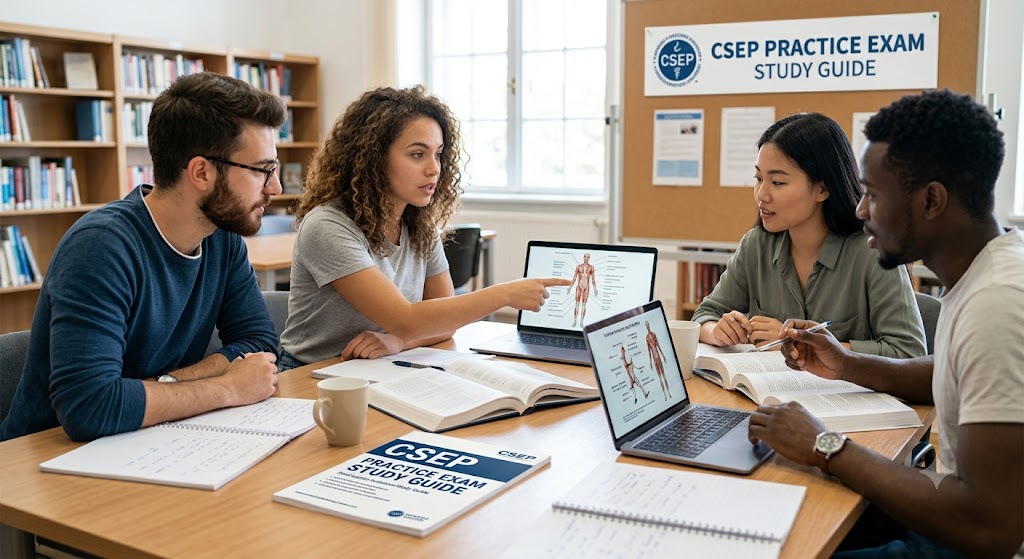
Additional Information
What the Course Entails and Exam Details
The CSEP-CPT and CSEP-CEP certifications assess a range of
competencies essential for exercise professionals in Canada. The core topics
covered include:
- Anatomy
and Physiology: In-depth understanding of the human body's structure and
function, including the cardiovascular, respiratory, nervous, skeletal,
and muscular systems.
- Exercise
Physiology: The scientific principles underlying the body's acute and
chronic responses to exercise.
- Physical
Activity and Health: The relationship between physical activity, health,
disease prevention, and management.
- Fitness
Assessment and Interpretation: Knowledge of various fitness testing
protocols (e.g., cardiorespiratory endurance, muscular strength and
endurance, flexibility, body composition) and the ability to interpret and
explain the results.
- Exercise
Prescription and Programming: Designing, implementing, and monitoring safe
and effective exercise programs for diverse populations, including
individuals with chronic conditions (for CSEP-CEP).
- Health
Promotion and Education: Strategies for motivating clients, promoting
healthy behaviors, and providing education on physical activity and
lifestyle modifications.
- Professional
Conduct and Ethics: Understanding the CSEP Code of Conduct, scope of
practice, and professional responsibilities.
- Legal
and Safety Considerations: Knowledge of risk assessment, emergency
procedures, and legal and safety issues related to exercise instruction.
The specific syllabus and learning objectives differ between
the CSEP-CPT and CSEP-CEP certifications, with the CSEP-CEP requiring advanced
knowledge and experience with clinical populations. It is essential to consult
the specific CSEP Certification Candidate Handbook for the detailed syllabus
and learning objectives for each certification.
What to Expect in the Final Exam
The CSEP-CPT and CSEP-CEP final exams consist of a written
component and, for the CSEP-CEP, a practical component.
Written Exam (CSEP-CPT and CSEP-CEP):
- Format:
Multiple-choice questions. The CSEP-CPT exam has approximately 100
questions, while the CSEP-CEP exam has around 120 questions.
- Time
Limit: Students are generally given a time limit of 2.5 hours to complete
the written exam.
- Passing
Score: The passing score varies slightly but is generally around 70-75%.
Candidates should refer to the specific Certification Candidate Handbook
for the most up-to-date information.
- Rules:
The written exam is a closed-book exam. No reference materials or
electronic devices are permitted.
Practical Exam (CSEP-CEP Only):
- Format:
A performance-based assessment that evaluates the candidate's ability to
apply their knowledge and skills in a real-world setting. Candidates are
required to demonstrate proficiency in various areas, such as fitness
assessment, exercise prescription, and communication with clients.
- Time
Limit: The practical exam typically lasts for several hours.
- Passing
Score: The practical exam is evaluated based on a set of criteria, and
candidates must meet the minimum requirements in each area to pass.
- Rules:
The practical exam is conducted under the supervision of CSEP-appointed
examiners.
How to Study and Exam Centers
Preparation for the CSEP exams requires a dedicated and
systematic approach. Here are some actionable study strategies and practice
methods:
- Review
the CSEP Certification Candidate Handbook: This document provides detailed
information about the exam content, format, and passing requirements.
- Utilize
CSEP Recommended Resources: CSEP recommends several textbooks and other
resources that cover the core competencies assessed in the exams.
- Complete
CSEP Workshops or Courses: CSEP offers various workshops and courses that
provide practical training and help candidates prepare for the exams.
- Take
Practice Exams: There are many practice exams and sample questions
available online and in various study guides. These can help candidates
become familiar with the exam format and identify areas where they need to
improve.
- Form
a Study Group: Studying with other candidates can be a great way to stay
motivated, share knowledge, and learn from each other's experiences.
- Seek
Mentorship: Connecting with experienced CSEP-certified professionals can
provide valuable insights and guidance.
Where and How to Take the Exam:
- Online
Portals: The written exam is often administered through an online portal.
CSEP provides candidates with the necessary information to access the
portal and schedule their exam.
- Authorized
Testing Centers: The written exam can also be taken at authorized testing
centers across Canada.
- Physical
Testing Centers or Authorized Schools: The practical exam is usually
conducted at specific physical testing centers or authorized schools that
have the necessary facilities and equipment.
Candidates should consult the CSEP website and the
Certification Candidate Handbook for the most up-to-date information on exam
scheduling and locations.
Job Opportunities from the Course
Upon earning a CSEP-CPT or CSEP-CEP certification,
individuals can pursue a wide range of job opportunities and career paths in
the fitness, health, and wellness industry in Canada. Some common job titles
and career paths include:
- Certified
Personal Trainer: Working in fitness centers, gyms, health clubs, and
corporate wellness programs to design and implement exercise programs for
clients.
- Clinical
Exercise Physiologist: Working in hospitals, clinics, rehabilitation
centers, and specialized wellness programs to help individuals with
chronic diseases and conditions.
- Fitness
Coordinator/Manager: Overseeing the fitness programs and facilities in
various settings.
- Group
Fitness Instructor: Leading various types of group exercise classes.
- Health
Coach: Helping individuals make sustainable lifestyle changes to improve
their health and well-being.
- Exercise
Specialist: Working in a variety of settings to promote physical activity
and exercise.
- Wellness
Program Coordinator: Designing and implementing wellness programs for
organizations and communities.
- Research
Assistant: Assisting in exercise science research.
- Lecturer/Instructor:
Teaching exercise science courses at colleges and universities.
The CSEP certifications are highly respected and recognized
by employers in Canada and internationally, opening up many doors for a
rewarding career in the exercise profession.
Disclaimer: This study guide is intended as a general
resource and should not be used as the sole basis for preparation for the CSEP
exams. Candidates should always consult the official CSEP website and the
Certification Candidate Handbook for the most accurate and up-to-date
information.
Frequently Asked Questions
Reviews
5.0
Based on 0 reviews
Leave a Review
No reviews yet. Be the first to review!