
Entrance Practice Test & Exam Prep | India
$69.00
- Buy to unlock unlimited access to all Quiz questions.
- After purchase you can print a PDF of the whole quiz at any point. The PDF will contain the questions and the correct answers.
About this Exam
Are you a student in India aspiring for top engineering, medical, management, or other prestigious courses?
Preparing for a national or state-level entrance exam can be both exciting and challenging.
This Indian Entrance Practice Exam resource is meticulously designed for ambitious students like you.
It seeks to provide comprehensive preparation and a realistic practice environment for various key entrance tests across the country.
Our aim is to empower you with the knowledge, practice, and confidence needed to excel in your chosen field.
Ready to test your knowledge?
Buy Now to Access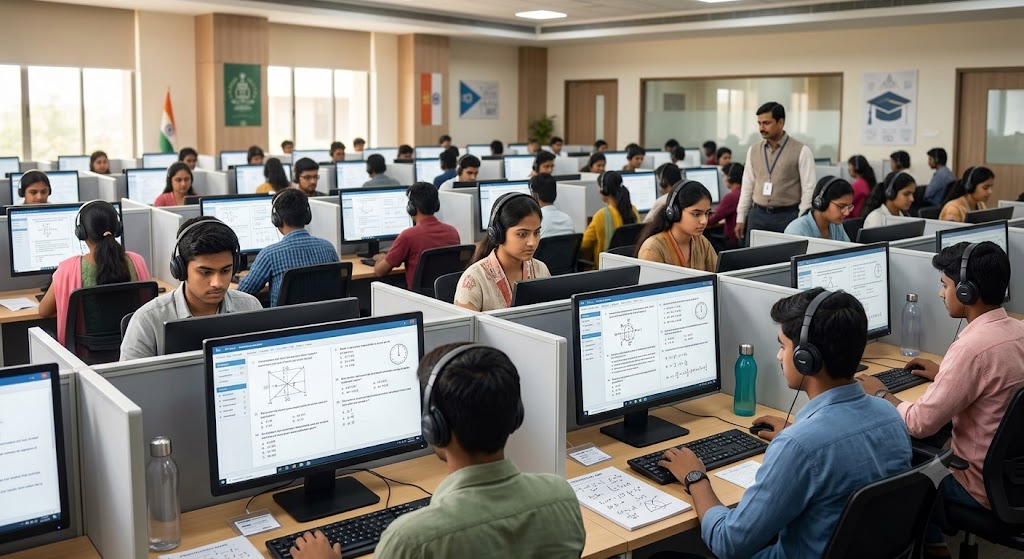
Additional Information
What the Course Entails and Exam Details
While the specific syllabus and topics vary significantly depending on the particular entrance exam, general preparation usually covers fundamental subjects.
Examples of major exams include JEE Main for engineering, NEET for medical, CAT for management, and CUET for undergraduate courses.
Science & Engineering Streams: Physics, Chemistry, and Mathematics concepts from standard curriculums (like CBSE/ICSE or state boards).
This involves deeply understanding theories, solving complex problems, and applying principles effectively.Medical Streams: Biology (Botany and Zoology) focusing heavily on memory, application of biological principles, and understanding complex systems.
Physics and Chemistry are also critical components.Management Streams: Quantitative Aptitude assessing numerical ability and problem-solving.
Verbal Ability & Reading Comprehension evaluating communication skills, critical reading, and language usage.
Data Interpretation & Logical Reasoning testing analytical thinking, interpretation of complex data, and logical deduction.General Streams (like CUET): Subject-specific tests across a vast array of disciplines.
A general test (covering numerical ability, quantitative reasoning, logical & analytical reasoning, general knowledge & current affairs).
Language tests to assess proficiency.
Effective preparation resources incorporate detailed subject matter, extensive practice questions for each topic, and full-length simulated exams to gauge readiness accurately.
What to Expect in the Final Exam
The actual final exam format is dictated by the specific testing authority (e.g., NTA for JEE Main & NEET, IIMs for CAT, NTA for CUET).
Generally, you can expect:
Format: Most prominent Indian entrance exams are increasingly computer-based tests (CBT).
They often feature multiple-choice questions (MCQs) with single correct options, or multiple correct options in some advanced sections.
Some exams may include numerical value questions, requiring calculated answers to be entered directly.
Less common for these typical entrance exams are short descriptive answers or essays.Time Limit: Each exam has strict time constraints.
Typically, these range from 2 to 3 hours or more, depending on the complexity, total marks, and number of sections or subjects involved.
Effective time allocation during practice is critical.Marking Scheme: Be acutely aware of the marking scheme.
This includes positive marks for correct answers and, crucially, negative marking for incorrect attempts in many major tests.
Understanding the risk-reward aspect of guessing is vital for test strategy.Rules & Regulations: Candidates must strictly adhere to entry times and rigorous identification requirements.
Dress codes (if specified) and extensive prohibited item lists must be followed (electronics of any kind, bags, certain jewelry, etc.) at designated testing centers.
Severe penalties apply for rule violations.
How to Study and Exam Centers
Success in competitive Indian entrance exams demands unwavering dedication, consistency, and effective study techniques:
Develop a Schedule: Create a realistic and detailed study plan.
Allocate adequate time to each subject/topic, incorporating regular revision sessions, and scheduling short breaks to maintain focus and prevent burnout.
Prioritize high-weightage topics.Master the Fundamentals: Thoroughly understand the core concepts and theories.
Utilize relevant textbooks (often NCERT in India, supplemented by other quality resources) and study materials.
Concept clarity is foundational.Solve Previous Years' Question Papers: This is a cornerstone of effective preparation.
Analyze and solve past papers extensively to understand the exam pattern, typical question difficulty, frequent topics, and time distribution requirements.
Notice trends.Take Mock Tests Regularly: Practice with numerous full-length, timed mock tests.
Do this under conditions that closely simulate the actual exam environment.
This builds critical exam stamina, improves time management skills, identifies specific weaknesses, and boosts confidence.
Utilize quality online mock test series specifically designed for your targeted exam.Analyze and Improve: Dedicate significant time to meticulously analyzing your performance after each mock test.
Review incorrect answers, understand exactly why you made a mistake (conceptual error, calculation mistake, silly error, time pressure).
Work intensely on reinforcing those specific weak areas or modifying your approach.Stay Healthy: Prioritize proper nutrition, adequate sleep, regular physical activity, and stress-management techniques.
Sleep is crucial for memory and concentration.
A healthy mind in a healthy body performs better.
Exam Centers: For most major computer-based Indian entrance exams, candidates typically select several preferred exam cities during the online registration process.
The actual test centers are designated physical locations.
Often these are dedicated computer labs or educational institutions equipped with necessary computer systems, high-speed internet, surveillance cameras, and security personnel.
These centers are spread across numerous cities and towns throughout India to ensure widespread accessibility.
The specific exam centers, schedules, and reporting times are communicated to candidates via their admit cards well in advance.
Always check the official website of the specific exam authority (e.g., NTA, IIMs) for the definitive list of center locations, registration timelines, and all relevant details.
Registration and center selection are managed through secure online portals.
Job Opportunities from the Course
Excelling in Indian entrance exams opens doors to prestigious educational institutions and, subsequently, sets the stage for diverse and rewarding career paths.
Successfully completing relevant courses after these exams significantly enhances your profile and unlocks numerous high-impact job opportunities in both private and government sectors:
Engineering Careers (from succeeding in JEE Main/Advanced, state-level engineering exams and completing B.Tech/B.E. degrees):
Software Engineer/Developer (Huge opportunities in IT/software firms)
Mechanical Engineer (In manufacturing, automotive, aerospace industries)
Civil Engineer (Construction, infrastructure development)
Electrical/Electronics Engineer (Power, electronics, telecommunications)
Data Scientist/AI/ML Engineer (Increasingly in demand across sectors)
Project Manager (Managing engineering projects and teams)
Consultant (Providing technical expertise to businesses)
Medical & Healthcare Careers (from succeeding in NEET and completing MBBS/BDS/AYUSH degrees):
Doctor (General Physician, specialist – after PG studies)
Surgeon (Highly skilled surgical positions – after PG studies)
Specialist Physician (e.g., Cardiologist, Oncologist, Neurologist – after PG studies)
Hospital Administrator (Managing healthcare facilities)
Medical Researcher (Contributing to medical advancements)
Public Health Professional (Working in government and NGO public health initiatives)
Management & Business Careers (from succeeding in CAT/MAT/XAT/etc. and completing MBA degrees):
Marketing Manager (Leading marketing strategies and campaigns)
Finance Manager/Analyst (Overseeing financial operations and investments)
Human Resources Manager (Managing personnel and recruitment)
Operations Manager (Streamlining business processes and supply chains)
Product Manager (Guiding product development and lifecycle)
Management Consultant (Advising organizations on improving performance)
Entrepreneur (Starting and scaling innovative businesses)
General Degree Careers (from succeeding in CUET/other general entrance exams and completing relevant B.A./B.Sc./B.Com degrees, or professional degrees like Law):
Civil Servant (Highly sought-after government positions through subsequently clearing UPSC/state services exams, leveraging a strong general degree foundation)
Teacher/Professor (In schools and universities – after higher education and B.Ed.)
Journalist/Media Professional (In news organizations, media houses)
Economist/Analyst (Analyzing economic data, financial trends)
Research Scientist (Conducting scientific research – often requiring higher studies)
Expert Educational Copywriter (Creating persuasive or informative content for businesses and educational platforms)
Artist/Designer (In graphic design, fine arts, fashion, etc. – from relevant courses)
Various roles in government and private organizations, depending heavily on the chosen specialization during undergraduate and postgraduate studies (e.g., Banking, Data Analysis, Administration, Legal services, Social Work).
Please note: The job market is dynamic, and specific job titles, responsibilities, and salary levels can vary significantly based on individual performance, institution reputation, specialization, experience, and prevailing economic conditions.
Success in these entrance exams is a critical first step that leads to educational paths from which these careers are then pursued.
Frequently Asked Questions
Reviews
5.0
Based on 0 reviews
Leave a Review
No reviews yet. Be the first to review!