
EMT Trauma Emergencies Practice Test
$69.00
- Buy to unlock unlimited access to all Quiz questions.
- After purchase you can print a PDF of the whole quiz at any point. The PDF will contain the questions and the correct answers.
About this Exam
Mastering trauma care is essential for any aspiring Emergency Medical Technician.
This practice test is designed for individuals currently in EMT training or those preparing for their certification exams, focusing specifically on critical trauma emergency assessment and management.
It offers a realistic opportunity to gauge your understanding, identify knowledge gaps, and build confidence before facing the actual high-stakes exam.
By engaging with challenging, scenario-based questions, you will reinforce vital skills needed to make quick, accurate decisions in real-world trauma situations.
This resource is an invaluable tool for both initial certification candidates and experienced providers seeking to refresh their trauma expertise.
Ready to test your knowledge?
Buy Now to Access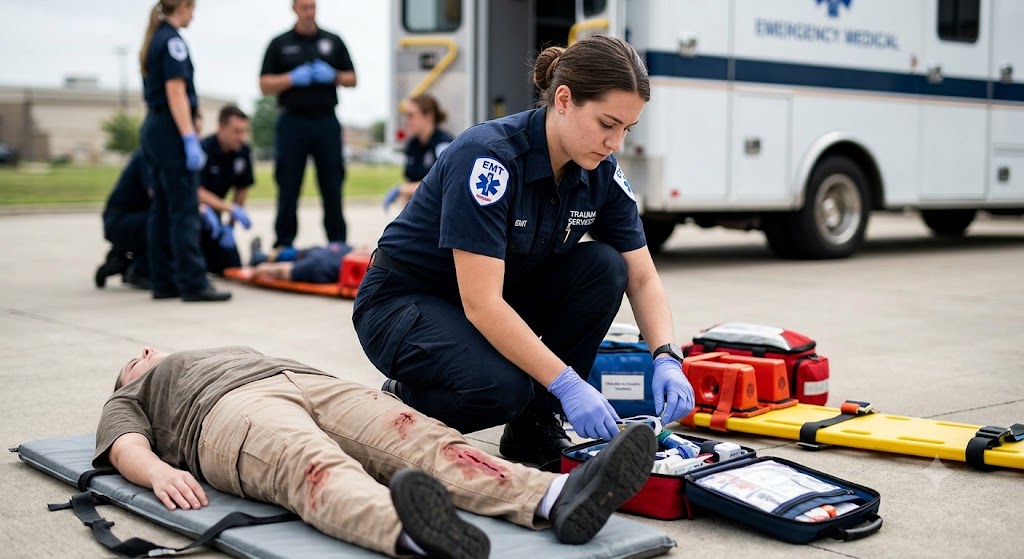
Additional Information
What the Course Entails and Exam Details
Preparing for the EMT trauma emergencies section requires a comprehensive grasp of various critical topics.
The core curriculum typically covers patient assessment techniques specific to trauma, ensuring you can systematically evaluate a patient for hidden injuries.
You will delve into the management of soft tissue injuries, including bleeding control, wound care, and burn management.
Understanding the complexities of musculoskeletal injuries, fractures, and dislocations, and the proper splinting techniques is crucial.
Furthermore, critical attention is given to head, neck, and spinal injuries, encompassing proper immobilization protocols.
Respiratory emergencies resulting from trauma, thoracic injuries, and shock management are also extensively covered.
Our practice test mirrors this syllabus, presenting diverse scenarios that test your ability to apply these principles effectively.
What to Expect in the Final Exam
The final certification exam typically consists of both a cognitive (written) and a psychomotor (practical) component.
The cognitive exam is often a computer-based, adaptive test featuring multiple-choice questions, where your performance determines the difficulty and number of questions you encounter.
A significant portion of these questions will specifically address trauma emergencies, evaluating your knowledge and decision-making skills.
Expect challenging scenarios requiring you to prioritize patient care, choose correct interventions, and demonstrate sound clinical judgment.
Specific details regarding the passing score and time limits can vary slightly depending on the testing body (e.g., NREMT) and your specific state's regulations, so always verify these specifics directly.
The psychomotor exam will require you to physically demonstrate your proficiency in critical skills, potentially including trauma assessment, bleeding control, and spinal immobilization, in front of certified examiners.
How to Study and Exam Centers
Effective studying involves a multi-faceted approach, starting with a thorough review of your EMT textbook and course materials.
Utilize practice tests extensively, just like this one, to simulate exam conditions, improve time management, and identify weak areas.
Create flashcards for key terms, protocols, and dosages.
Forming study groups can facilitate discussions and peer learning, reinforcing complex concepts.
For the psychomotor exam, practice hands-on skills frequently with classmates or instructors, ensuring proper technique and adherence to established protocols.
Certification exams are typically administered at authorized testing centers.
The NREMT, for instance, utilizes Pearson VUE testing centers located throughout the country for its cognitive exam.
Psychomotor exams are often coordinated through approved state or regional EMS offices and training institutions, so consult your course instructor or state EMS agency for specific locations and schedules.
Job Opportunities from the Course
Successfully navigating this exam and obtaining your EMT certification opens doors to rewarding career paths in emergency medical services and related fields.
Specific job opportunities include:
Emergency Medical Technician (EMT) in ambulance services
Firefighter/EMT with municipal fire departments
Emergency Room Technician in hospitals
Paramedic (with advanced training)
Flight EMT/Paramedic (with experience and further certification)
Industrial or Tactical EMT
EMS Instructor or Educator
Healthcare Administrator (with further education and experience)
Frequently Asked Questions
Reviews
5.0
Based on 0 reviews
Leave a Review
No reviews yet. Be the first to review!