
EMT Medical Emergencies Practice Test
$69.00
- Buy to unlock unlimited access to all Quiz questions.
- After purchase you can print a PDF of the whole quiz at any point. The PDF will contain the questions and the correct answers.
About this Exam
The Emergency Medical Technician (EMT) certification is a crucial milestone for aspiring healthcare professionals seeking to make a difference in pre-hospital emergency medical services. This comprehensive program equips students with essential knowledge and skills to provide life-saving interventions in critical situations. While trauma situations are often dramatic, the Medical Emergencies component focuses on the intricate world of systemic illnesses and acute medical crises that require precise assessment and prompt care. This practice material is specifically designed for students preparing for the Medical Emergencies domain of the National Registry of Emergency Medical Technicians (NREMT) cognitive exam, as well as state-level equivalents. It is intended for those enrolled in an approved EMT training program or individuals looking to refresh their medical knowledge in a testing context.
Ready to test your knowledge?
Buy Now to Access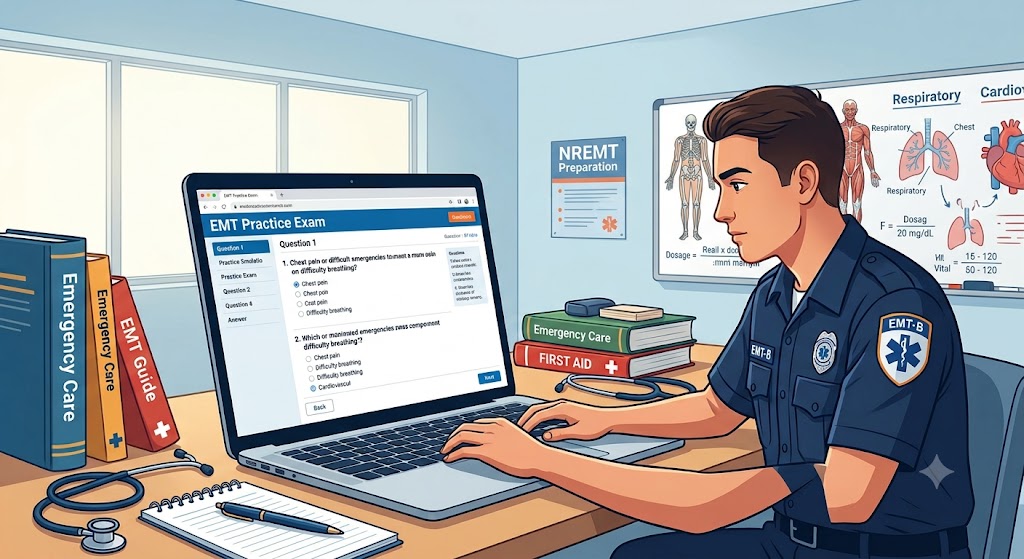
Additional Information
What the Course Entails and Exam Details
A typical EMT certification course comprehensively covers medical emergencies over dozens of hours of instruction. Students delve into pathophysiology, patient assessment, and evidence-based treatments for various body systems and non-traumatic conditions. Key topics include: cardiovascular emergencies (like acute myocardial infarction, heart failure, and strokes); respiratory emergencies (such as asthma, COPD, pneumonia, and pulmonary embolism); endocrine issues (including diabetic ketoacidosis and hypoglycemia); gastrointestinal and genitourinary problems; immunological reactions (allergies and anaphylaxis); neurological disorders (seizures and altered mental status); toxicology and overdose scenarios; behavioral and psychiatric emergencies; and environmental emergencies. Practice tests focus on applying this theoretical knowledge to clinical scenarios.
What to Expect in the Final Exam
The actual NREMT certification exam features a cognitive component that is computer-adaptive (CAT). This means the difficulty adjusts based on your performance. For EMTs, the exam generally consists of 70 to 120 questions, with around 20-24% of questions specifically related to Medical Emergencies and OB/GYN (which can overlap). The test is time-limited, often around two hours or slightly less, depending on the adaptive nature. It primarily uses multiple-choice questions, many of which are scenario-based to evaluate your critical thinking and decision-making abilities. There is no simple passing percentage; a minimum level of competency across all domains must be demonstrated. Testing rules are strict, requiring valid identification and adherence to security procedures at the exam center. A separate psychomotor (practical skills) exam is also required for certification, which assesses hands-on proficiency, including medical patient assessment.
How to Study and Exam Centers
Effective preparation is key to success. Thoroughly study your EMT textbook, paying close attention to medical chapters, algorithms, and treatment protocols. Utilize online resources, video lectures, and study groups. Most importantly, take numerous practice exams. Platforms like ours provide simulated NREMT-style questions to build your confidence, improve time management, and identify weak areas in your medical knowledge. Practice scenarios with others to sharpen your patient assessment and communication skills. Ensure you get adequate rest and hydration before the actual test. For the cognitive exam, candidates primarily schedule and take the test at authorized Pearson VUE testing centers located throughout the country and internationally. Registration is completed through the NREMT website. Your state EMS office or training program will typically coordinate the psychomotor exam at approved locations.
Job Opportunities from the Course
Successfully completing an EMT course and obtaining your certification opens doors to a rewarding career in emergency medical services. Your foundational knowledge in medical emergencies will be invaluable in various roles:
Ambulance EMT: Providing emergency and non-emergency transport, assessing patients, and administering care en route.
Firefighter/EMT: A dual-role in many fire departments, performing both firefighting duties and responding to medical emergencies.
Hospital ER Technician: Working in emergency departments alongside doctors and nurses, assisting with patient care.
Industrial EMT: Ensuring the safety of workers in construction, manufacturing, or other industrial settings.
Search and Rescue (SAR) EMT: Providing medical aid as part of specialized rescue teams.
Private Transport EMT: Transporting patients with non-life-threatening conditions between facilities.
Flight EMT (often requiring advanced training): Providing critical care in helicopter or airplane medical transports.
Event Medical Service EMT: Staffing concerts, sporting events, festivals, or large gatherings.
Clinical EMT: In some clinics or urgent care settings.
Paramedic (requires further education): Advancing your career with advanced life support training.
Frequently Asked Questions
Reviews
5.0
Based on 0 reviews
Leave a Review
No reviews yet. Be the first to review!