
Design Entrance Practice Test & Exam Prep | India
$69.00
- Buy to unlock unlimited access to all Quiz questions.
- After purchase you can print a PDF of the whole quiz at any point. The PDF will contain the questions and the correct answers.
About this Exam
Design entrance exams in India, such as NID DAT, NIFT Entrance, UCEED, and CEED, are the gateway to prestigious design institutes across the country.
These highly competitive examinations assess candidates' creative aptitude, visual perception, drawing skills, logical reasoning, and problem-solving abilities.
They are designed for aspiring students who are passionate about pursuing a career in various design disciplines, including Fashion Design, Graphic Design, Product Design, and Animation.
Successfully clearing these tests demonstrates a candidate's readiness for rigorous professional design education.
Ready to test your knowledge?
Buy Now to Access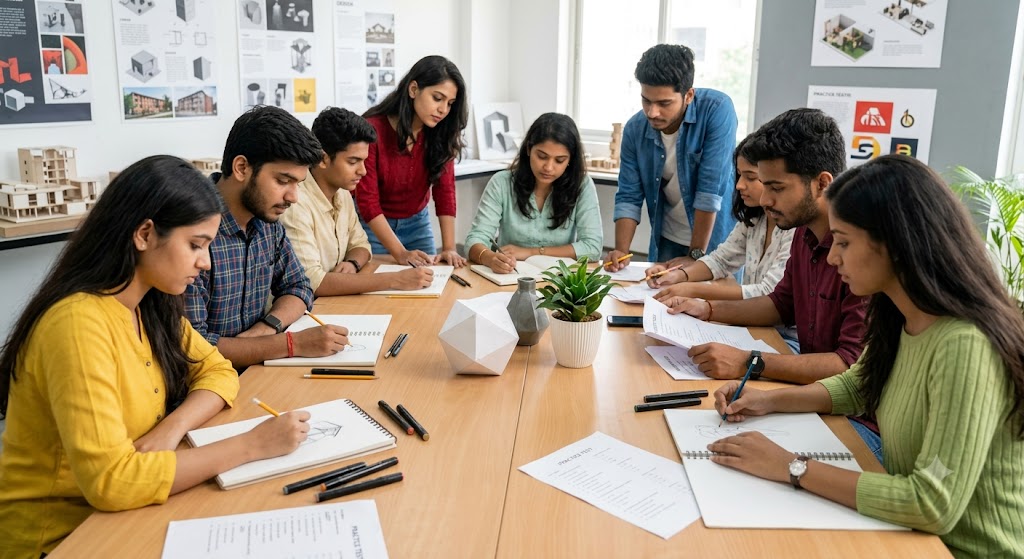
Additional Information
What the Course Entails and Exam Details
A comprehensive preparation course focuses on developing the core skills and knowledge required for success in these varied entrance exams.
The syllabus typically covers several key areas: Creative Thinking and Innovation, Drawing and Sketching Skills (including perspective, composition, and object drawing), Color Theory, Design Principles, and Visualization.
Additionally, candidates are tested on their General Knowledge and Current Affairs, particularly related to the design and art world, as well as their Logical Reasoning and Analytical Ability.
For exams like UCEED, there is also a strong emphasis on observational skills and digital literacy in design.
What to Expect in the Final Exam
While the specific format varies slightly by institute (NIFT, NID, IITs), design entrance exams generally follow a multi-stage process.
The first stage is usually a written test, which often includes a combination of Multiple Choice Questions (MCQs) assessing General Aptitude (GAT) and subjective/drawing questions evaluating Creative Aptitude (CAT).
Specific exams like UCEED are entirely computer-based and primarily consist of numerical aptitude and visual reasoning MCQs.
There is typically no single passing score; rather, candidates are ranked based on their performance, and shortlisting for the next round is determined by the number of seats available. Time limits range from 2 to 3 hours per section.
How to Study and Exam Centers
Effective preparation requires a combination of self-study, dedicated practice, and sometimes formal coaching.
Actionable strategies include consistent sketching and drawing practice, solving previous years' question papers, and taking timed mock tests to improve speed and accuracy. Developing a strong portfolio is also crucial for subsequent stages.
These exams are conducted at numerous designated physical testing centers located in major cities across India. Candidates must register online through the respective institute's official admission portals and select their preferred test center during the application process.
Job Opportunities from the Course
Clearing these entrance exams and completing a design degree from a premier institute opens up diverse and exciting career paths.
Graduates go on to work in various sectors, including:
Graphic Designer
Fashion Designer
Industrial/Product Designer
UI/UX Designer
Interior Designer
Animation Artist / Illustrator
Textile Designer
Set Designer
Creative Director
Frequently Asked Questions
Reviews
5.0
Based on 0 reviews
Leave a Review
No reviews yet. Be the first to review!