
Dca Cpl A Practice Test & Exam Prep | Brunei
$69.00
- Buy to unlock unlimited access to all Quiz questions.
- After purchase you can print a PDF of the whole quiz at any point. The PDF will contain the questions and the correct answers.
About this Exam
Embark on a rewarding and challenging career in the skies! The Dca Cpl A (Commercial Pilot License – Aeroplane) certification is a crucial milestone for aspiring professional pilots in Brunei. Administered by the Department of Civil Aviation (DCA) Brunei, this comprehensive exam validates the theoretical knowledge and practical skills required to operate commercial aircraft safely and efficiently. This license is designed for passionate individuals who have completed their initial flight training and are ready to transition into the commercial aviation sector, demonstrating their competence to potential employers and ensuring they meet stringent regulatory standards. Achieving your CPL(A) is not just about passing a test; it’s about proving you have the dedication, skill, and knowledge to be a professional pilot.
Ready to test your knowledge?
Buy Now to Access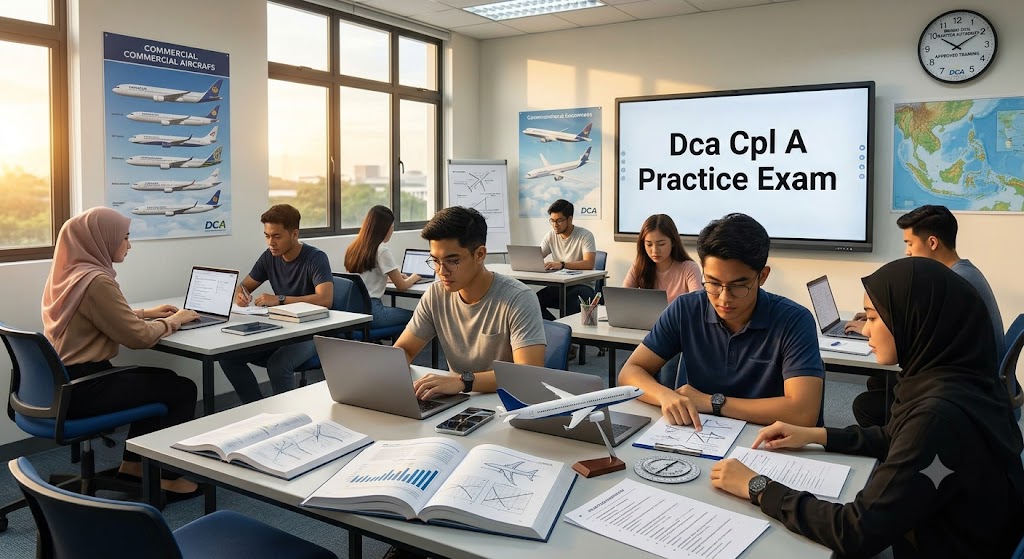
Additional Information
What the Course Entails and Exam Details
The training journey towards a Dca Cpl A involves both intensive ground school studies and extensive flight training. The core topics covered are vast, ensuring a deep understanding of all aspects of commercial aviation. Aspiring pilots will delve into key subjects such as:
Air Law and ATC Procedures: Understanding national and international regulations, rules of the air, and air traffic control communication.
Aircraft General Knowledge: Mastering aircraft systems, structures, powerplants, and instruments.
Flight Performance and Planning: Learning to calculate weight and balance, fuel requirements, take-off and landing performance, and creating detailed flight plans.
Human Performance and Limitations: Exploring physiological and psychological factors affecting pilot performance, decision-making, and crew resource management.
Meteorology: Interpreting weather reports, understanding weather patterns, and assessing their impact on flight safety.
Navigation: Utilizing both traditional and modern navigation techniques, charts, and avionics.
Operational Procedures: Adhering to standard operating procedures (SOPs), emergency checklists, and safety management systems.
Principles of Flight: Grasping the aerodynamics and physics that govern aircraft controlled flight.
Radiotelephony: Effectively communicating with air traffic control and other aircraft using standard terminology.
The overall CPL course typically includes a minimum number of flight hours, encompassing various phases of flight training, including cross-country navigation, instrument flying, and complex aircraft operation, often using sophisticated simulators.
What to Expect in the Final Exam
The final Dca Cpl A examination is a demanding, multi-stage assessment designed to rigorously test all aspects of a candidate’s readiness. Candidates can expect:
Theoretical Knowledge Exams (Written): You must pass a series of challenging theoretical knowledge examinations covering the subjects listed above. These are typically computer-based, multiple-choice tests administered in a controlled environment. Each subject has a specific number of questions and time limit. While exact passing scores and time limits can vary, candidates should aim for high proficiency, typically requiring scores of 70% or higher in each subject. Expect detailed, technical questions that require in-depth understanding.
Practical Skill Test (Flight Test): Upon successful completion of the theoretical exams and flight training, you will undergo a comprehensive flight skill test with a DCA-authorized examiner. This is the culmination of your practical training and evaluates your ability to operate a commercial aircraft competently and safely. The test involves various maneuvers, including take-offs, landings, navigation exercises, instrument flight procedures, and handling simulated emergency situations. The examiner will assess your decision-making, technical skill, situational awareness, and adherence to procedures throughout the entire flight. There are strict criteria for passing, evaluating your proficiency in every required maneuver and procedure.
Ensure you are thoroughly prepared for both components, as success in both is mandatory for license issuance.
How to Study and Exam Centers
Preparation is key to succeeding in the Dca Cpl A exam. Implement actionable study strategies:
Utilize Official Resources: Base your studies on the official DCA Brunei regulations, syllabi, and recommended reading materials. Obtain the most up-to-date versions of relevant documents.
Structured Study Plan: Create a comprehensive study schedule, allocating dedicated time to each subject and balancing theoretical study with practical flight preparation.
Ground School and Instructor Guidance: Attend a reputable, DCA-approved ground school and leverage the expertise of experienced flight instructors. They can provide invaluable insights, clarify complex concepts, and offer practical advice.
Practice, Practice, Practice: Use practice exam papers, online question banks, and software specifically designed for pilot exam preparation. Regular practice with multiple-choice questions is crucial for the theoretical exams.
Simulators and Flight Training: Make the most of simulator sessions and actual flight time. Treat every flight lesson as an opportunity to refine skills, practice maneuvers, and enhance your practical knowledge. Seek constant feedback from your instructors.
Mental Preparation: Develop good decision-making skills, stress management techniques, and crew resource management (CRM) practices, essential for both the exams and your future career.
Stay Updated: Monitor official DCA Brunei announcements and aviation news for any updates to regulations or exam procedures.
Both theoretical exams and practical skill tests are typically conducted at official locations designated and approved by DCA Brunei. For theoretical exams, these are often dedicated computer-based testing centers within DCA facilities or contracted examination halls. The practical flight test will occur at approved aerodromes or flight training organizations using registered aircraft and involve authorized DCA examiners. Specific center locations and registration details should be confirmed directly on the official DCA Brunei website. Ensure you check for the current procedures and available test dates well in advance.
Job Opportunities from the Course
Achieving your Dca Cpl A certification unlocks a wide array of exciting and rewarding career paths within the aviation industry, not only in Brunei but potentially internationally (subject to conversions and additional requirements). Here are some specific job opportunities:
Commercial Airline Pilot: Flying for major international or regional airlines, operating large passenger jets.
Charter Pilot: Conducting private or business charter flights for individuals or companies.
Cargo Pilot: Transporting goods and freight for cargo airlines and logistics companies.
Flight Instructor: Teaching aspiring pilots in ground school and during flight training (often requires additional instructor ratings).
Corporate Pilot: Flying private aircraft for corporations, transporting executives and personnel.
Agricultural Pilot: Conducting crop spraying or aerial seeding operations.
Aerial Survey Pilot: Performing mapping, photography, or other survey work from aircraft.
Medevac/Air Ambulance Pilot: Flying emergency medical transport missions.
General Aviation Pilot: Various roles involving light aircraft operations, such as sightseeing flights or skydiving.
Ferry Pilot: Transporting new or used aircraft between manufacturers, dealers, and owners.
Embark on your journey with dedication and determination, and let the skies become your workplace! Good luck with your preparation for the Dca Cpl A Practice Test & Exam!
Frequently Asked Questions
Reviews
5.0
Based on 0 reviews
Leave a Review
No reviews yet. Be the first to review!