
Cxc Practice Test & Exam Prep | Caribbean
$69.00
- Buy to unlock unlimited access to all Quiz questions.
- After purchase you can print a PDF of the whole quiz at any point. The PDF will contain the questions and the correct answers.
About this Exam
The Caribbean Examinations Council (CXC) examinations are critical academic benchmarks for students across the Caribbean region.
Designed for secondary and post-secondary levels, these assessments certify completion of education and determine eligibility for higher learning and career entry.
They evaluate proficiency in various subjects, shaping the future educational and professional paths of countless students.
For candidates preparing for CSEC (Caribbean Secondary Education Certificate) and CAPE (Caribbean Advanced Proficiency Examination), rigorous practice and understanding the exam structure are key to success.
Ready to test your knowledge?
Buy Now to Access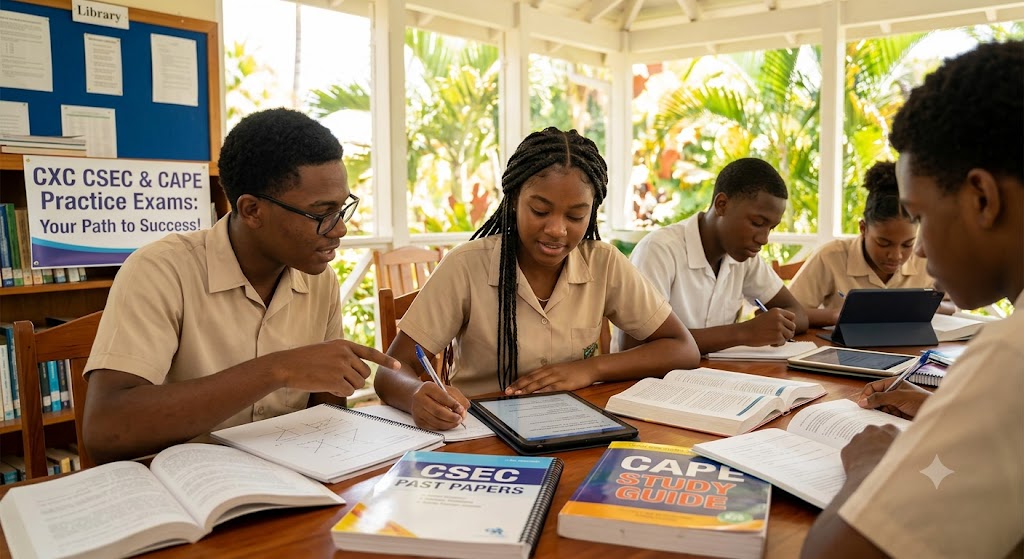
Additional Information
What the Course Entails and Exam Details
The curriculum for CXC examinations varies significantly by subject, covering disciplines like Mathematics, English Language, Science, Business Studies, Foreign Languages, and Humanities.
Each subject's syllabus focuses on developing foundational knowledge, critical thinking, problem-solving, analytical skills, and communication abilities.
Preparation involves studying complex theories, mastering specific methodologies, and applying knowledge to real-world scenarios relevant to the Caribbean context.
For CSEC, topics focus on core secondary education; for CAPE, they delve into advanced, introductory university-level concepts.
What to Expect in the Final Exam
Final CXC exams generally consist of several components, often split into Papers 1, 2, and sometimes 3.
Paper 1 is typically multiple-choice, testing broad knowledge.
Paper 2 involves extended response questions, essays, structured problems, and data analysis.
Practical examinations may also be required for certain science and technical subjects.
Time limits vary but commonly range from 1 to 3 hours per paper.
A final grade is assigned (Grades I to VI), based on performance across all papers, and often includes School-Based Assessment (SBA) scores.
Consistent performance across all components is crucial.
Specific rules regarding permitted materials, calculators, and conduct are strictly enforced.
How to Study and Exam Centers
Effective CXC study involves systematic revision of the syllabus, active note-taking, and identifying key concepts.
Utilizing past papers is essential for practicing exam time management and familiarizing oneself with question formats.
Form study groups, seek help from teachers, and use various online educational resources.
Create a structured study timetable and ensure adequate rest.
The exams are administered through authorized secondary schools and other registered examination centers across the Caribbean region.
Registration is typically handled through students' schools or local CXC offices.
Practice resources and syllabus guides are available through official CXC channels and reputable educational platforms.
Job Opportunities from the Course
Achieving high grades in CXC exams (especially at the CAPE level) significantly enhances your eligibility for higher education and diverse job opportunities.
Successful results can open doors to various career paths, such as:
Entry-level positions in sectors corresponding to your top CXC subjects (e.g., Accounts, IT, Science, Office Administration).
Admission to reputable regional and international universities for specialized degree programs (leading to careers like doctors, engineers, lawyers, teachers).
Government and public service jobs in Caribbean territories.
Entrepreneurial ventures leveraging skills learned during CSEC/CAPE studies (e.g., business management, creative fields).
Technical and vocational apprenticeships and job training programs.
Advanced opportunities and professional roles requiring secondary or post-secondary certification.
Frequently Asked Questions
Reviews
5.0
Based on 0 reviews
Leave a Review
No reviews yet. Be the first to review!