
CPC Radiology Practice Test – Questions Answers
$69.00
- Buy to unlock unlimited access to all Quiz questions.
- After purchase you can print a PDF of the whole quiz at any point. The PDF will contain the questions and the correct answers.
About this Exam
The Certified Professional Coder (CPC) credential is the gold standard for medical coding in physician office settings. Provided by AAPC, this certification validates your proficiency in translating medical documentation into standardized codes used for billing and reimbursement. While the CPC exam is comprehensive, the Radiology section represents a critical specialized area of knowledge. This practice test is designed specifically for aspiring medical coders who want to master the coding of imaging services and therapeutic radiology procedures. By focusing on this challenging segment, you will build the confidence and accuracy required to excel on your full certification exam. Mastering radiology coding demonstrates a commitment to technical precision and opens doors to a stable and essential healthcare career.
Ready to test your knowledge?
Buy Now to Access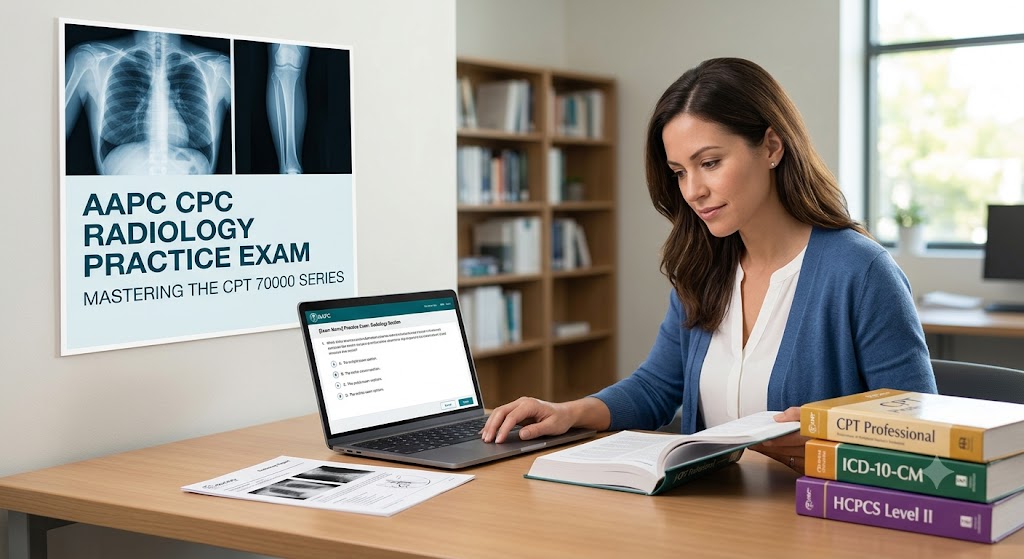
Additional Information
What the Course Entails and Exam Details
Preparing for the Radiology section of the CPC exam requires a robust understanding of both anatomy and procedural terminology. The core curriculum focuses heavily on the CPT® 70000 code series. Students must understand the intricacies of diagnostic imaging. This includes X-rays, CT scans, MRIs, and ultrasounds across all body systems. You will need to differentiate between the technical and professional components of services using specific modifiers. A significant focus is also placed on therapeutic and interventional radiology. You must understand the specific rules governing catheter placement and surgical procedures performed under imaging guidance. Additionally, students are expected to correctly identify and apply relevant ICD-10-CM diagnosis codes and HCPCS Level II supply codes associated with radiology procedures.
What to Expect in the Final Exam
When you sit for the actual AAPC CPC exam, you will encounter a rigorous 100-question, multiple-choice assessment. You are given exactly four hours to complete the test, which averages to about 2.4 minutes per question. The Radiology section typically comprises around six questions. These questions are scenario-based and require you to analyze a medical report to select the correct coding combination. While six questions may seem small, they can be complex and are essential for reaching the total passing score. The passing score required is 70%, which means answering at least 70 of the 100 questions correctly across all sections. The exam is open-book, requiring the use of current, AMA-approved CPT®, ICD-10-CM, and HCPCS Level II coding books.
How to Study and Exam Centers
The key to passing the CPC Radiology section is familiarity with your coding books and consistent practice. You should utilize timed mock exams to improve your speed and decision-making under pressure. When studying, focus on understanding the parenthetical notes and coding guidelines embedded throughout the CPT® book. Tabbing your books with relevant labels can significantly reduce search time during the actual exam. It is highly encouraged to invest in official study guides and practice exams from AAPC as they closely mirror the difficulty level of the actual test. When you are ready to take the exam, you have two primary options. You can schedule a physical testing session at various authorized physical centers located globally, which are often administered through partners like Meazure Learning or Pearson VUE. Alternatively, AAPC now offers a convenient online proctoring option, allowing you to take the exam from a quiet, secure location in your own home.
Job Opportunities from the Course
Earning your CPC certification immediately increases your employability and potential salary within the healthcare revenue cycle management field. While the CPC is a general physician-based credential, strong expertise in radiology coding can lead to niche roles in high-volume imaging centers. The certification unlocks diverse career paths including:
Medical Coder
Outpatient Radiology Coder
Certified Interventional Radiology Coder (with further specialization)
Coding Auditor
Revenue Cycle Specialist
Medical Billing Manager
Healthcare Compliance Officer
HIM (Health Information Management) Director
Frequently Asked Questions
Reviews
5.0
Based on 0 reviews
Leave a Review
No reviews yet. Be the first to review!