
Colorado Hunters Safety Practice Test
$69.00
- Buy to unlock unlimited access to all Quiz questions.
- After purchase you can print a PDF of the whole quiz at any point. The PDF will contain the questions and the correct answers.
About this Exam
The Colorado Hunters Safety Certification, administered by Colorado Parks and Wildlife (CPW), is a mandatory legal requirement for anyone born on or after January 1, 1949, who wishes to apply for or purchase a Colorado hunting license. The program is designed to create responsible, knowledgeable, and ethical hunters by providing foundational knowledge that reduces hunting-related accidents. It is intended for new hunters of all ages—including youth—as well as non-residents who must verify their safety training before participating in Colorado's premier hunting seasons for species like elk, deer, and bear.
Sample Questions
Explanation:
Explanation:
Explanation:
Explanation:
Explanation:
Ready to test your knowledge?
Buy Now to Access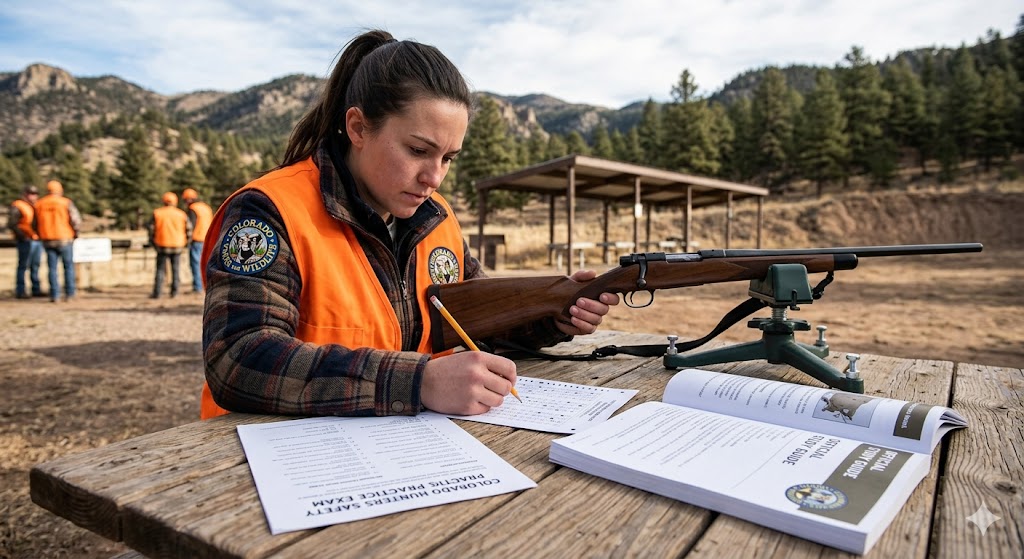
Additional Information
What the Course Entails and Exam Details
The hunter education course is comprehensive and covers a diverse range of subjects essential for modern hunters. Key pillars of the syllabus include strict protocols for firearm handling safety, basic muzzleloader safety, and bowhunting safety. Beyond mechanical safety, students dive deep into hunting ethics, wildlife management principles, conservation concepts, and precise wildlife identification techniques. You will also learn critical outdoor survival skills, water safety, and wilderness first aid. To accommodate different learning styles, CPW offers two primary methods to complete the requirements:
The Traditional Classroom Course requires at least 10 hours of in-person instruction, hands-on activities, a live-fire exercise, and culminates in the final written exam.
The Hybrid Online Course allows you to complete the study portion online via an approved vendor, followed by a mandatory in-person "Conclusion Class" that includes a summary lecture, the live-fire handling exercise, and the final written exam.
What to Expect in the Final Exam
The final exam is designed to verify that you possess the necessary knowledge to hunt safely in the field. It is not designed to be trick you, but rather to ensure competency. The exam consists of approximately 50 to 60 multiple-choice and true/false questions. Topics are evenly weighted across the syllabus, with significant focus on firearm safety rules and Colorado specific laws. A minimum passing score of 80% is typically required on the written test. In addition to the written portion, all students must successfully demonstrate safe firearm handling skills during the live-fire practical exercise, where an instructor will assess your ability to properly load, carry, and fire a rifle under supervision. You must pass both components to receive your certification card. The final in-person exam is usually not timed, but the entire process (including the live-fire) takes several hours.
How to Study and Exam Centers
The best way to prepare is to take a Colorado Hunters Safety Practice Test multiple times. These practice exams are essential for familiarizing yourself with the wording of CPW questions and identifying areas where your knowledge may be lacking, particularly in wildlife identification and regulation nuances. You should also thoroughly review the official Hunter Education Manual provided during your course. Practice safe firearm handling techniques at home with an unloaded, proven-safe firearm, ensuring you always keep the muzzle pointed in a safe direction.
Regarding test locations:
If you are taking the Traditional or Hybrid (Conclusion) courses, these are held at designated physical locations throughout Colorado. Authorized testing centers include CPW regional offices, community centers, gun clubs, sporting goods retailers like Cabela’s or Bass Pro Shops, and some community colleges. You must register for these classes in advance through the official CPW website using the "Register-Ed" portal. The final exam for these courses is administered in-person by certified volunteer instructors or CPW staff. You cannot take the final exam purely online; the field day and written test must be completed in person.
Job Opportunities from the Course
While the primary function of this certification is to permit recreational hunting, the knowledge acquired is a valuable foundational credential for several career paths within the outdoor industry. This certification demonstrates to employers that you have formal training in safety protocols, wildlife identification, and state regulations.
Career paths this certification unlocks include:
Certified Hunter Education Instructor (often a volunteer position that can lead to paid educational roles).
Hunting Guide or Outfitter Assistant (requires further specialized licensing).
Outdoor Recreation Leader or Camp Counselor (focusing on shooting sports or survival skills).
Sporting Goods Sales Specialist (particularly within the hunting, firearms, or optics departments).
Park Ranger or Wildlife Technician (at a foundational level, showing early commitment to conservation safety).
Frequently Asked Questions
Reviews
5.0
Based on 0 reviews
Leave a Review
No reviews yet. Be the first to review!