
CNA Practice Exam 2025 (Test -3) Questions Answers
$69.00
- Buy to unlock unlimited access to all Quiz questions.
- After purchase you can print a PDF of the whole quiz at any point. The PDF will contain the questions and the correct answers.
About this Exam
Certified Nursing Assistants (CNAs) are the heart of patient care, providing essential daily support and compassion.
This practice exam is specifically designed to help you prepare for your critical journey into the rewarding field of healthcare.
Whether you're just starting your CNA course or looking to ace your final certification, consistent practice is key.
This resource provides a comprehensive review of fundamental skills and knowledge, ensuring you approach test day with confidence.
Sample Questions
Explanation:
Explanation:
Explanation:
Explanation:
Explanation:
Ready to test your knowledge?
Buy Now to Access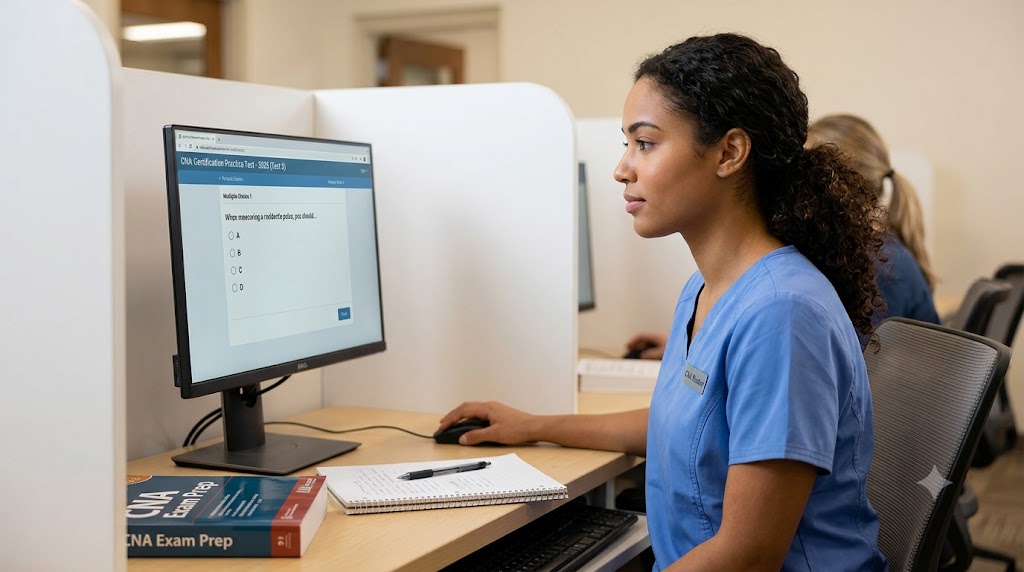
Additional Information
What the Course Entails and Exam Details
Your CNA course and ultimately the certification exam cover a foundational breadth of practical skills and theoretical understanding necessary for safe and effective care.
Core topics include basic nursing procedures like taking vital signs, personal care and grooming, positioning and mobility techniques, and comprehensive patient hygiene practices.
You will also master essential safety and emergency responses, infection control principles, and understanding patient rights and ethical practices.
This thorough grounding ensures you can confidently meet the diverse needs of residents and patients, from communication skills to basic restorative care and supporting cognitive changes.
What to Expect in the Final Exam
The CNA certification exam is typically a two-part process, assessing both your theoretical knowledge and your practical application of essential skills.
The knowledge portion is generally a multiple-choice test, often computer-based, covering topics from your training including basic care, communication, safety, and rights.
For the skills assessment, you will be required to successfully perform a designated number of random clinical skills (e.g., handwashing, changing bed linens with a patient, assisting with a bedpan) in front of an evaluator.
While exact formats, passing scores, and time limits differ by state and testing body, a passing grade is necessary for both components to receive certification.
Be prepared for potentially 60-90 minutes for the knowledge section and a focused, hands-on skills session.
How to Study and Exam Centers
Effective study strategies combine a deep understanding of core concepts with consistent practice.
Make the most of comprehensive resources like this CNA Practice Exam to reinforce learning and identify knowledge gaps early.
Regularly review your course materials, textbook, and reliable online guides to master foundational principles.
Equally crucial is dedicated time for hands-on practice; simulate clinical skills repeatedly with classmates or even willing volunteers to build proficiency and confidence for the practical exam.
Regarding exam locations, certifications are often administered through dedicated testing services like Pearson VUE or Prometric, or sometimes directly through state-approved test sites and training facilities.
Always verify the specific, authorized testing centers and scheduling processes with your training provider or state regulatory agency, and check if online proctored options are available for the written section in your area.
Job Opportunities from the Course
Upon successfully achieving your CNA certification, a fulfilling and stable career path opens up with numerous opportunities.
You can immediately explore diverse roles such as:
Certified Nursing Assistant (CNA)
Nursing Assistant
Home Health Aide
Patient Care Technician (PCT)
Geriatric Nursing Assistant (GNA) (in specific states)
Orderly or Hospital Attendant
You can find employment in various healthcare settings, including hospitals, long-term care facilities and nursing homes, assisted living communities, and providing personalized care in private homes.
Frequently Asked Questions
Reviews
5.0
Based on 0 reviews
Leave a Review
No reviews yet. Be the first to review!