
CLT Verbal Reasoning Practice Test 3 – Philosophy/Religion
$69.00
- Buy to unlock unlimited access to all Quiz questions.
- After purchase you can print a PDF of the whole quiz at any point. The PDF will contain the questions and the correct answers.
About this Exam
The CLT (Classic Learning Test) Verbal Reasoning section evaluates a student's ability to analyze and evaluate complex texts, drawing from the rich tradition of liberal arts. This specific practice test focuses on passages centered around philosophy and religion, challenging students to engage with foundational ideas and arguments that have shaped Western thought. It is designed for high school students preparing for the CLT as part of their college application process, particularly those aiming for institutions that value a classical or liberal arts education.
Ready to test your knowledge?
Buy Now to Access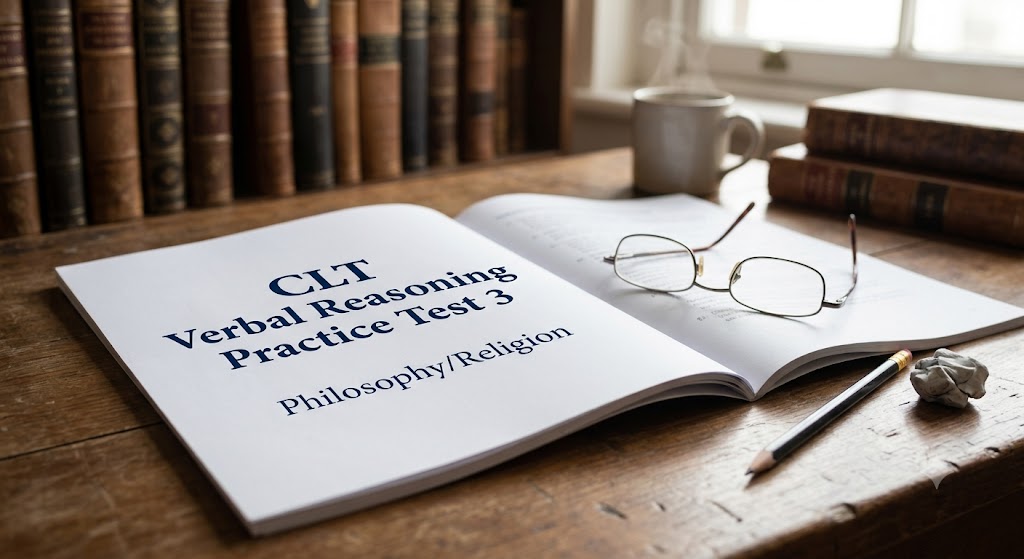
Additional Information
What the Course Entails and Exam Details
This practice material is designed to hone the specific critical reading and analytical skills required for the Philosophy/Religion passages on the CLT. While not a formal course, engagement with this material entails rigorous practice in understanding sophisticated vocabulary, identifying main arguments, analyzing tone and nuance, and evaluating evidence within historical and philosophical contexts. The content is drawn from influential texts spanning ancient philosophy, theological treatises, and influential religious works.
What to Expect in the Final Exam
On the actual CLT, the Verbal Reasoning section consists of multiple-choice questions based on several reading passages. The passages in the Philosophy/Religion category are typically dense and intellectually demanding. You will need to answer questions that test your comprehension, ability to draw inferences, and capacity to analyze the structure and logic of the arguments presented. The exam is strictly timed, requiring students to read efficiently and think critically under pressure.
How to Study and Exam Centers
Effective preparation for this section requires consistent practice with complex texts. Students should read widely in classic philosophy and religious literature to familiarize themselves with the style, vocabulary, and common themes. Taking timed practice tests, like this one, is crucial for building stamina and improving pacing. When taking practice tests, focus on understanding why correct answers are right and why distractors are wrong.
The actual CLT is primarily an online exam. Students typically take the test on their own laptops, which must meet certain technical requirements, and are proctored remotely. The CLT can be taken at authorized schools or testing centers, but the online, home-proctored option is the most common format. You must register for a specific test date in advance through the official CLT website.
Job Opportunities from the Course
While the CLT itself is a college entrance exam and does not directly confer a job qualification, achieving a strong score demonstrates the advanced critical thinking and communication skills highly valued in many professional fields. Success on the CLT can facilitate entry into competitive liberal arts colleges, which in turn opens doors to diverse career paths.
Some potential career fields for students with strong backgrounds in verbal reasoning and classical education include:
Law
Education (Teaching, Administration)
Journalism and Communications
Public Policy and Administration
Writing and Editing
Religious Leadership or Ministry
Non-Profit Management
Academic Research
Frequently Asked Questions
Reviews
5.0
Based on 0 reviews
Leave a Review
No reviews yet. Be the first to review!