
CLT Verbal Reasoning Practice Test 1 – Literature
$69.00
- Buy to unlock unlimited access to all Quiz questions.
- After purchase you can print a PDF of the whole quiz at any point. The PDF will contain the questions and the correct answers.
About this Exam
The Classical Learning Test (CLT) is a college entrance exam that provides a modern and comprehensive alternative to traditional options like the SAT or ACT. It was developed to serve students from classical, Christian, and homeschooling academic traditions. The test focuses heavily on the Great Books of the Western tradition, aiming to connect students with the rich historical and philosophical foundations of their education.
This particular resource is a comprehensive practice test specifically for the Verbal Reasoning section of the CLT, with a focus on literature. It is designed to help high school students who are preparing for college admissions. By simulating the types of questions and text complexitiess they will encounter on the real CLT, it aims to build confidence and hone critical thinking skills. It is an ideal tool for familiarizing oneself with the exam's unique structure and content.
Ready to test your knowledge?
Buy Now to Access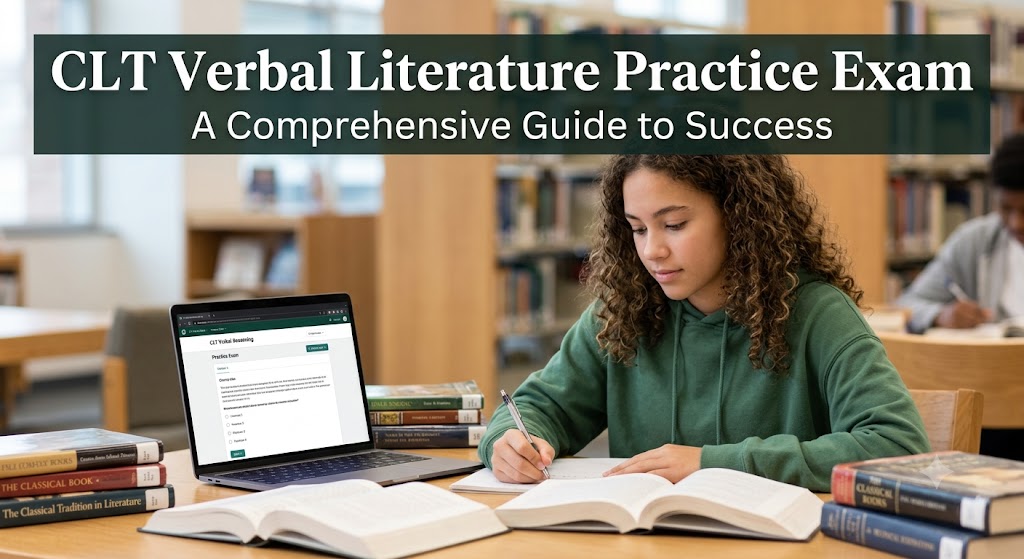
Additional Information
What the Course Entails and Exam Details
The core purpose of this practice test is to evaluate your ability to interpret and analyze sophisticated literary passages. You will encounter excerpts from significant works of fiction, poetry, and drama that have shaped Western thought. The course (or practice test, in this context) aims to test your proficiency in identifying core themes, understanding authorial tone, analyzing characters, and evaluating stylistic choices. It challenges you to draw accurate conclusions based on the provided texts.
The actual CLT exam details for the Verbal Reasoning section typically include approximately 40 passage-based multiple-choice questions. Students generally have about 40 minutes to complete this specific section. The questions are designed to test not only factual comprehension but also deeper interpretive and analytical skills. The exam is structured in a way that assesses reading comprehension and critical reasoning through an integrated approach.
What to Expect in the Final Exam
When taking the actual CLT, you can expect the Verbal Reasoning section to be entirely multiple-choice. The passages are drawn from the Western canon, requiring a level of careful reading and analysis that goes beyond just summarizing information. Unlike some exams, there is no set passing score. Instead, your performance generates a scaled score that colleges use in their admissions process.
The CLT is often administered digitally. It can be taken through authorized schools, certain testing centers, or even via rigorous online proctoring. Time management is crucial, as you will have strict time limits for each section. Preparing with this practice test will help you familiarize yourself with the structure, length, and types of complex texts you will face on test day.
How to Study and Exam Centers
Effective study strategies involve more than just practice questions. We recommend reading widely across the Great Books and classics. Immersing yourself in historical philosophy, literature, and the texts of Western civilization is the best way to become accustomed to the language and ideas you'll encounter. Practice active reading by identifying themes, structures, and arguments in everything you study.
For taking the actual CLT, you typically register through authorized classical or Christian schools. Many homeschooling networks also facilitate testing. CLT also offers online proctoring options for individual test-takers who may not be close to an authorized testing center. Make sure to check the official CLT website for the most current information regarding upcoming test dates and locations. Focus your preparation on both understanding the content and improving your reading speed.
Job Opportunities from the Course
Preparing for and excelling on college entrance exams like the CLT is a critical step for high school students aiming for a strong college education. While the practice test itself does not lead to a specific job title, the classical education and strong verbal reasoning skills the CLT measures are valuable assets in the professional world. A good score can lead to admission to top universities and potential scholarship opportunities. These foundations are crucial for success in the following career paths:
Editor
Copywriter
Legislative Assistant
Librarian
Teacher (K-12 or higher education)
Technical Writer
Journalist
PR Specialist
Researcher
Paralegal
Historian
Frequently Asked Questions
Reviews
5.0
Based on 0 reviews
Leave a Review
No reviews yet. Be the first to review!