
CLT Grammar/Writing Practice Test 1 on Philosophy/Religion
$69.00
- Buy to unlock unlimited access to all Quiz questions.
- After purchase you can print a PDF of the whole quiz at any point. The PDF will contain the questions and the correct answers.
About this Exam
This is an excellent opportunity for students to prepare for the specific challenges of the CLT (Classic Learning Test) Grammar & Writing section with a focus on philosophy and religion. Our CLT Philosophy & Writing Practice Exam is designed for high school students or anyone intending to take the CLT and wishing to sharpen their analysis and composition skills using profound historical texts. This practice test helps you refine your critical thinking and communication abilities, preparing you for the academic rigors you will encounter in higher education and for excellence in the reading and writing portions of the actual CLT. Whether you are aiming for top scores on the overall exam or specifically want to focus on humanities content, this practice exam is a valuable tool for your preparation. It provides a realistic test simulation, allowing you to gauge your readiness and identify areas for improvement.
Ready to test your knowledge?
Buy Now to Access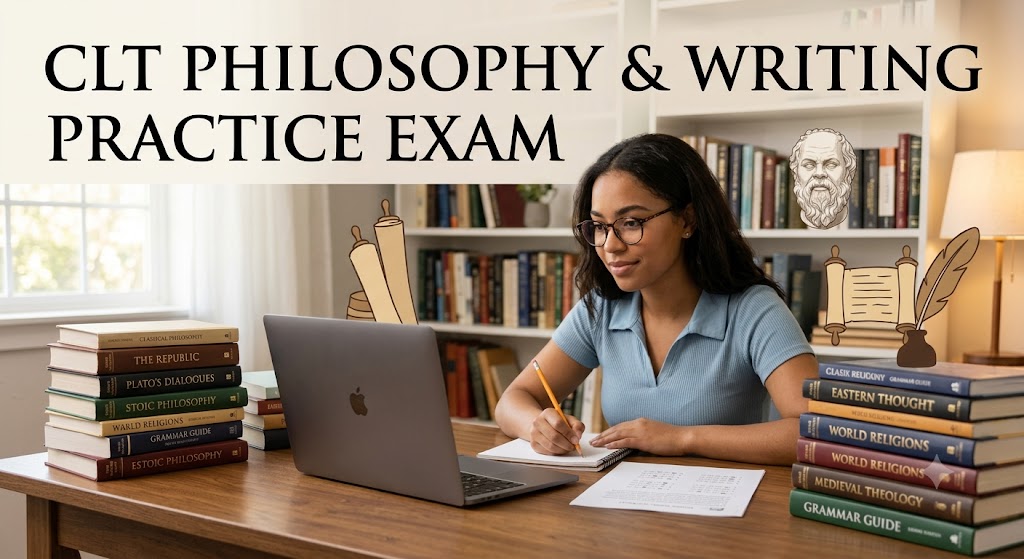
Additional Information
What the Course Entails and Exam Details
This specific practice test, rooted in the values of a classical liberal arts education, focuses intensely on the critical mechanics and stylistic elements of standard English grammar and effective writing. By engaging with passages and questions centered around philosophical arguments, ethical dilemmas, and diverse religious concepts, you will hone your ability to dissect complex sentences, understand subtle usage conventions, and enhance overall coherence and impact in written communication. Key skills and areas covered within this practice framework include sentence structure analysis, verb tense agreement, proper pronoun usage, punctuation mastery (commas, semicolons, dashes), and the application of rhetorical devices for greater clarity and persuasiveness.
What to Expect in the Final Exam
While this is a practice test focused on specific themes, understanding the overall structure of the official CLT Grammar/Writing section is crucial for comprehensive preparation. The final CLT exam features multiple-choice questions throughout, including the Grammar/Writing section. You won't find practical writing components here, but rather precise questions evaluating your proofreading and editing abilities on a variety of texts. The overall CLT has specific time limits for each section, designed to challenge your pacing and critical thinking under pressure. A strong performance in this section, alongside the others, contributes to your overall composite score, which colleges then utilize for admissions, placement, and potential scholarship consideration. There isn't typically a single "passing score" in the traditional sense, but higher scores significantly enhance your prospects. Understanding these factors and practicing under timed conditions is essential.
How to Study and Exam Centers
Maximizing your success on both this practice test and the actual CLT requires a dedicated study strategy. Beyond completing practice exams like this one, it is vital to review fundamental grammar rules systematically. Utilize reputable study guides, online writing resources, and classic texts to build your reading comprehension and analytical writing abilities. Consider forming study groups to discuss complex grammatical concepts and critique each other's writing. The actual CLT is primarily administered online, offering flexibility and accessibility. Students can register and take the test from the comfort of their homes or approved testing locations through secure online portals. Some classical schools and educational centers may also serve as authorized physical testing sites. Always check the official CLT website for the most up-to-date information on exam scheduling, registration procedures, and available test center options, ensuring you are well-prepared for test day.
Job Opportunities from the Course
While completing this specific practice test doesn't directly confer job opportunities, performing well on the actual CLT can open doors to numerous exciting career paths. A high score signifies strong critical thinking, analytical, and written communication skills – attributes highly sought after across diverse professional fields. Here are just a few specific job titles and career paths where these foundational abilities are invaluable:
Copywriter
Editor
Journalist
Content Strategist
Public Relations Specialist
Teacher (especially English or Humanities)
Policy Analyst
Communications Manager
Frequently Asked Questions
Reviews
5.0
Based on 0 reviews
Leave a Review
No reviews yet. Be the first to review!