
Civic Literacy Exam Section 4 Practice Test
$69.00
- Buy to unlock unlimited access to all Quiz questions.
- After purchase you can print a PDF of the whole quiz at any point. The PDF will contain the questions and the correct answers.
About this Exam
The Civic Literacy Exam is a fundamental assessment designed to ensure students and aspiring citizens possess the critical knowledge required to participate effectively in a democratic society. It serves as a graduation requirement for many academic pathways, particularly within state college and university systems, validating a candidate's competency in the principles and history of the American government. The exam is engineered for students seeking diplomas, individuals preparing for naturalization, and anyone aiming to demonstrate they understand the rights and responsibilities that underpin the United States government.
Ready to test your knowledge?
Buy Now to Access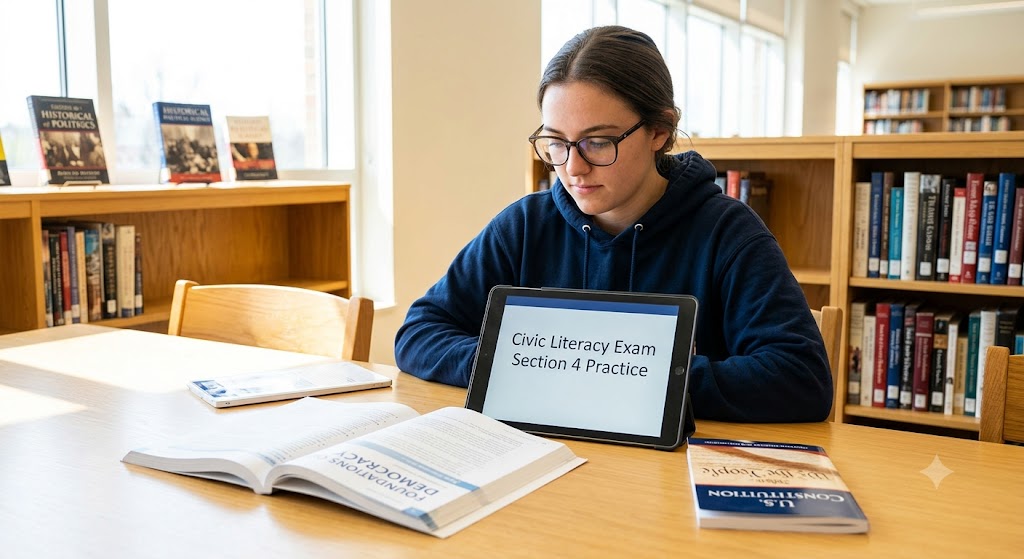
Additional Information
What the Course Entails and Exam Details
A comprehensive preparation course for the Civic Literacy Exam ensures candidates master four foundational domains of civic knowledge. First, you will build a solid understanding of the basic principles of American democracy and how they are applied in a republican form of government. Second, you will rigorously study the United States Constitution, its articles, and its amendments, focusing on how these concepts structure federal power. Third, the course instills knowledge of founding documents, such as the Declaration of Independence and The Federalist Papers, analyzing how they shaped the nation's self-governance institutions. Finally, you must demonstrate an understanding of landmark Supreme Court cases, significant legislation, and executive actions that have had a lasting impact on law and society. Section 4 specifically emphasizes this critical integrative knowledge, testing your ability to connect foundational documents to contemporary legal and societal frameworks.
What to Expect in the Final Exam
The final Civic Literacy Exam typically follows a strict multiple-choice format, designed to assess both factual recall and critical application of civic concepts. The assessment often consists of approximately 80 questions, though this can vary slightly by jurisdiction, requiring a standardized passing score, often set at 60% correct answers. Candidates are generally allotted 90 minutes to complete the exam, which provides sufficient time for careful consideration of each scenario. The examination is computer-based and administered in a controlled, proctored setting to ensure the integrity of the results, strictly prohibiting the use of outside notes or digital resources.
How to Study and Exam Centers
Effective study for Section 4 requires a strategic approach that moves beyond mere memorization to active analysis. You should begin by reviewing summary guides of the 100 typical citizenship questions and standard academic civics benchmarks, emphasizing the analysis of the US Constitution's structure and major Supreme Court decisions. Taking regular practice tests is essential, as these diagnostics help identify specific areas where your knowledge needs reinforcement before the final test day. The final exam is taken at authorized centers, which can range from specific testing offices within your university or college to third-party proctoring facilities such as Pearson VUE, or via authorized online portals using secure browser technology, depending on your state’s academic policies.
Job Opportunities from the Course
A strong grasp of civic literacy is a valued asset in a wide array of career paths within the public and non-profit sectors. While this exam is primarily an academic hurdle or part of the naturalization process, the knowledge it validates is highly beneficial for roles focused on policy, law, and community service. Graduates and citizens who possess this certified understanding are better equipped for professional opportunities including: Paralegal, Legislative Assistant, Community Outreach Coordinator, Policy Analyst, Non-profit Program Director, Government Administrator, History or Government Educator, and various positions within State and Local Government.
Frequently Asked Questions
Reviews
5.0
Based on 0 reviews
Leave a Review
No reviews yet. Be the first to review!