
Civic Literacy Exam Section 1 Practice Test
$69.00
- Buy to unlock unlimited access to all Quiz questions.
- After purchase you can print a PDF of the whole quiz at any point. The PDF will contain the questions and the correct answers.
About this Exam
The Civic Literacy Exam is a pivotal assessment designed to measure a student’s understanding of the fundamental principles, processes, and history of the United States government and its civic institutions.
This exam is primarily intended for high school or college students to demonstrate their readiness for responsible citizenship and to fulfill specific graduation requirements in many regions.
It evaluates critical knowledge necessary for active and informed participation in a democratic society.
Ready to test your knowledge?
Buy Now to Access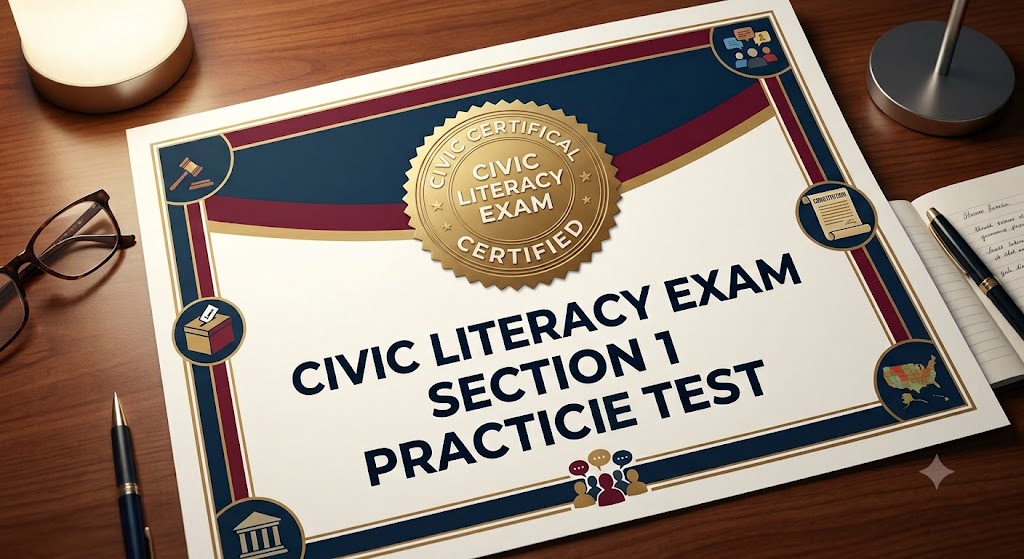
Additional Information
What the Course Entails and Exam Details
To prepare for the exam, students are required to either complete a designated course or achieve a passing score on the assessment, although many educational paths involve both.
The comprehensive assessment framework is generally organized around four key competencies that every citizen should understand.
These core areas include: understanding the basic principles and practices of American democracy and their application in our republican form of government; a functional understanding of the United States Constitution and its various applications; substantial knowledge of the Founding Documents and how they have shaped the nature and function of our institutions of self-government; and a deep understanding of landmark Supreme Court cases, legislation, and executive actions that have significantly impacted law and society.
A thorough course of study will cover these concepts, moving beyond simple definitions to focus on interpretive and analytical skills.
What to Expect in the Final Exam
The final Civic Literacy Exam is typically a computerized assessment consisting of approximately 80 multiple-choice questions.
You will need to demonstrate your competency under strict time constraints, usually having about two hours to complete the entire exam.
To achieve a passing score, you generally must answer around 60% of the questions correctly, which usually equates to answering at least 48 out of 80 questions accurately.
The testing environment is proctored, and specific rules apply, such as the prohibition of personal items, including cell phones and large bags, within the testing center, and the requirement of valid identification.
How to Study and Exam Centers
Effective preparation is the key to success on the Civic Literacy Exam, and students have access to a wealth of free and official resources.
A highly recommended strategy is to practice applying your civic knowledge by taking official practice tests, including sample items provided by the Department of Education, which familiarize you with the computerized platform and question style.
Additionally, we strongly encourage you to review foundational documents and specialized study guides, including official study materials from state-level departments of education, institutional library guides, and even flashcards designed for the U.S. Naturalization Test.
When you are ready to test, you will usually register through your authorized institution's testing portal to take the exam at specific physical testing centers located on college or university campuses.
While most students test in person, some institutions may offer remote proctoring options under very specific qualifying circumstances, such as permanent residence outside the state or deployment.
Job Opportunities from the Course
Fulfilling the civic literacy competency requirement unlocks a variety of valuable career paths by proving you have the analytical and legal understanding necessary for roles that interface with law, policy, and public service.
This certification is particularly beneficial for students aiming for the following professional roles:
Paralegal: Helping lawyers prepare for hearings, trials, and corporate meetings through extensive legal research.
Legislative Assistant: Supporting elected officials by tracking legislation, managing constituent communications, and drafting policy proposals.
Public Policy Analyst: Evaluating the effectiveness of government programs and proposing solutions to societal challenges.
Civics or Government Educator: Inspiring the next generation by teaching foundational American government at the secondary level.
Development & Communications Coordinator: Managing organizational strategy and outreach for governmental agencies or non-profit organizations focused on civic engagement.
Program Manager (Public Sector/NGO): Planning, defining, and supervising projects that deliver value to communities through policy implementation.
Frequently Asked Questions
Reviews
5.0
Based on 0 reviews
Leave a Review
No reviews yet. Be the first to review!