
CII Certificate in Insurance - Motor Insurance Products
$69.00
- Buy to unlock unlimited access to all Quiz questions.
- After purchase you can print a PDF of the whole quiz at any point. The PDF will contain the questions and the correct answers.
About this Exam
The CII Certificate in Insurance - Motor Insurance Products
(IF5) is a specialized qualification designed to provide a comprehensive
understanding of the primary principles and practices associated with motor
insurance in the United Kingdom. This certificate is ideal for professionals
currently working in the insurance industry who wish to deepen their knowledge
of motor policies, or for newcomers seeking a foundational understanding of
this specific product area. The exam validates an individual's comprehension of
legal requirements, policy coverage, underwriting, and claims processes within
the motor insurance sector.
Sample Questions
Explanation:
Explanation:
Explanation:
Explanation:
Explanation:
Ready to test your knowledge?
Buy Now to Access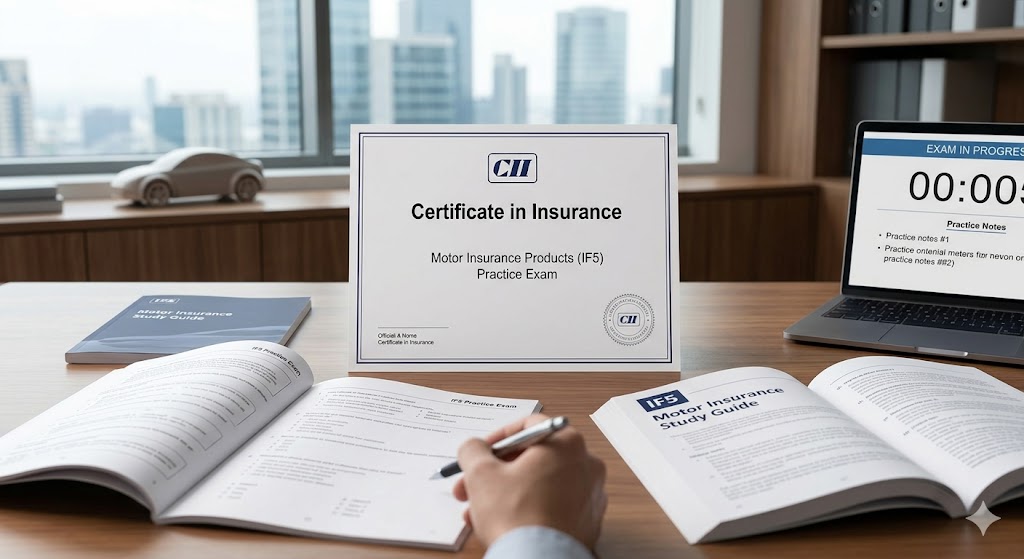
Additional Information
What the Course Entails and Exam Details
This unit focuses on developing a thorough understanding of
the principles and practices of motor insurance. Key areas covered include:
- The
legal and regulatory framework governing motor insurance, including the
Road Traffic Acts.
- The
different types of motor insurance policies available for private cars,
commercial vehicles, and other specialist areas.
- The
scope of coverage and common exclusions within motor insurance contracts.
- The
fundamental elements of motor insurance underwriting, including risk
assessment and premium calculation.
- The
principles of claims handling, management, and standard dispute resolution
procedures.
- The
role of the Motor Insurers' Bureau (MIB) and handling claims involving
uninsured or untraced drivers.
What to Expect in the Final Exam
The IF5 exam consists of a 90-minute multiple-choice paper.
There are 50 standard multiple-choice questions, and the passing score is
approximately 70%. The exam is designed to test knowledge and application, with
questions covering all learning outcomes of the IF5 syllabus. It is a
closed-book exam, and no reference materials are permitted during the session.
How to Study and Exam Centers
Effective preparation for the IF5 exam combines theoretical
study with practical application. Begin by thoroughly reviewing the CII's
official IF5 study text. We recommend creating a structured study plan that
breaks down the syllabus into manageable sections. Supplement your learning
with interactive study materials, such as online revision courses, and practice
questions to reinforce key concepts. Utilizing practice exams is crucial for
familiarizing yourself with the multiple-choice format, identifying areas for
improvement, and building your confidence. Consider forming study groups or
engaging in online forums to discuss complex topics with peers.
The CII offers flexible options for sitting the exam.
Candidates can take the exam at a physical assessment center managed by the
CII's testing partner, Pearson VUE, which has locations throughout the UK and
internationally. Alternatively, the exam can be completed via remote
invigilation, allowing you to take the test securely from your home or
workplace computer. Both options require advance booking.
Job Opportunities from the Course
Upon successfully completing the IF5 unit and achieving the
Certificate in Insurance, you unlock various career paths in the general
insurance sector. This qualification is highly regarded by employers and
demonstrates specialist knowledge in motor insurance. Example job titles and
career paths include:
- Motor
Insurance Underwriting Assistant: Reviewing and processing
applications for motor policies.
- Motor
Claims Handler: Managing end-to-end claims for policyholders following
vehicle incidents.
- Junior
Broker - Motor Specialist: Advising clients on suitable motor
insurance coverage.
- Customer
Service Advisor (Insurance): Specializing in policy inquiries and
support for motor products.
- Operations
Associate: Supporting the backend processes of insurance companies
focused on motor lines.
Frequently Asked Questions
Reviews
5.0
Based on 0 reviews
Leave a Review
No reviews yet. Be the first to review!