
CHSE Odisha Higher Secondary MIL Exam Prep | India
$69.00
- Buy to unlock unlimited access to all Quiz questions.
- After purchase you can print a PDF of the whole quiz at any point. The PDF will contain the questions and the correct answers.
About this Exam
The CHSE Odisha Higher Secondary MIL (Modern Indian Language) Exam is a compulsory subject examination for students pursuing their Higher Secondary Education (+2) under the Council of Higher Secondary Education, Odisha. This examination is designed to assess students' proficiency, understanding, and application of their chosen Modern Indian Language, such as Odia, Hindi, Bengali, Telugu, Urdu, or Alternative English (for specific candidates). It is a vital component of the +2 curriculum across all streams (Arts, Science, and Commerce) in Odisha.
Ready to test your knowledge?
Buy Now to Access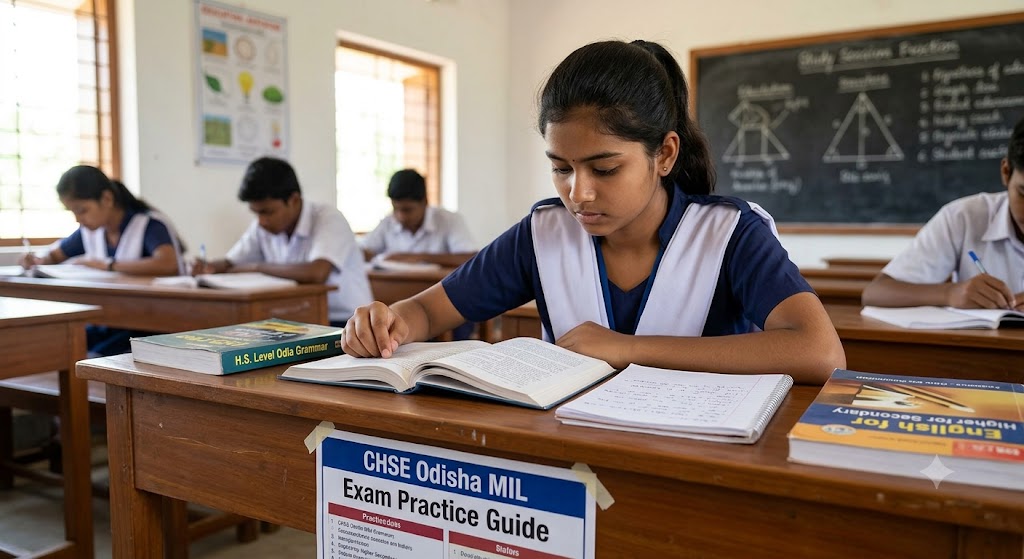
Additional Information
What the Course Entails and Exam Details
The MIL course focuses on comprehensive language development. The syllabus includes:
Prose: Detailed study of prescribed prose pieces, focusing on themes, style, and comprehension.
Poetry: Analysis of selected poems, including understanding poetic devices, central themes, and critical appreciation.
Non-Detailed Study: Extensive reading of additional literary texts for broader exposure to the language and its cultural context.
Grammar: Essential grammar concepts specific to the chosen language (e.g., syntax, tense, voice, vocabulary, idioms).
Creative Writing/Composition: Development of writing skills, including essay writing, letter writing, précis writing, and report writing.
The exact syllabus and distribution of marks vary depending on the specific language chosen by the student.
What to Expect in the Final Exam
The CHSE Odisha MIL Exam is a traditional written, pen-and-paper examination. Here are the typical details:
Format: The question paper consists primarily of subjective questions, including long-answer questions, short-answer questions, and very short-answer questions.
Maximum Marks: The exam usually carries a total of 100 marks.
Time Limit: Students are typically allotted 3 hours to complete the examination.
Question Types: Questions will test understanding of prescribed texts (prose and poetry), ability to write creatively, understanding of grammatical rules, and skills in comprehension and translation (where applicable).
Passing Marks: Students must achieve the minimum passing marks as prescribed by CHSE Odisha (usually 33%) to clear the MIL subject.
How to Study and Exam Centers
Preparation for the MIL exam requires a balance of understanding literature and mastering language skills. Effective strategies include:
Thorough Reading of Textbooks: Prioritize reading the prescribed textbooks for prose, poetry, and non-detailed study repeatedly. Pay attention to meanings of difficult words and summaries of chapters.
Practice Writing: Regularly practice writing essays, letters, and answers to previous years' question papers. This helps improve writing speed, clarity, and articulation.
Solve Model Papers: Practice with CHSE Odisha MIL model question papers to understand the exam pattern, mark distribution, and types of questions asked.
Focus on Grammar: Dedicate specific study time to master the grammar concepts included in the syllabus. Practice exercises to reinforce learning.
Time Management: During practice sessions, time yourself while answering questions to simulate exam conditions.
Exam Centers: The CHSE Odisha Higher Secondary examinations, including the MIL paper, are conducted annually. Students appear for these examinations at designated examination centers assigned by the Council. These centers are typically located in government or affiliated schools and junior colleges across the state. Students receive their admit cards, which specify their allocated exam center and timetable, through their respective institutions.
Job Opportunities from the Course
A strong performance in the Higher Secondary MIL exam, reflecting proficiency in a regional language, opens several pathways:
Higher Education: Essential for pursuing undergraduate degrees (BA, BSc, BCom) in any discipline within Odisha, and particularly beneficial for students aiming for specializations in languages or literature.
State Government Jobs: Proficiency in the state language (Odia) is often a requirement or a significant advantage for various recruitment exams conducted by the Odisha Public Service Commission (OPSC) and other state government bodies (e.g., administrative services, police services).
Teaching Careers: Ideal for students aspiring to become language teachers in schools and colleges, especially after pursuing higher qualifications like B.Ed. or post-graduation in the language.
Media and Journalism: Vital for careers in regional language media, including newspapers, news channels, and digital content creation in Odia or other MILs.
Translation Services: Opportunities exist for translating documents, books, and content between English and the respective Modern Indian Language.
Frequently Asked Questions
Reviews
5.0
Based on 0 reviews
Leave a Review
No reviews yet. Be the first to review!