
CCRN Exam 80 Questions Answers Quiz
$69.00
- Buy to unlock unlimited access to all Quiz questions.
- After purchase you can print a PDF of the whole quiz at any point. The PDF will contain the questions and the correct answers.
About this Exam
The Critical Care Registered Nurse (CCRN®) certification is a prominent credential for acute and critical care nurses. This specialized certification validates your knowledge and clinical expertise in caring for acutely and critically ill adult patients. It is designed specifically for registered nurses (RNs) who work in environments such as intensive care units (ICUs), cardiac care units, trauma units, or critical care transport. Earning your CCRN certification demonstrates a commitment to excellence and ensures you possess the advanced skills necessary to provide high-quality care in high-acuity settings.
Ready to test your knowledge?
Buy Now to Access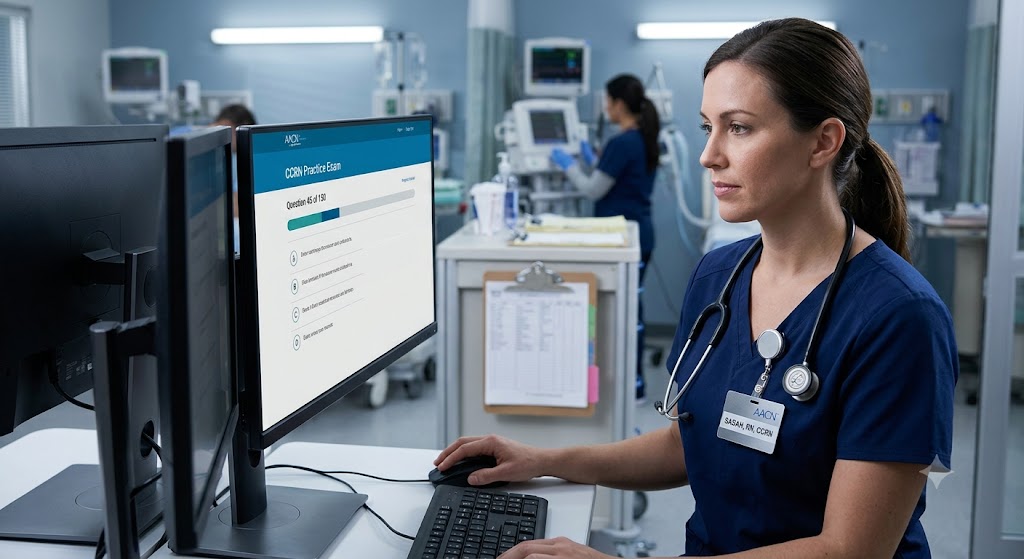
Additional Information
What the Course Entails and Exam Details
The CCRN certification process focuses on a comprehensive understanding of critical care nursing principles rather than a formal preparatory course. The exam content is based on a test blueprint that outlines the essential knowledge and skills required for practice. The majority of the exam (approximately 80%) focuses on Clinical Judgment, covering various body systems and multi-system conditions common in critically ill adults, such as cardiovascular, pulmonary, endocrine, hematology, immunology, neurology, gastrointestinal, renal, and behavioral health. The remaining 20% of the exam addresses Professional Caring and Ethical Practice, focusing on advocacy, moral agency, caring practices, response to diversity, facilitation of learning, and systems thinking.
What to Expect in the Final Exam
The CCRN exam is a computer-based test consisting of 150 multiple-choice questions. It is important to note that only 125 of these questions are scored; the remaining 25 are pretest questions used for future exam development and do not affect your final score. Candidates are given three hours to complete the examination. The passing score is determined by a criterion-referenced method, and results are typically provided immediately upon completion. The exam is closed-book, and no reference materials or outside assistance are permitted during the testing session.
How to Study and Exam Centers
Effective preparation is key to success on the CCRN exam. Start by thoroughly reviewing the official AACN CCRN Test Plan to understand the specific topics and weightings. Dedicate significant time to answering practice questions and rationales, which helps reinforce knowledge and improves test-taking strategies. Utilize study guides, textbooks specific to critical care nursing, and online review courses. Creating a consistent study schedule and focusing on areas where you feel less confident can be very beneficial. Group study or finding a mentor who is already CCRN certified can also provide valuable support. The CCRN exam is administered year-round at computerized testing centers globally, including locations managed by Prometric and Pearson VUE. Candidates must schedule their exam appointment in advance after receiving eligibility confirmation from the AACN.
Job Opportunities from the Course
Achieving CCRN certification can significantly enhance your career opportunities in the acute and critical care nursing field. This credential is highly respected by employers and often leads to increased responsibilities, recognition, and potential salary increases. Specific job titles and career paths this certification unlocks or enhances include:
Critical Care Registered Nurse (ICU/CCU/Trauma)
ICU Charge Nurse
Clinical Nurse Specialist (CNS) in Critical Care
Critical Care Nurse Educator
Flight Nurse / Transport Nurse
Nurse Manager or Director of Critical Care Units
Research Nurse in Acute Care Settings
Enhanced opportunities for travel nursing assignments in high-acuity units.
Frequently Asked Questions
Reviews
5.0
Based on 0 reviews
Leave a Review
No reviews yet. Be the first to review!