
California CDL General Knowledge Practice Test 4
$69.00
- Buy to unlock unlimited access to all Quiz questions.
- After purchase you can print a PDF of the whole quiz at any point. The PDF will contain the questions and the correct answers.
About this Exam
The California Commercial Driver’s License (CDL) General Knowledge Practice Test 4 is a crucial step for aspiring commercial drivers in California. This practice exam is designed to help students prepare for the official CDL General Knowledge written test administered by the California DMV. It covers the essential safe driving information required for all commercial vehicle operators, regardless of the vehicle class or endorsements they plan to obtain. By taking this practice test, candidates can assess their understanding of key concepts, identify areas where they need further study, and gain the confidence needed to pass the actual exam on their first attempt.
Ready to test your knowledge?
Buy Now to Access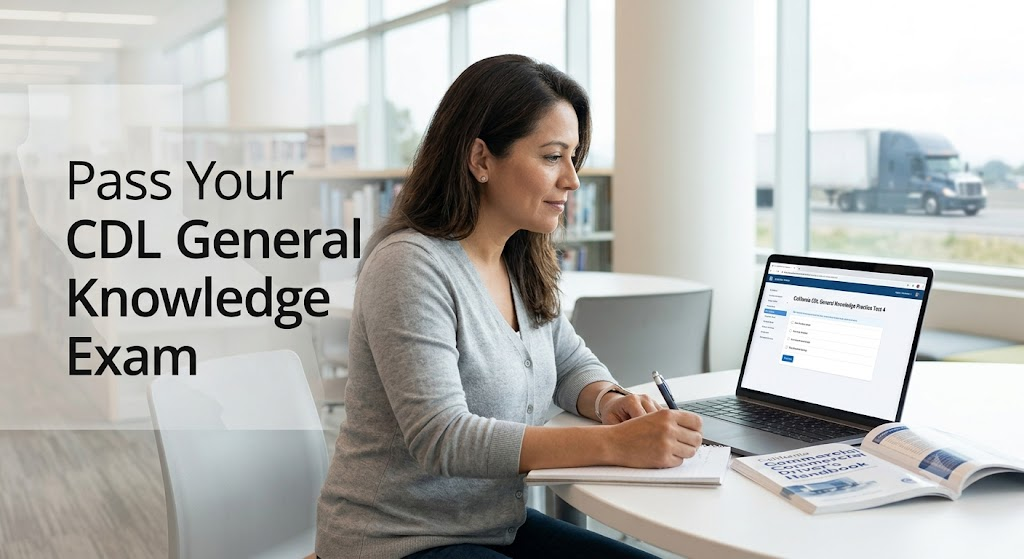
Additional Information
What the Course Entails and Exam Details
This practice exam is not a taught course but rather a tool to reinforce learning from the official California Commercial Driver Handbook. The core topics, which mirror those in the official General Knowledge exam, include:
Vehicle Inspection: Procedures for conducting pre-trip, en-route, and post-trip vehicle inspections to ensure safety.
Basic Control of Your Vehicle: Skills related to shifting gears, braking, and managing speed.
Seeing Hazards: Understanding how to identify potential dangers on the road and react appropriately.
Communicating: Proper use of signals, horns, and other communication devices to interact safely with other drivers.
Controlling Speed: Factors affecting speed control, including road conditions, visibility, and traffic flow.
Managing Space: Maintaining safe following distances and managing space around the vehicle.
Driving in Night and Inclement Weather: Techniques for driving safely in low light and various weather conditions.
Hazardous Materials: Basic understanding of regulations and procedures for transporting hazardous materials.
Emergency Procedures: How to respond to emergencies, including fires, tire blowouts, and accidents.
Shifting Gears: Techniques for proper shifting, including double clutching and engine speed management.
The practice test typically consists of multiple-choice questions designed to simulate the format and difficulty of the official California DMV exam.
What to Expect in the Final Exam
When you take the actual California CDL General Knowledge written test at a DMV office, here is what you can expect:
Format: The exam consists of approximately 50 multiple-choice questions.
Passing Score: A passing score of 80% is required, meaning you must answer at least 40 questions correctly.
Time Limit: There is no specific time limit for the written exam, allowing you to take the time needed to carefully read and answer each question.
Rules: The test is usually administered on a computer at the DMV office. You are generally not allowed to use reference materials, including the driver handbook, during the exam. Cell phones and other electronic devices must be turned off and put away.
How to Study and Exam Centers
How to Study:
Obtain and Read the California Commercial Driver Handbook: This is your primary resource. Read it thoroughly, paying close attention to the sections covered in the General Knowledge test.
Use Practice Tests: Regularly take practice tests like "California CDL General Knowledge Practice Test 4." This helps you assess your knowledge and become familiar with the types of questions asked. Focus on understanding why answers are correct, not just memorizing them.
Spaced Repetition: Spread out your study sessions over time. Revisit key concepts frequently to reinforce learning and improve long-term retention.
Use Visual Aids: Create flashcards or diagrams to help you remember vehicle inspection procedures, road signs, and other technical information.
Study with a Partner: Quiz each other on the material or explain concepts aloud to deepen your understanding.
Exam Centers:
You must take the official CDL General Knowledge written test in person at a California DMV office. Many DMV offices require you to make an appointment for the written test. You can find a list of DMV offices and their contact information on the official California DMV website. It’s advisable to book your appointment well in advance.
Job Opportunities from the Course
Successfully obtaining your California CDL, with the General Knowledge test as a foundational step, opens the door to a wide range of job opportunities in the transportation and logistics industry, including:
Heavy and Tractor-Trailer Truck Driver: Operating large trucks to transport goods over long distances.
Light or Delivery Services Truck Driver: Delivering goods locally or regionally, often involving multiple stops.
Bus Driver: Transporting passengers for public transit agencies, private charter companies, or schools.
Heavy Equipment Operator: Operating various construction and heavy machinery, which may require a CDL for transport.
Specialized Vehicle Operator: Driving vehicles like cement mixers, dump trucks, or garbage trucks, often with specific endorsements.
These roles offer various work schedules, pay scales, and opportunities for advancement, making a CDL a valuable asset in the job market.
Frequently Asked Questions
Reviews
5.0
Based on 0 reviews
Leave a Review
No reviews yet. Be the first to review!