
Caia Practice Test & Exam Prep
$69.00
- Buy to unlock unlimited access to all Quiz questions.
- After purchase you can print a PDF of the whole quiz at any point. The PDF will contain the questions and the correct answers.
About this Exam
Embark on your journey to becoming a Chartered Alternative Investment Analyst with our comprehensive CAIA Practice Exam study guide. The CAIA designation is the premier global distinction for professionals in the alternative investment industry, demonstrating a deep expertise in non-traditional asset classes. This rigorous certification is designed for ambitious financial analysts, portfolio managers, consultants, and other investment professionals seeking to differentiate themselves and broaden their career horizons. Earning the CAIA charter signals unmatched knowledge and commitment to the field. Our guide is tailored to help you navigate your preparation, leveraging the power of structured study and practice exams to master the challenging curriculum and achieve success on exam day.
Ready to test your knowledge?
Buy Now to Access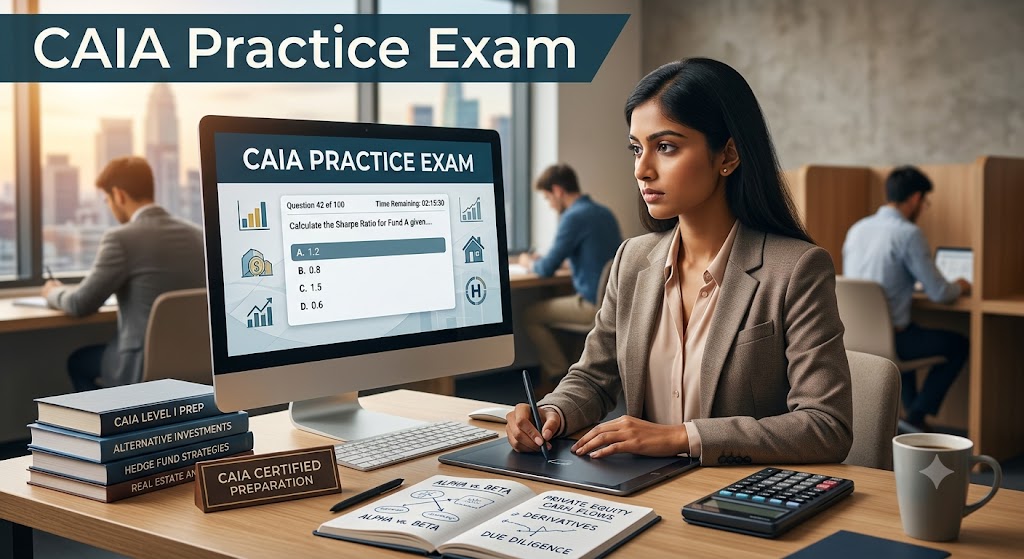
Additional Information
What the Course Entails and Exam Details
Preparing for the CAIA certification typically involves
dedication to a self-study program or enrollment in structured prep courses,
covering a vast range of alternative investment topics across two demanding
levels. Level I builds a solid foundation, introducing core concepts, including
various alternative asset classes like hedge funds, private equity, real
estate, and structured products. Candidates dive into the characteristics,
strategies, and risk-return profiles of each. Level II then progresses to advanced
analysis, application, and asset allocation, challenging candidates with
complex scenarios and portfolio management principles.
The curriculum demands mastery of sophisticated financial
concepts, regulatory environments, and ethical standards specific to the
alternative investment realm. Practice tests and mock exams, which mirror the
complexity and structure of the actual tests, are invaluable tools. They allow
you to apply theoretical knowledge to practical situations, refining your
critical thinking and reinforcing your understanding of the diverse and dynamic
world of alternative investments. Each level requires significant dedicated
study time, often hundreds of hours, to achieve proficiency across all domains.
What to Expect in
the Final Exam
The actual CAIA exams (Levels I and II) are computer-based
and known for their rigor and comprehensive nature. Level I generally consists
of multiple-choice questions, testing your breadth and depth of knowledge
across the entire Level I curriculum. Candidates can expect a substantial
number of questions, often around 200, split into two distinct sessions (e.g.,
two 2-hour sessions with a scheduled break in between). You'll need to
demonstrate your ability to recall concepts quickly and apply analytical skills
under time pressure.
Level II builds upon Level I and may incorporate a mix of
multiple-choice questions and constructed response (or case study-based)
questions. This format assesses your capability to synthesize information and
provide detailed, well-reasoned analyses. Both levels place a significant
emphasis on ethics and professional conduct, integrated throughout the
questions. Specific question counts, session durations, and exact formats can
vary by level and from year to year, so it's crucial to consult official CAIA
resources for the most up-to-date details for your specific exam window. CAIA
does not typically publish a set passing score percentage; instead, results are
determined based on a scaled score methodology, meaning you'll need to
demonstrate proficiency relative to a set standard, not just achieve a
particular numerical grade. Ensure you are familiar with all exam rules,
identification requirements, and testing environment protocols well before your
exam date.
How to Study and Exam Centers
Preparation is paramount for the challenging CAIA exams.
Start by establishing a structured study plan early, allocating ample time for
comprehensive curriculum review and intensive practice. Utilize the official
CAIA curriculum materials as your primary resource, and consider supplementing
your learning with reputable third-party study guides and prep courses, which
often provide simplified explanations and additional practice questions.
Crucially, integrate frequent and rigorous practice exams
into your study routine. Attempt full-length, timed mock exams under simulated
test conditions. This approach will help you:
- Build
Stamina and Focus: Accustom yourself to the length and concentration
required on exam day.
- Manage
Time Effectively: Practice pacing yourself to complete all sections
within the allotted time.
- Identify
Knowledge Gaps: Analyze your practice results to pinpoint weak areas
and focus your remaining study time strategically.
- Refine
Exam Technique: Get comfortable with question formats and learn how to
navigate the computerized testing interface efficiently.
Be sure to thoroughly review both your correct and incorrect
answers, understanding the rationale behind each choice to deepen your
understanding. Consistent practice with relevant, high-quality test materials
is a key differentiator for successful candidates.
CAIA exams are typically administered globally through
secure computer-based testing centers, often in partnership with major test
delivery providers like Pearson VUE. Candidates must register and schedule
their exam appointments well in advance within specified testing windows, which
are usually offered twice a year, typically in March and September. Check the
CAIA Association website for current testing window dates, available center
locations worldwide, and instructions on how to register and schedule your
specific exam level.
Job Opportunities
from the Course
Earning the CAIA designation opens doors to numerous
prestigious and rewarding career paths within the rapidly growing alternative
investment sector. The certification is highly valued by top global employers,
and charterholders are sought after for roles such as:
- Alternative
Investment Analyst
- Portfolio
Manager (specializing in hedge funds, private equity, real estate, etc.)
- Risk
Manager (focused on alternative asset classes)
- Alternative
Investments Consultant
- Due
Diligence Professional
- Product
Specialist/Manager for alternative products
- Wealth
Manager (advising high-net-worth clients on alternatives)
- Operations
or Compliance role within alternative investment firms
- Academic
or Researcher specializing in alternative investing
- Investment
Banker focused on alternative asset transactions
This comprehensive guide and dedicated preparation,
utilizing practice exams to their full potential, will position you well to
join the elite group of CAIA charterholders and unlock significant career
advancement opportunities in the dynamic world of alternative investments. Stay
focused, practice diligently, and you can achieve your goal!
Frequently Asked Questions
Reviews
5.0
Based on 0 reviews
Leave a Review
No reviews yet. Be the first to review!