
CAA Ir Practice Test & Exam Prep | New Zealand
$69.00
- Buy to unlock unlimited access to all Quiz questions.
- After purchase you can print a PDF of the whole quiz at any point. The PDF will contain the questions and the correct answers.
About this Exam
The New Zealand Civil Aviation Authority (CAA) Instrument Rating (IR) is a crucial qualification for pilots seeking to advance their careers and fly in a wider range of weather conditions. This rating authorizes a pilot to operate an aircraft under Instrument Flight Rules (IFR), meaning they can rely primarily on the aircraft's instruments for navigation and control when visibility is poor, such as in clouds or at night. This certification is essential for aspiring commercial pilots and those aiming to fly for airlines or charter organizations.
Ready to test your knowledge?
Buy Now to Access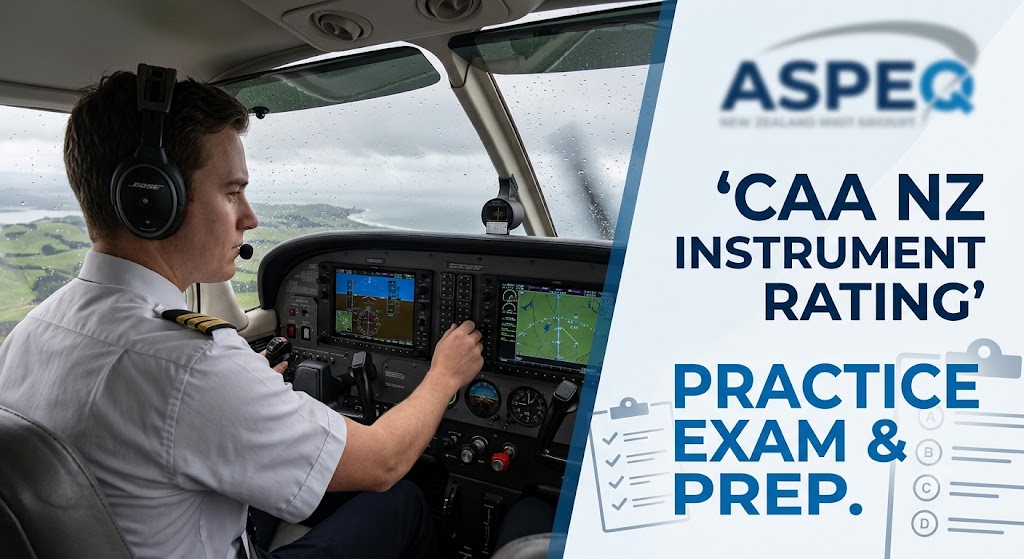
Additional Information
What the Course Entails and Exam Details
To obtain your NZ CAA Instrument Rating, you must demonstrate proficiency in theoretical knowledge through a rigorous written examination. The course of study typically covers several key subjects, including:
Air Law: Regulations and procedures specifically pertaining to IFR operations in New Zealand airspace.
Meteorology: Advanced interpretation of weather reports, forecasts, and understanding weather phenomena relevant to instrument flight.
Navigation: IFR navigation techniques using various radio navigation aids (VOR, NDB, ILS, GPS) and instrument approach procedures.
Aircraft Technical Knowledge: Detailed understanding of flight instruments, their operation, limitations, and malfunctions.
Human Factors: Physiological and psychological aspects of instrument flying, including spatial disorientation and decision-making.
The written exam itself is a computer-based, multiple-choice assessment designed to test your comprehensive understanding of these topics. It ensures that you have the knowledge base necessary to safely make decisions and operate an aircraft in complex IFR environments.
What to Expect in the Final Exam
The NZ CAA IR theory exam is known for being challenging and thorough. Here are the key details you should expect:
Format: The exam consists entirely of multiple-choice questions administered via a computer system.
Passing Score: To pass, you must achieve a minimum score of 70%.
Time Limit: You will be given a specific time limit to complete the exam, which requires efficient time management and a solid grasp of the material.
Rules: Strict examination protocols are in place, and you may be required to bring specific materials like a flight computer (E6B) and navigation plotters, as permitted by the CAA.
It's crucial to remember that passing this theoretical exam is just one step; you must also successfully complete a practical flight test with a CAA examiner to be fully rated.
How to Study and Exam Centers
Preparing for the IR theory exam requires dedicated study and a structured approach. Effective strategies include:
Official CAA Documents: Thoroughly study the relevant NZ CAA Advisory Circulars (ACs), particularly those in the Part 61 series which detail the syllabi.
Approved Training Organizations (ATOs): Enroll in a ground school course offered by a certified flight training school. Their expert instructors provide structured learning and valuable insights.
Practice Exams: Utilize reputable online practice exam platforms. These are invaluable for familiarizing yourself with the question style, identifying weak areas, and practicing time management.
Study Groups: Collaborating with fellow pilot students can enhance understanding and provide mutual support.
The official exams are booked and sat through authorized aviation examination providers in New Zealand, such as ASL (Aviation Services Limited). They have various testing centers conveniently located across the country.
Job Opportunities from the Course
Earning your Instrument Rating significantly broadens your career horizons within the aviation industry. It is a mandatory requirement for almost all professional piloting roles beyond basic flight instruction. Here are some of the exciting career paths this certification unlocks:
Commercial Airline Pilot: A fundamental requirement for flying for regional or international airlines.
Charter Pilot: Conducting charter flights, often required in all-weather conditions.
Corporate/Business Aviation Pilot: Flying private jets for corporations or individuals.
Flight Instructor (with IR): Teaching IFR procedures to the next generation of pilots.
Aerial Work Pilot: Specialized operations like crop dusting, photography, or surveillance that may require IFR capability.
Air Ambulance/Medevac Pilot: Conducting vital medical transport missions.
Frequently Asked Questions
Reviews
5.0
Based on 0 reviews
Leave a Review
No reviews yet. Be the first to review!