
BLS Pretest Chapter 5 BLS for Infants (0 to 12 months)
$69.00
- Buy to unlock unlimited access to all Quiz questions.
- After purchase you can print a PDF of the whole quiz at any point. The PDF will contain the questions and the correct answers.
About this Exam
Basic Life Support (BLS) for infants is a critical certification designed to provide healthcare professionals, first responders, and sometimes specialized caregivers with the essential skills to respond effectively to cardiac arrest or life-threatening breathing emergencies involving infants (aged 0 to 12 months).
The infant BLS module (often covered in Chapter 5 of comprehensive BLS courses) focuses specifically on the unique anatomy and physiological needs of infants, which differ significantly from adults and older children.
This certification is essential for pediatric nurses, emergency medical technicians, daycare providers, neonatal specialists, and individuals working in settings where infant care is paramount.
By mastering infant BLS, you gain the confidence and competence required to act decisively in high-pressure situations, potentially making a life-saving difference for a vulnerable patient.
Ready to test your knowledge?
Buy Now to Access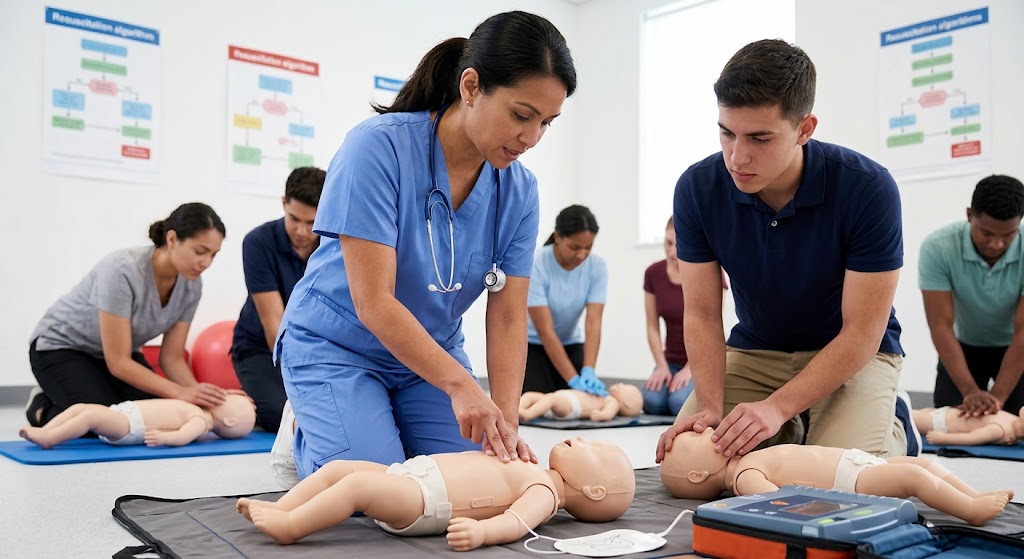
Additional Information
What the Course Entails and Exam Details
The infant BLS curriculum is concise but intensive, emphasizing the sequence of care tailored for the youngest patients.
Core topics covered in this specialized module typically include:
Recognizing signs of cardiac arrest and respiratory distress in infants (e.g., lack of breathing, no pulse, poor color).
Performing high-quality chest compressions using the appropriate infant techniques, such as the two-finger method or the two-thumb-encircling hands method.
Maintaining the proper compression depth (approximately 1.5 inches or 4 cm) and compression rate (100-120 compressions per minute).
Delivering effective rescue breaths (ventilations) while maintaining a proper seal over the infant’s nose and mouth.
Mastering the 1-rescuer and 2-rescuer sequences for infant CPR, including the specific compression-to-ventilation ratios (usually 30:2 or 15:2).
Correct utilization of an Automated External Defibrillator (AED) on an infant, including pad placement and energy levels (using pediatric pads or attenuator if available).
Techniques for relieving choking (foreign-body airway obstruction) in responsive and unresponsive infants.
What to Expect in the Final Exam
The final BLS certification exam typically combines two components to evaluate your comprehensive knowledge and practical competence:
Written/Cognitive Exam
This portion consists of multiple-choice questions designed to test your understanding of critical concepts, procedures, and algorithms specific to infant BLS.
Topics covered include identifying the correct steps in the CPR sequence, recognizing specific anatomical landmarks for compressions, knowing when and how to use an AED, and distinguishing between procedures for infants and adults.
A passing score of at least 84% (or equivalent) is typically required on the written portion.
Practical Skills Evaluation (Skill Station)
The practical skills assessment is a mandatory, in-person evaluation where you must demonstrate hands-on proficiency in front of an authorized instructor.
Candidates are required to perform various skills on an infant-specific CPR manikin, which simulates realistic feedback.
Skills evaluated include performing a correct cycle of infant CPR (including checking response, calling for help, compressions, and rescue breaths) within the specified timeframe, demonstrating proper choking relief techniques, and operating an AED.
Successful completion of the skills station is essential and is often graded on a pass/fail basis.
How to Study and Exam Centers
Effective preparation is key to passing both the written and practical portions of the infant BLS exam.
Effective Study Methods
The primary resource for study is the official BLS Provider Manual issued by accredited organizations (such as the American Heart Association or the American Red Cross). Thoroughly read the specific chapter on infant BLS multiple times.
Utilize practice pretests, quizzes, and flashcards focusing specifically on infant procedures and statistics (like compression rates and depths).
Review instructional videos and flowcharts that visually detail the exact sequence of actions for various emergency scenarios involving infants.
If possible, attend optional practice sessions or use available training manikins to rehearse the correct hand placement, compression force, and ventilation techniques before the actual exam.
Exam Centers
The official certification and associated exams are administered exclusively through authorized training centers affiliated with accredited organizations.
You can find authorized training centers through the websites of the American Heart Association (AHA), the American Red Cross, or similar national health organizations.
These exams are conducted in professional settings such as hospitals, community colleges, dedicated medical training facilities, and emergency medical services (EMS) training hubs. While some written exams might be available in an online, proctored format, the practical skills evaluation MUST be completed in person.
Job Opportunities from the Course
A valid Infant BLS Certification is a critical prerequisite or a highly valued asset for numerous specialized careers across the healthcare, educational, and childcare sectors.
Specific job opportunities unlocked or advanced by this certification include:
Pediatric Nurse
Daycare Provider
Childcare Worker
Emergency Medical Technician (EMT) / Paramedic
Neonatal Intensive Care Unit (NICU) Nurse
Nanny or Specialized Babysitter
Swim Instructor (specializing in infant/toddler classes)
Pediatric Dental Assistant
Medical Assistant in a pediatrician’s office
Early Childhood Educator
Home Health Aide (specializing in infant care)
Labor and Delivery Nurse
Respiratory Therapist (specializing in pediatric/neonatal care)
Hospice Worker (focused on pediatric care)
Fetal and Neonatal Care Specialist
The completion of this course and exam ensures you are equipped with the specialized, life-saving knowledge and physical skills necessary to respond to infant emergencies, opening doors to dedicated and impactful career paths.
Frequently Asked Questions
Reviews
5.0
Based on 0 reviews
Leave a Review
No reviews yet. Be the first to review!