
BLS Pretest Chapter 1: General Concepts of Basic Life Support
$69.00
- Buy to unlock unlimited access to all Quiz questions.
- After purchase you can print a PDF of the whole quiz at any point. The PDF will contain the questions and the correct answers.
About this Exam
Basic Life Support (BLS) certification is a crucial skill for healthcare professionals and many public-facing roles. It equips individuals with the fundamental knowledge and techniques needed to respond effectively in life-threatening emergencies, such as cardiac arrest, respiratory failure, or choking. This certification demonstrates a commitment to patient safety and a readiness to act under pressure. The BLS course is designed for doctors, nurses, paramedics, and other first responders. However, many schools, sports coaches, and even workplace safety officers find this training indispensable for their responsibilities.
Ready to test your knowledge?
Buy Now to Access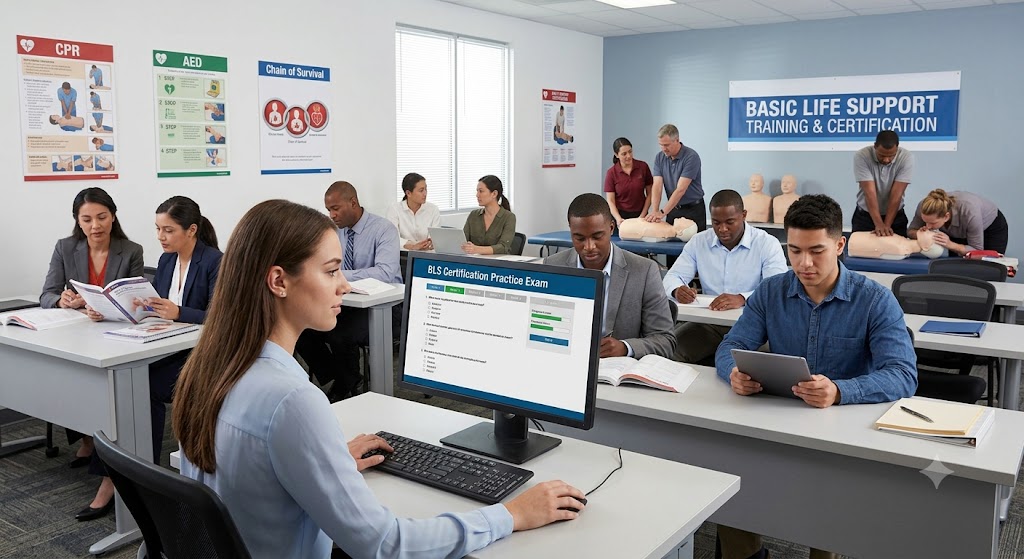
Additional Information
What the Course Entails and Exam Details
The comprehensive BLS course typically follows the guidelines set forth by major resuscitation councils, most notably the American Heart Association (AHA). It covers dynamic concepts including high-quality chest compressions, effective rescue breathing, and the proper use of an Automated External Defibrillator (AED) for adults, children, and infants. Students also learn how to relieve choking victims across all age groups. In "Chapter 1: General Concepts," you will focus on understanding the overarching principles of resuscitation. This includes recognizing early signs of medical distress, the crucial chain of survival concept, and the importance of immediate, high-quality CPR before professional medical help arrives.
What to Expect in the Final Exam
The official BLS final exam consists of a written multiple-choice component and a practical skill evaluation. The written exam assesses your theoretical knowledge through questions about the correct sequence of actions, techniques for different patient types, and relevant medical protocols. You can expect to answer around 25 to 50 questions, depending on the specific certifying body. The final score needed to pass is generally 84% or higher. For the practical part, you must successfully demonstrate key skills like performing effective chest compressions and rescue breathing, following the provided instructions and safety guidelines. The written test has a time limit, often between 45 and 60 minutes.
How to Study and Exam Centers
To best prepare for the BLS pretest and the subsequent final exam, students are encouraged to use various practice methods. Dedicating quality study time to reviewing the latest guidelines in your textbook or online course materials is foundational. Utilize practice tests and quizzes to familiarize yourself with typical question formats and improve your retention of key concepts. Engaging in hands-on practice, if possible, helps reinforce practical skills. Many training providers, including the American Heart Association and the Red Cross, offer authorized online portals for taking BLS pretests and finding local courses. Authorized schools, community colleges, and testing centers with modern simulation labs are standard locations for completing the practical assessment and final certification exam.
Job Opportunities from the Course
Securing a BLS certification opens numerous career paths in healthcare and public safety. Specific job titles that require or value this essential skill include:
Registered Nurse (RN)
Licensed Practical Nurse (LPN/LVN)
Emergency Medical Technician (EMT)
Paramedic
Physical Therapist
Physician
Respiratory Therapist
Dental Hygienist
CNA (Certified Nursing Assistant)
First Responder (Police Officer, Firefighter)
Public Safety Officer
School Nurse
Sports Coach or Athletic Trainer
Swim Instructor or Lifeguard
Workplace Safety Coordinator
Frequently Asked Questions
Reviews
5.0
Based on 0 reviews
Leave a Review
No reviews yet. Be the first to review!