
BLS Precourse Self Assessment Questions Answers
$69.00
- Buy to unlock unlimited access to all Quiz questions.
- After purchase you can print a PDF of the whole quiz at any point. The PDF will contain the questions and the correct answers.
About this Exam
Basic Life Support (BLS) is a fundamental level of medical care used in emergencies before full medical support can be provided. This critical certification is essential for healthcare professionals – such as nurses, EMTs, physicians, and firefighters – and often required for lifeguards, school personnel, and childcare providers. Mastering these skills is not just about passing a test; it is about confidently possessing the ability to save a life when every second counts. This comprehensive guide, 'BLS Practice Exam,' is designed to be your essential study companion, offering detailed insights into what you need to know and how to prepare effectively, empowering you to approach your certification with confidence. With dedication and practice, you can succeed and make a significant impact in critical situations.
Ready to test your knowledge?
Buy Now to Access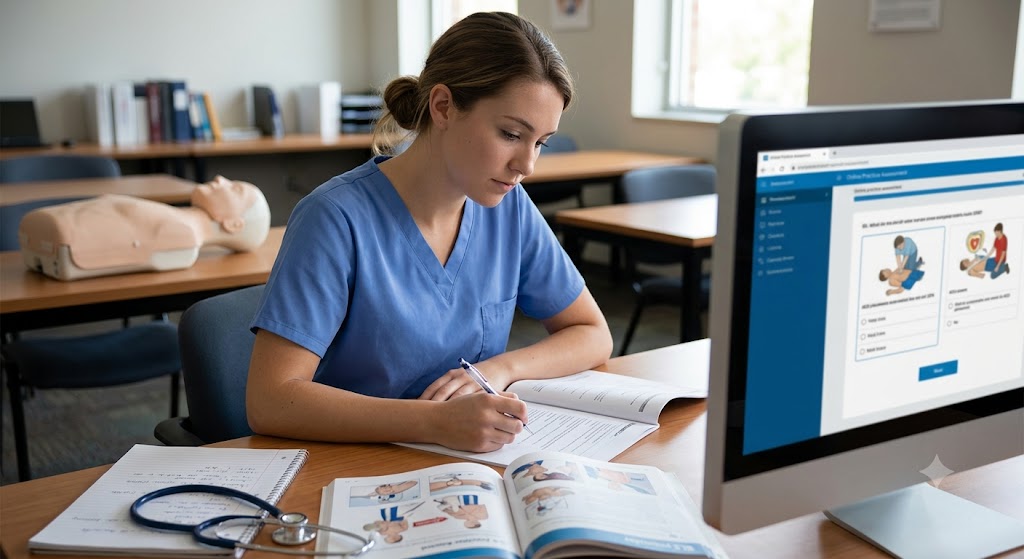
Additional Information
What the Course Entails and Exam Details
BLS courses, typically offered by accredited organizations like the American Heart Association (AHA) or Red Cross, focus on high-quality cardiopulmonary resuscitation (CPR) and choking relief. The curriculum comprehensively covers essential topics, including:
High-quality CPR for adults, children, and infants.
Relief of foreign-body airway obstruction (choking).
Proper and safe use of an Automated External Defibrillator (AED).
Bag-valve mask (BVM) ventilation techniques.
Recognizing signs of dynamic cardiac arrest or respiratory distress.
Effective single-rescuer and team-based resuscitation methods. Understanding the difference between assessments is crucial: The BLS Precourse Self-Assessment is a diagnostic tool, often taken online. It is non-proctored and multiple-choice, focusing on identifying your strengths and weaknesses to help you target your study efforts. It is not graded for your final certification but is vital for preparation. The official final exam, however, is a two-part evaluation that you must pass to earn your certification.
What to Expect in the Final Exam
The final BLS provider exam is the critical step to earning your official certification. Prepare yourself for two distinct components that must both be successfully completed:Written Exam: You will encounter a timed, multiple-choice exam, often consisting of around 25 questions covering key BLS concepts, protocols, and best practices. Depending on the specific training center and guidelines, this portion may be open or closed book. Passing scores are typically set around 84%, requiring a good understanding of all core topics.Practical Skills Test: Equally important, you will need to physically demonstrate your proficiency in essential practical skills. This involves correctly performing high-quality, continuous CPR on manikins for adult, child, and infant scenarios; accurately and safely setting up and using an AED; and demonstrating proper technique with a bag-valve mask. Examiners will look for precision in compression depth and rate, effective ventilations, seamless transitions, and strict adherence to standard precautions (e.g., using gloves, following safety protocols). Be ready to apply your knowledge calmly and accurately in simulated real-world scenarios.
How to Study and Exam Centers
Effective preparation is key to succeeding on your BLS exam. Implement these actionable study strategies:
Thoroughly study official provider manuals and coursework from accredited organizations. Ensure you are using the most current guidelines.
Take advantage of online self-assessments and practice tests, like the BLS Precourse Self-Assessment, and treat them as diagnostic tools to pinpoint areas needing focus.
Review key algorithms and steps for CPR, AED use, and choking relief consistently. Repetition aids recall.
Actively practice hands-on skills whenever possible. If you have access to a manikin and training equipment, practice the physical techniques repeatedly to build muscle memory and confidence. Seek practical practice opportunities during your course.
Work through scenarios, both individually and within a simulated team environment, thinking through critical decisions. Finding authorized training centers for your in-person course and official testing is straightforward: Look for accredited providers such as local hospitals, community colleges, healthcare companies, and dedicated safety training schools that are recognized by major organizations like the AHA or Red Cross. Their websites will list approved centers and scheduling options.
Job Opportunities from the Course
Earning your BLS certification is a critical step for a wide range of rewarding careers and can enhance your employability in many fields. Possessing these vital skills can unlock opportunities in diverse roles, including:
Registered Nurse (RN)
Licensed Practical Nurse (LPN/LVN)
Physician
Paramedic
Emergency Medical Technician (EMT)
Respiratory Therapist
Dental Assistant
Dental Hygienist
Firefighter
Police Officer
Lifeguard
Medical Assistant
Certified Nursing Assistant (CNA)
Healthcare Administrator (many require clinical understanding)
Hospital Patient Transporter
School Nurse
Specific childcare positions
Frequently Asked Questions
Reviews
5.0
Based on 0 reviews
Leave a Review
No reviews yet. Be the first to review!