
BGCSE Bsse Practice Test & Exam Prep | Botswana
$69.00
- Buy to unlock unlimited access to all Quiz questions.
- After purchase you can print a PDF of the whole quiz at any point. The PDF will contain the questions and the correct answers.
About this Exam
The Botswana General Certificate of Secondary Education (BGCSE) is the baseline qualification for students completing senior secondary education in Botswana. This crucial certification serves as a gateway, designed to assess the academic readiness of Form 5 students for tertiary education, technical training, or entry-level employment. It is the standardized yardstick used throughout the country to measure secondary school achievement across a wide array of academic and vocational subjects.
Ready to test your knowledge?
Buy Now to Access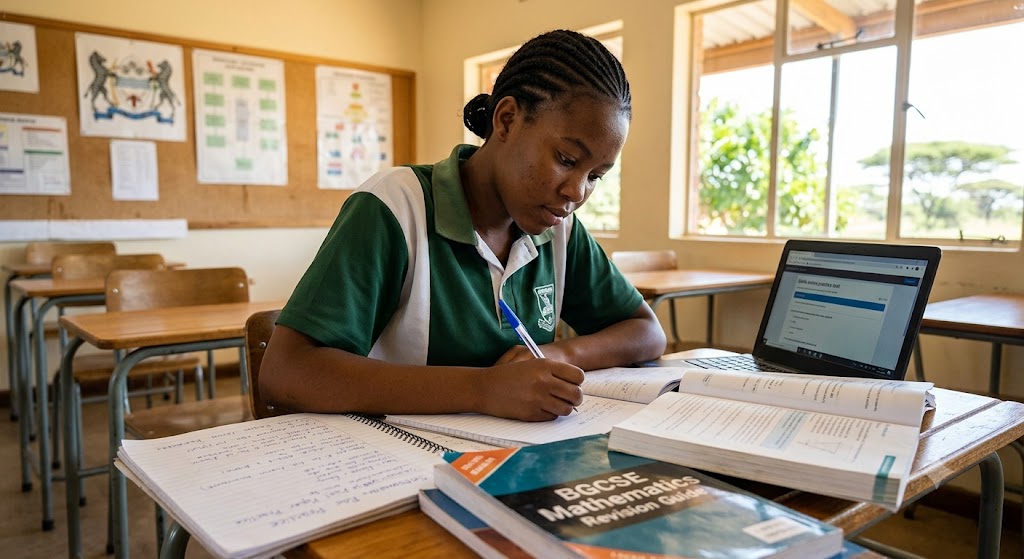
Additional Information
What the Course Entails and Exam Details
The BGCSE is not a single course, but a curriculum framework where students undertake several subjects over a two-year period (Form 4 and Form 5). The syllabus for each subject is rigorous and designed to cultivate analytical thinking, practical skills, and subject-specific knowledge. Candidates typically take a core group of compulsory subjects, including English Language and Setswana, alongside a selection of elective subjects chosen from categories such as Sciences (e.g., Physics, Chemistry, Biology), Humanities (e.g., Geography, History), and Vocational/Technical subjects (e.g., Business Studies, Art and Design, Computer Studies). The total number of subjects taken varies by student and school capability.
What to Expect in the Final Exam
The final BGCSE assessment is a comprehensive examination process administered annually, usually between October and November, by the Botswana Examinations Council (BEC). For most academic subjects, the assessment is not based on a single paper; instead, it consists of multiple components. Students must be prepared for a combination of assessment formats, including multiple-choice papers, structured written questions, essay-based papers, and coursework or practical assessments for scientific and technical subjects. Time limits vary depending on the specific paper and subject. The grading system uses an eight-point scale ranging from A* (highest) to G (lowest), with a 'U' grade denoting ungraded performance.
How to Study and Exam Centers
Effective preparation for the BGCSE requires a disciplined, multi-faceted approach. Students should prioritize understanding the core concepts outlined in the official BEC syllabus for each subject. Actionable strategies include creating a structured study timetable, active note-taking, and forming study groups for collaborative learning. However, the most critical strategy is practicing with past BGCSE examination papers; this familiarizes students with the exam format, question phrasing, and time management constraints. Candidates are also strongly encouraged to utilize practice tests and revision guides specifically tailored to the Botswana curriculum.
Regarding exam centers, BGCSE exams are taken in-person. Registered students sitting for the exams through their senior secondary schools will take the exams at their respective schools, which serve as officially designated centers. Private candidates must register through the Botswana Examinations Council (BEC) and will be assigned to specific, authorized private testing centers or government schools across Botswana.
Job Opportunities from the Course
While the primary pathway after BGCSE is furthering education, achieving a strong certificate opens immediate doors. It is often the minimum requirement for many entry-level positions in Botswana. Opportunities include:
Clerical and Administrative Assistant roles in the public and private sectors.
Retail Sales Associates and customer service positions.
Entry-level hospitality roles.
Enrolment into uniformed services (Police, Botswana Defence Force).
Admission into certificate and diploma-level vocational training programs (e.g., at technical colleges or brigades), leading to careers in trades like mechanics, electrical work, or cosmetology.
Frequently Asked Questions
Reviews
5.0
Based on 0 reviews
Leave a Review
No reviews yet. Be the first to review!