
Baden Wurttemberg Abitur Practice Test & Exam Prep | Germany
$69.00
- Buy to unlock unlimited access to all Quiz questions.
- After purchase you can print a PDF of the whole quiz at any point. The PDF will contain the questions and the correct answers.
About this Exam
The Abitur, often referred to as the Hochschulreife, is the culmination of secondary education in Germany. The state of Baden-Württemberg is known for setting particularly rigorous academic standards for this qualification. This examination is specifically designed for students finishing their upper secondary education (Gymnasium or equivalent vocational schools) and serves as the essential gateway for university admission in Germany and recognition abroad. Achieving the Abitur signifies a high level of academic proficiency and preparedness for tertiary education or advanced vocational paths.
Ready to test your knowledge?
Buy Now to Access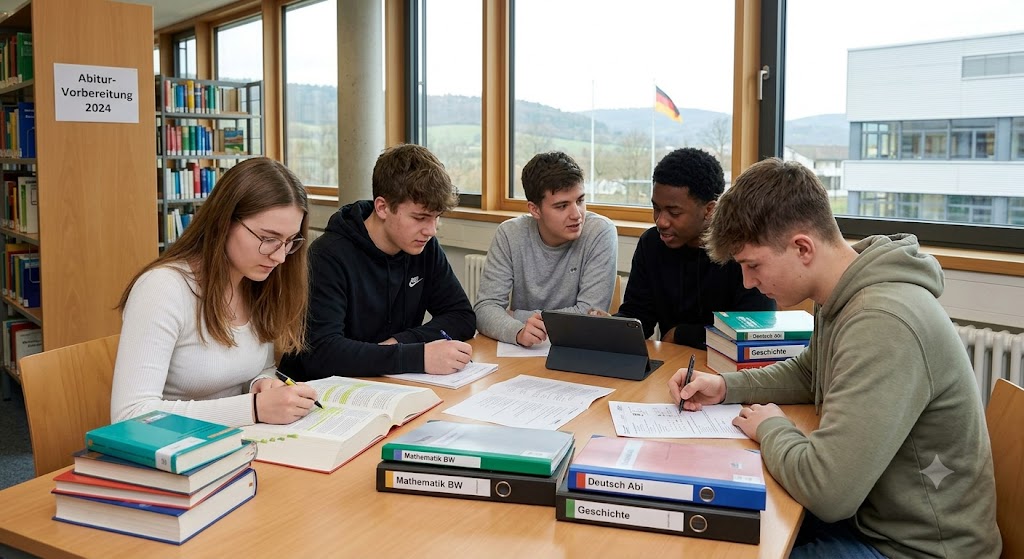
Additional Information
What the Course Entails and Exam Details
Preparation for the Abitur is not a single course, but rather an intensive two-year curriculum during the final years of upper secondary school (the Qualifikationsphase). While specific requirements slightly differ between different types of Gymnasiums (e.g., general vs. vocational), students typically select a combination of core subjects and specialized profile or performance courses (Leistungskurse and Basiskurse). The extensive syllabus covered during these two years forms the foundational knowledge tested in the final, multi-subject examinations.
What to Expect in the Final Exam
The Baden-Württemberg Abitur consists of multiple examinations, usually taken over several weeks towards the end of the final school year. The core structure generally includes three written examinations and two oral examinations. The written exams are centrally administered state-wide (Zentralabitur) in fundamental subjects like German, Mathematics, and usually a foreign language or a natural science, depending on the student's chosen track. These written tests are typically comprehensive and essay-based or involve complex problem-solving, requiring deep analysis rather than multiple-choice questions. Following the written portion, students undergo oral examinations, focusing on different subjects, where presentation skills and in-depth understanding are assessed through discussion with a panel of teachers. The final Abitur grade is a weighted calculation combining performance throughout the two-year qualification phase and the results of the final Abitur exams themselves.
How to Study and Exam Centers
Preparation for the Abitur demands consistent and dedicated effort throughout the final two years of school. Students are encouraged to use various strategies: actively engaging with the comprehensive curriculum, forming study groups, seeking guidance from teachers, and, crucially, practicing with official previous Abitur exam papers from Baden-Württemberg to become familiar with the question formats, timing constraints, and expected depth of answers. The official exams for the Abitur are not taken at external test centers like Pearson VUE; they are conducted strictly within the authorized secondary schools that the students attend, following dates and regulations set by the state Ministry of Education.
Job Opportunities from the Course
Successfully achieving the Abitur provides unparalleled access to diverse educational and career opportunities:
Unlocks admission to all German universities and universities of applied sciences (Fachhochschulen).
Is essential for pursuing highly competitive fields like Medicine, Law, or Veterinary Sciences.
Significantly enhances eligibility and competiveness for dual vocational training programs (Duales Studium).
Provides a distinct advantage when applying for prestigious apprenticeships (Ausbildung) in various sectors.
Is globally recognized, facilitating application to international universities.
Frequently Asked Questions
Reviews
5.0
Based on 0 reviews
Leave a Review
No reviews yet. Be the first to review!