
Baccalaureat Practice Test & Exam Prep | France
$69.00
- Buy to unlock unlimited access to all Quiz questions.
- After purchase you can print a PDF of the whole quiz at any point. The PDF will contain the questions and the correct answers.
About this Exam
The Baccalauréat, often referred to simply as le Bac, is the academic qualification that French students take at the end of high school (Lycée). It serves as the national secondary education diploma and is the required prerequisite for entering university and higher education in France. The Bac is designed for students completing their final year of secondary schooling and assesses their knowledge and skills across a broad range of subjects, depending on their chosen stream of study. Achieving the Bac is a significant milestone for students in the French education system.
Ready to test your knowledge?
Buy Now to Access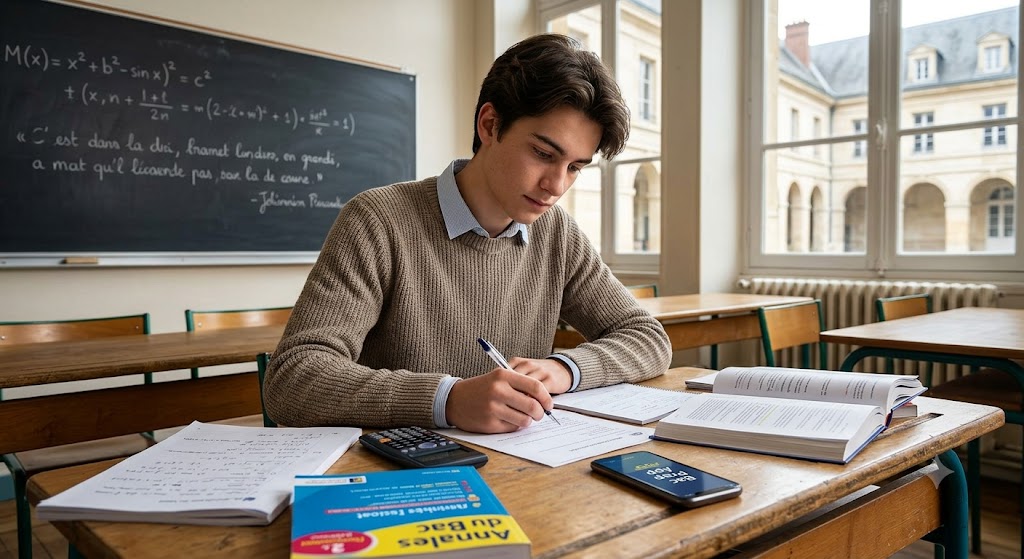
Additional Information
What the Course Entails and Exam Details
The Baccalauréat curriculum is comprehensive and structured according to three main pathways: General, Technological, and Vocational. While the specific subjects vary, the General stream, which is common for university-bound students, includes a core curriculum of French literature, philosophy, history-geography, moral and civic education, two foreign languages, and science. Additionally, students choose specialized subjects (specialty courses) beginning in their Première year (11th grade) and continuing into Terminale (12th grade), focusing deeply on fields like Mathematics, Physics-Chemistry, Life and Earth Sciences, Economic and Social Sciences, Humanities, Literature and Languages, or Arts. The exam requires a mastery of both general knowledge and in-depth understanding of these selected specialties.
What to Expect in the Final Exam
The final exam process for the Baccalauréat is a combination of written, oral, and practical assessments, depending on the subject. Following recent reforms, the Baccalauréat now places significant weight on continuous assessment (controle continu) throughout the final two years of high school, making up roughly 40% of the final grade. The remaining 60% is based on several mandatory final exams: the French Epreuves (taken at the end of Premiere), two specialized subject written exams (taken in Terminale), a mandatory Philosophy written exam, and the Grand Oral, which is an extensive oral presentation focusing on the student’s specialty subjects. The scoring is on a scale from 0 to 20, with a score of 10/20 required to pass. The exams are known for being rigorous, often featuring essay-based questions, problem-solving scenarios, and extensive oral defenses.
How to Study and Exam Centers
Effective preparation for the Baccalauréat requires a disciplined study strategy that spans the entire academic year, as continuous assessment contributes significantly to the final result. Students should create a structured revision timetable, dedicating specific time slots to both core and specialty subjects. Practicing with past papers, known as Annales du Bac, is essential for understanding the typical exam format, time management, and the types of questions asked. Many students find it helpful to form study groups to discuss complex concepts and review materials. Seeking regular feedback from teachers and using reputable online resources and review guides tailored to the Bac curriculum can also be highly effective. The physical exams are administered nationally by the Ministère de l’Éducation Nationale through regional centers known as Académies. Students usually sit for their exams at their own high school or a nearby designated secondary school (Lycée). Information about specific exam centers and dates is communicated directly to students through their schools and the official online portals managed by their Académie.
Job Opportunities from the Course
The Baccalauréat itself is primarily an academic milestone and the critical passport to higher education rather than a direct entry into a specific career. However, the stream and specialty subjects a student chooses significantly influence their future career options by opening doors to particular higher education pathways. Successful completion of the Bac allows students to pursue various forms of higher education, which in turn lead to job opportunities. Here are example careers accessible after completing the Bac followed by subsequent specialized higher education:
Higher Education in Business/Management –> Marketing Manager, Accountant, Financial Analyst
Higher Education in Engineering/Science –> Civil Engineer, Software Developer, Biomedical Researcher
Higher Education in Law –> Lawyer, Legal Counsel, Judge
Higher Education in Medicine/Healthcare –> Doctor, Nurse, Pharmacist
Higher Education in Education –> Primary or Secondary School Teacher
Higher Education in Vocational Fields (BTS/BUT) –> Technician, Specialized Skilled Trades, Administrative Manager
Frequently Asked Questions
Reviews
5.0
Based on 0 reviews
Leave a Review
No reviews yet. Be the first to review!