
ATPL Mass And Balance Practice Test
$69.00
- Buy to unlock unlimited access to all Quiz questions.
- After purchase you can print a PDF of the whole quiz at any point. The PDF will contain the questions and the correct answers.
About this Exam
The ATPL Mass and Balance exam is one of the most critical theoretical knowledge examinations required to obtain an Airline Transport Pilot License (ATPL). Designed for aspiring commercial airline pilots, this challenging module ensures you possess the advanced mathematical and theoretical understanding required to safely load an aircraft within its structural limits.
Mastering this subject is not just about passing an exam; it is a fundamental piloting skill directly linked to flight safety. An improperly balanced aircraft can lead to uncontrollable flight characteristics, making this knowledge essential for every professional aviator. This study guide is designed to help you prepare effectively and confidently for this pivotal step in your aviation career.
Ready to test your knowledge?
Buy Now to Access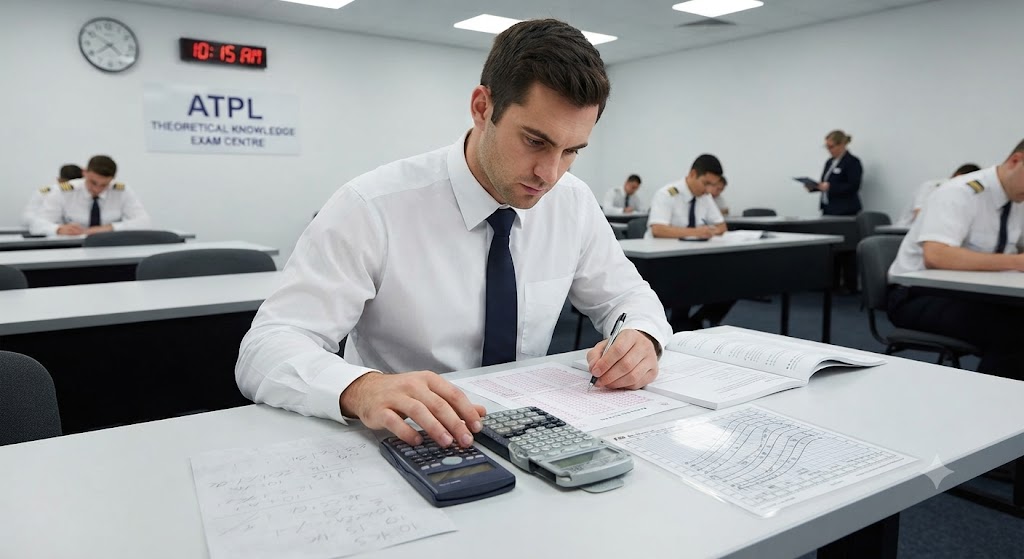
Additional Information
What the Course Entails and Exam Details
The ATPL Mass and Balance syllabus dives deep into the
physics and mathematics of aircraft loading. To succeed, you must move beyond
basic arithmetic and grasp complex concepts regarding how weight distribution
affects an aircraft's center of gravity (C of G) and overall performance.
The course typically covers the following core topics:
- Definitions
and Terminology: Mastering standard industry terminology, including
Maximum Zero Fuel Weight (MZFW), Maximum Take-Off Weight (MTOW), Basic
Empty Weight (BEW), and Traffic Load.
- Center
of Gravity Calculations: Learning to calculate the exact C of G
position using moments, indices, and graphs, ensuring it remains within
the defined safe operating envelope.
- Loading
Systems and Documentation: Understanding how to read and utilize
aircraft-specific loading manifests, trim sheets, and load control
documents used by commercial operators.
- Cargo
and Passenger Distribution: Calculating the effects of adding,
removing, or shifting passengers, cargo, and fuel on both the total weight
and the C of G.
- Fuel
Management: Accounting for the burn-off of fuel during flight and
ensuring the C of G stays within limits from takeoff to landing.
What to Expect in
the Final Exam
The ATPL Mass and Balance exam is known for being
time-pressured and detail-oriented. It demands precision and speed under
pressure.
While specific formats may vary slightly depending on the
aviation authority (e.g., EASA, UK CAA, FAA), the general structure remains
consistent:
- Exam
Format: The exam consists almost exclusively of multiple-choice
questions (MCQs). However, many of these are complex
"multi-step" problems that require you to perform lengthy
calculations before you can identify the correct answer from the options
provided.
- Number
of Questions: The number of questions varies but is typically between
25 and 40 per exam sitting.
- Time
Limit: You are generally allotted between 60 and 90 minutes, meaning
you have roughly 2 to 3 minutes per calculation. Time management is often
as challenging as the questions themselves.
- Passing
Score: The required pass mark is almost universally set at a minimum
of 75%.
- Permitted
Materials: You will not be doing this mentally. In the exam, you are
typically allowed to use a specific approved scientific calculator, an E6B
flight computer (or Jeppesen CR-3), and provided annexes containing
necessary aircraft data charts, graphs, and load tables.
How to Study and Exam Centers
Relying solely on ground school lectures is rarely enough
for Mass and Balance. Success requires consistent, active practice.
Effective Study Strategies:
- Master
the E6B: Become incredibly fast and accurate with your manual or
electronic flight computer for calculating weight, fuel, and conversions.
- Use
Authorized Question Banks: The single most effective study method is
repeatedly working through large volumes of realistic practice questions. This
helps you recognize question patterns and improves your calculation speed.
- Simulate
Exam Conditions: When taking practice tests, do so under strict time
limits and without referring to notes. This builds the stamina and
mental agility required for the real exam.
- Understand
Why: If you get an answer wrong, do not just memorize the
correct letter. Go back and understand the calculation error you made.
Where and How to Take the Exam:
ATPL theoretical exams are highly regulated. You cannot sit
them just anywhere. They must be taken at approved examination centers
authorized by your national aviation authority.
- Booking:
You must book your exam session well in advance through the authority’s
online portal or an authorized third-party testing provider (such as
Pearson VUE in some regions).
- Location:
These centers are typically located near major flight training
organizations (FTOs) or in major cities. You may need to travel to a
designated city to sit the exams.
- Identification:
Strict security protocols are in place. You will need to present valid
government-issued photo ID and adhere to all examination rules regarding
permitted items.
Job Opportunities from the Course
Passing the ATPL theory exams, including Mass and Balance,
is a mandatory gateway toward earning your "frozen" ATPL. This
qualification unlocks the right-hand seat in multi-crew commercial operations.
This certification is the prerequisite for starting a career
in various sectors of commercial aviation:
- First
Officer (Regional Airline)
- First
Officer (Major Commercial Airline)
- First
Officer (Cargo Operations)
- Charter
Pilot
- Corporate
Pilot (Business Aviation)
- Flight
Instructor (after gaining necessary ratings)
Frequently Asked Questions
Reviews
5.0
Based on 0 reviews
Leave a Review
No reviews yet. Be the first to review!