
ATI Nutrition Practice Exam
$69.00
- Buy to unlock unlimited access to all Quiz questions.
- After purchase you can print a PDF of the whole quiz at any point. The PDF will contain the questions and the correct answers.
About this Exam
The ATI Nutrition Practice Exam is a valuable educational resource designed to simulate the format, style, and content of the ATI Nutrition Proctored Assessment.
This practice exam is specifically created for students in nursing and related health programs who are taking a comprehensive nutrition course.
Its primary purpose is to help students assess their understanding of core nutrition principles, identify areas requiring further study, and gain familiarity with the types of questions and formatting they will encounter in the final proctored exam. By actively engaging with this practice tool, students can build confidence and improve their performance on the actual assessment.
Ready to test your knowledge?
Buy Now to Access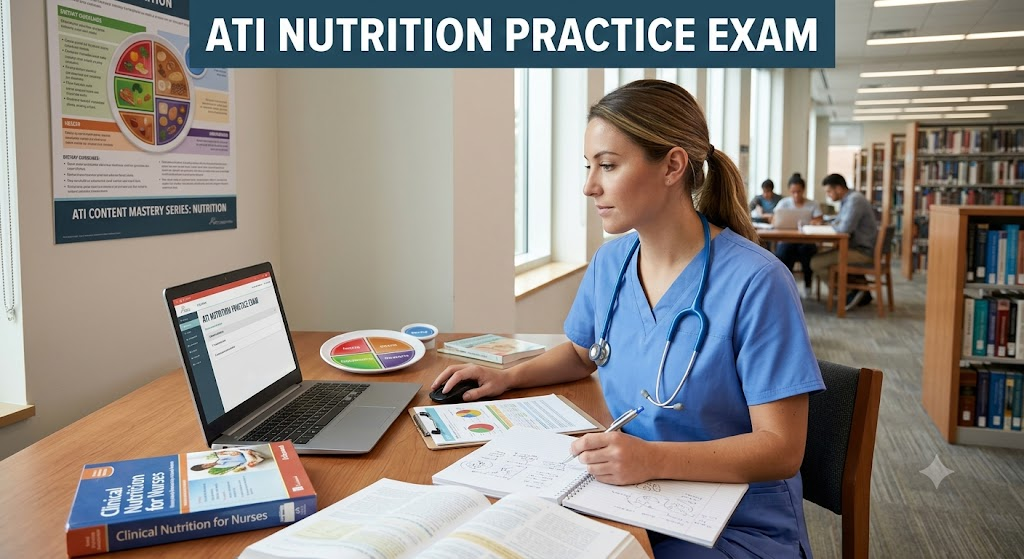
Additional Information
What the Course Entails and Exam Details
The underlying material covered by this practice exam, reflecting typical nursing school nutrition coursework, is comprehensive and fundamental to patient care.
Students are tested on their knowledge of essential topics such as macronutrients and micronutrients, understanding their functions, sources, and recommended intake levels.
Digestion, absorption, and metabolism processes are often integral parts of the syllabus.
lifecycle nutrition, addressing specific dietary needs from infancy through old age and during pregnancy, is also a key area.
Therapeutic diets, which are crucial for managing various health conditions, represent a significant portion of the expected knowledge, covering modifications for illness, allergies, and post-surgical recovery.
Nutritional assessment techniques, cultural considerations related to food, and public health nutrition initiatives are also likely topics included in the exam's scope.
What to Expect in the Final Exam
Correction: This section describes the actual ATI Nutrition assessment, for which this practice exam provides essential preparation.
The final ATI Nutrition assessment typically consists of a series of multiple-choice questions designed to thoroughly evaluate a student's grasp of the curriculum.
The exact number of questions can vary, but students should be prepared for a substantial exam, potentially ranging from 60 to 100 questions.
Multiple interaction types might be included, such as select-all-that-apply or other computerized testing formats common in ATI assessments.
The time limit for the actual exam is generally structured to provide approximately 1.5 to 2 hours for completion, varying slightly by institution.
Passing score requirements are determined by individual nursing programs and are not universally set by ATI; therefore, students must check with their specific institution or educational guidelines for their benchmark.
Strict proctoring rules, whether in-person or online, are standard, and students are expected to adhere to all integrity guidelines and prohibited item policies.
How to Study and Exam Centers
How to Study:
Effective preparation involves regular and targeted practice.
Students should dedicate consistent time to taking multiple practice attempts of the ATI Nutrition Practice Exam, simulating real exam conditions as closely as possible.
Thoroughly reviewing the provided rationales for both correct and incorrect answers is perhaps the single most critical study strategy, as it reinforces understanding and clarifies misconceptions.
Utilizing official ATI study guides, textbooks, and interactive learning modules is highly recommended for building a strong foundation.
Focusing extra attention on weakest topic areas identified through practice performance is essential for comprehensive review.
Consider creating structured study schedules and forming study groups for collaborative learning and discussion.
Exam Centers:
The actual ATI Nutrition assessment is typically administered through authorized educational institutions, most commonly within the student's own nursing school testing center.
Some programs may also offer secure, remotely proctored online testing options utilizing specific software.
Students should consult with their nursing program administrators or relevant department to determine the exact procedure, location, and scheduling details for their official exam.
It is important to emphasize that this specific ATI Nutrition Practice Exam is an invaluable preparation tool, often available through the same platforms as the main curriculum resources.
Job Opportunities from the Course
Successfully completing the overall nursing curriculum, with strong performance in areas like nutrition as evidenced by passing relevant assessments, significantly enhances career prospects for aspiring healthcare professionals.
While this specific practice exam and the subsequent assessment do not directly grant a qualification, they are integral steps towards achieving overall nursing licensure and graduation.
A solid understanding of nutrition, fortified by rigorous practice and study, is crucial for roles such as:
Registered Nurse (RN)
Licensed Practical Nurse (LPN) or Licensed Vocational Nurse (LVN)
Nurse Educator (specializing in foundational topics including nutrition)
Community Health Nurse
Public Health Nurse
Nutrition Educator or Consultant (potentially with further specialized qualifications)
Dietetic Technician, Registered (DTR - requiring separate certification, but supported by this knowledge)
Health Coach (emphasizing nutrition education)
By dedicating yourself to understanding and practicing for these essential assessments, you are investing in your future success and the well-being of the patients you will care for as a knowledgeable and skilled healthcare provider.
Frequently Asked Questions
Reviews
5.0
Based on 0 reviews
Leave a Review
No reviews yet. Be the first to review!