
ATI Neurosensory Practice Test
$69.00
- Buy to unlock unlimited access to all Quiz questions.
- After purchase you can print a PDF of the whole quiz at any point. The PDF will contain the questions and the correct answers.
About this Exam
The ATI Neurosensory Practice Test is an essential study tool designed for nursing students preparing for their comprehensive assessments or final nursing board exams (like NCLEX-RN or NCLEX-PN). It focuses specifically on evaluating your knowledge and understanding of neurological and sensory system nursing care. By using this practice test, you can identify areas where you excel and areas that require focused study, boosting your confidence for high-stakes nursing exams.
Ready to test your knowledge?
Buy Now to Access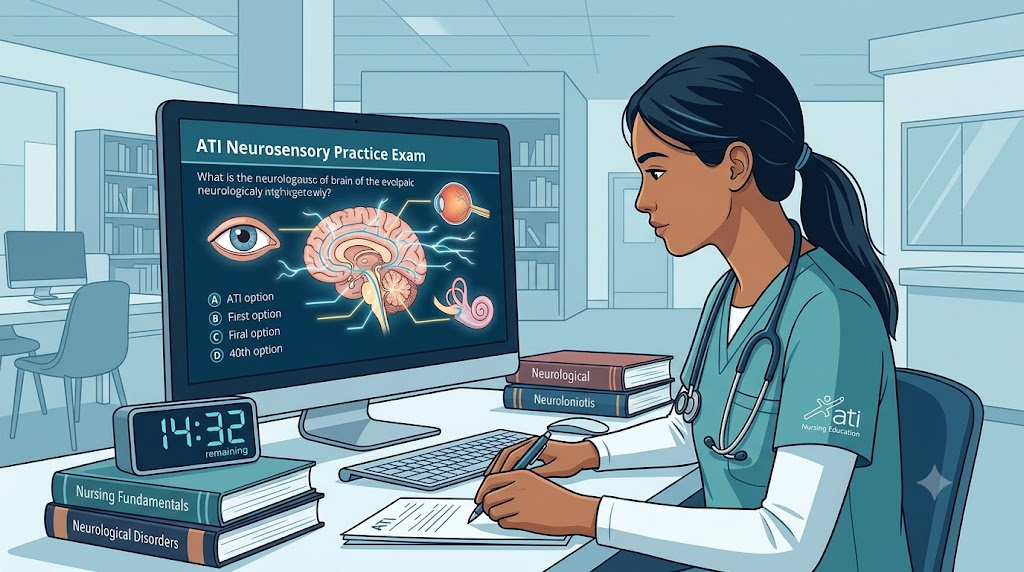
Additional Information
What the Course Entails and Exam Details
This practice exam covers critical nursing concepts related to the neurological and sensory systems. You will face questions on neurological assessment, including Glasgow Coma Scale (GCS) and cranial nerves. The course content and exam test your understanding of common neurological disorders such as stroke, head injury, seizures, and increased intracranial pressure. Sensory topics include disorders of vision (cataracts, glaucoma, macular degeneration) and hearing (hearing loss, Ménière’s disease), as well as related nursing interventions and patient education. The exam is structured to simulate a real ATI assessment experience.
What to Expect in the Final Exam
While the ATI Neurosensory Practice Test is primarily a preparation tool, the final comprehensive exam you're preparing for (such as a nursing program exit exam or NCLEX) will have specific requirements. These exams are typically multiple-choice, though NCLEX can include alternative format questions. A passing score is defined by your nursing program or the National Council of State Boards of Nursing (NCSBN). Time limits are strictly enforced, often allowing several hours to complete. For the final exam, specific rules include presentating photo identification and adhering to strict testing center security protocols.
How to Study and Exam Centers
To prepare effectively for this practice test and subsequent exams, prioritize active learning. Review your nursing textbooks, ATI content modules, and focus specifically on neurosensory topics. Take practice questions regularly to simulate the test environment and review rationales for all answers. Pay attention to areas where you struggle. Utilizing physical study guides and participating in group study can reinforce concepts. Accessing practice tests often occurs through your nursing program's authorized ATI online portal. While the practice test is digital, the final high-stakes exams are typically taken at Pearson VUE testing centers or other authorized physical locations depending on your jurisdiction.
Job Opportunities from the Course
Completing your nursing education and passing the essential exams, supported by practice tools like the ATI Neurosensory Practice Test, opens numerous professional doors. While not a certification itself, your successful completion of your nursing degree and licensure (RN or PN) empowers you to pursue specialized careers. Job opportunities in neurosensory nursing include:
Registered Nurse (RN) - Neurology Unit
Critical Care Nurse - Neuro ICU
Trauma Nurse
Rehabilitation Nurse
Neurosurgical Nurse
Stroke Coordinator
Epilepsy Nurse Specialist
Hearing Health Educator
Frequently Asked Questions
Reviews
5.0
Based on 0 reviews
Leave a Review
No reviews yet. Be the first to review!