
ATC Tower Cab Block 2 Practice Test
$69.00
- Buy to unlock unlimited access to all Quiz questions.
- After purchase you can print a PDF of the whole quiz at any point. The PDF will contain the questions and the correct answers.
About this Exam
The ATC Tower Cab Block 2 certification and its associated practice test are designed for aspiring air traffic controllers who have completed initial training modules and are now focusing on the specific, complex operations within an airport tower cab. This block of training deepens your understanding and practical skills in managing traffic within the immediate vicinity of an airport (the Class D airspace, typically). It is specifically tailored for controller trainees and those looking to refresh their knowledge and skills in tower-specific procedures. This stage transitions you from foundational knowledge to more dynamic, real-world scenario management, ensuring you are equipped to handle diverse traffic situations safely and efficiently from the tower perspective.
Ready to test your knowledge?
Buy Now to Access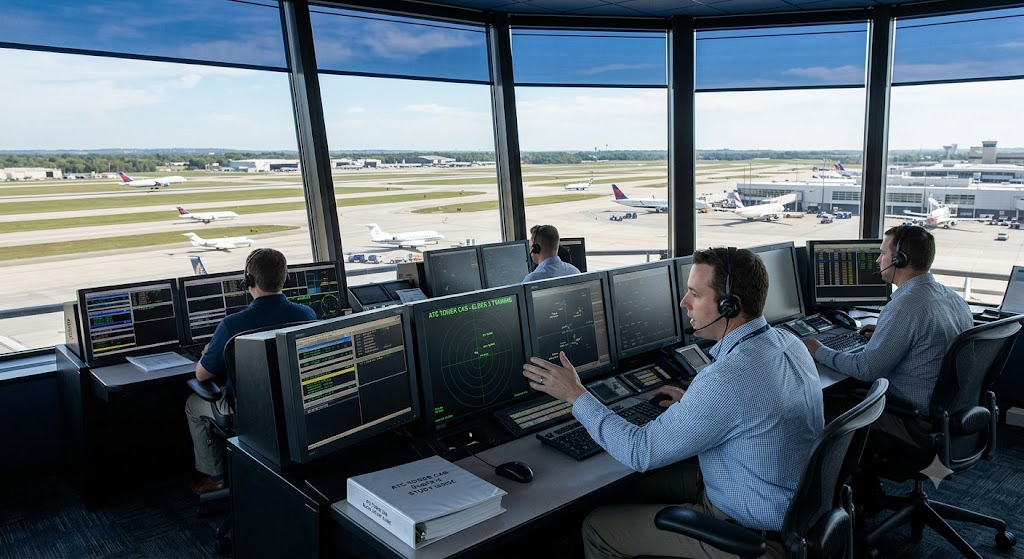
Additional Information
What the Course Entails and Exam Details
The ATC Tower Cab Block 2 course delves into the intricate details of tower operations, building upon previous training blocks. You will cover a wide range of critical topics, including:
Tower Airspace Management: In-depth knowledge of Class D airspace rules, dimensions, and controller responsibilities within this specific environment.
Sequencing and Separation: Advanced techniques for establishing and maintaining safe separation between arriving, departing, and overflying aircraft using both visual and radar-derived information (where applicable for tower coordination).
Runway Operations: Detailed procedures for managing runway usage, including crossing, departure, and arrival operations, and understanding runway safety areas.
Pattern Work and Visual Approaches: Managing aircraft in the visual flight rules (VFR) traffic pattern, including various entry points and sequencing visual approaches with instrument traffic.
Weather and Environmental Considerations: Interpreting and applying weather information, understanding its impact on tower operations, and managing traffic during adverse conditions.
Emergency Procedures: Developing quick thinking and precise execution of protocols for handling diverse aircraft emergencies in the tower jurisdiction.
Coordination with Adjacent Facilities: Understanding the critical communication and coordination procedures with Approach/Departure Control, Center, and other relevant facilities.
Equipment Proficiency: Ensuring mastery in the use of tower-specific equipment, communication systems, and potentially simulated radar displays or ground surveillance systems.
The associated practice test aims to simulate the types of questions and scenarios you will encounter in the actual certification exam, testing your comprehension and application of these topics through multiple-choice questions, and potentially, interactive scenario-based assessments (depending on the specific practice platform).
What to Expect in the Final Exam
While the exact format can vary slightly depending on the training provider (e.g., FAA Academy, specific contract training), you can generally expect the ATC Tower Cab Block 2 Final Exam to include the following elements:
Format: A combination of multiple-choice questions designed to test theoretical knowledge and procedural understanding. Many exams also incorporate a significant practical or simulation-based component, where you must demonstrate your ability to manage simulated traffic scenarios in a realistic tower cab environment.
Scenario-Based Evaluation: Expect to be presented with complex, dynamic traffic situations and asked to make critical decisions, apply appropriate separation standards, and issue correct control instructions within a specified timeframe.
Time Limit: Both the knowledge-based and practical portions of the exam will be timed to simulate the real-world pressure of air traffic control. Be prepared to work efficiently.
Passing Score: Requirements can vary, but typically a high score (often 70% or higher, and sometimes requiring flawless performance in critical safety areas) is needed to pass both the knowledge and practical assessments.
Specific Rules: Standard exam rules apply, including prohibitions on outside assistance, electronic devices (unless integrated into the simulation), and strict adherence to communication protocols. Preparation is key, as the practical evaluation often requires quick, accurate responses and clear communication.
How to Study and Exam Centers
Preparation is paramount for success in the ATC Tower Cab Block 2 exam. Here are some actionable study strategies:
Thorough Review: Re-read and master all course materials, manuals, and official directives (such as relevant sections of FAA Order 7110.65). Pay close attention to definitions, separation standards, and coordination procedures.
Utilize the Practice Test: Take the practice test multiple times to become familiar with the question style, identify knowledge gaps, and practice managing your time. Review incorrect answers thoroughly to understand the correct application of procedures.
Simulation Practice: If you have access to ATC simulation software or a training lab, dedicate ample time to practicing diverse tower scenarios. Practice sequencing different types of aircraft, handling varying traffic loads, and managing unexpected events. Focus on clear, concise communication.
Study Groups: Collaborate with fellow trainees. Discussing scenarios, quizzing each other, and explaining concepts to one another can significantly enhance understanding and retention.
Mnemonics and Visualization: Use mnemonic devices for complex procedures and visualize yourself working in a real tower, managing traffic safely. Mental practice can be incredibly effective.
Mental and Physical Readiness: Get plenty of rest before study sessions and the exam itself. Manage stress through relaxation techniques, as a clear and focused mind is essential for peak performance.
Exam Centers: The actual certification exams are typically administered within the official air traffic control training facilities. For FAA controllers, this primary location is the FAA Academy in Oklahoma City. However, depending on your specific training path (e.g., Collegiate Training Initiative - CTI, military training, or contract towers), exams may also be conducted at authorized training centers, specific educational institutions, or operational facility training departments. You will receive detailed information on when and where your exam will take place from your training coordinator. The practice test, however, is often accessible online through specific training platforms or provided as a downloadable resource.
Job Opportunities from the Course
Successfully completing the ATC Tower Cab Block 2 training and passing the associated exam marks a major milestone in your career journey and directly prepares you for or advances you toward the following specific roles:
Air Traffic Controller (Tower): This is the direct application, allowing you to control aircraft within the tower's jurisdiction, managing arrivals, departures, and ground movement at airports.
Certified Tower Controller: With further facility-specific training and certification, you can work as a fully certified controller in a wide range of airport towers, from smaller regional airfields to large international hubs.
ATC Specialist (Tower Operations): Roles within air traffic control facilities or management that focus on tower operations, training, or quality assurance.
Lead Controller / Tower Supervisor: With significant experience, you can advance to leadership positions, supervising other tower controllers and overseeing safe operations.
ATC Training Instructor (Tower): Experienced controllers often become instructors, guiding the next generation of trainees through the same rigorous training you are completing.
Airport Operations Manager: Understanding air traffic flow from the tower perspective can be invaluable in broader airport management roles focused on safety and efficiency.
Your dedication and success in this block of training open doors to a rewarding and dynamic career, ensuring the safety and efficiency of air travel from the critical vantage point of the tower cab. Good luck with your studies and the practice exam!
Frequently Asked Questions
Reviews
5.0
Based on 0 reviews
Leave a Review
No reviews yet. Be the first to review!