
ASRT Compliance Practice Test
$69.00
- Buy to unlock unlimited access to all Quiz questions.
- After purchase you can print a PDF of the whole quiz at any point. The PDF will contain the questions and the correct answers.
About this Exam
The American Society of Radiologic Technologists (ASRT) plays a vital role in setting standards, providing education, and advocating for the profession of radiologic technology. Maintaining high standards of compliance is paramount in healthcare, especially in medical imaging where patient safety, ethical conduct, and adherence to regulations regarding ionizing radiation are crucial. The ASRT Compliance Practice Test (and the course or standards it relates to) is designed as a powerful preparatory tool for students, entry-level technologists, and experienced professionals aiming to validate and enhance their knowledge of these essential professional standards, ethical guidelines, and safety regulations within the field. Successfully navigating this practice test signals readiness for official certification exams (such as those from the ARRT) and demonstrates a commitment to quality patient care and professional integrity.
Ready to test your knowledge?
Buy Now to Access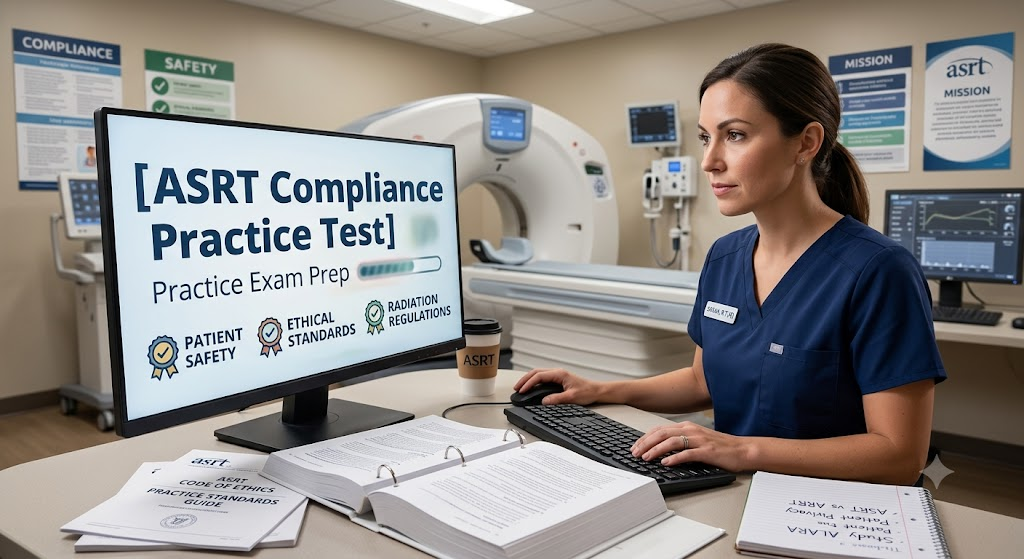
Additional Information
What the Course Entails and Exam Details
The materials associated with ASRT compliance and this practice test delve into a common body of knowledge essential for ethical and safe practice in radiologic technology. This typically includes, but is not limited to:
ASRT Practice Standards: Comprehensive guidelines outlining the expectations for education, experience, and professional conduct across various modalities (radiography, CT, MRI, mammography, etc.).
ASRT Code of Ethics: A detailed set of principles guiding professional interactions, patient care, and decision-making for all radiologic technologists.
Regulatory Compliance: Understanding federal and state regulations, quality standards (e.g., related to radiation safety like ALARA – As Low As Reasonably Achievable), and institutional policies.
Patient Safety and Rights: Ensuring patient well-being, privacy (HIPAA), informed consent, and proper procedures for minimizing harm.
Professional Conduct: Upholding professional boundaries, collaboration, continuing education, and legal responsibilities.
Radiography-Specific Compliance (if applicable): Specific standards and safety protocols related to the practice of radiography and associated imaging modalities.
The practice test itself often takes the form of:
Multiple-Choice Questions: A common format used to assess knowledge and application of compliance standards.
Case Studies and Scenarios: Questions based on real-world medical imaging situations that require ethical decision-making and standard application.
Online Format: Typically accessible through an educational portal or learning management system.
Self-Paced and Retakeable: Often designed for repeated practice, allowing you to learn from errors and identify areas for further study. Note that scores on a practice test generally do not confer official certification, but are vital indicators of readiness.
What to Expect in the Final Exam
While the ASRT provides invaluable practice standards and educational tools, the primary official certification exam for radiologic technologists in the United States is typically administered by the American Registry of Radiologic Technologists (ARRT). This final exam includes:
Comprehensive Assessment: A significant portion of the ARRT radiography or modality-specific exam is dedicated to safety, patient care, and image production/procedures, all heavily steeped in compliance.
Detailed Content Outline: Review the ARRT's Content Specifications to understand the exact breakdown and weight of ethics, compliance, and safety topics on the official final exam.
Computer-Based Format: Delivered in a secure testing environment.
Time Limit: Generally several hours for completion.
Passing Score Requirement: Typically a scaled score of 75 or higher.
The practice test prepares you by mirroring the types of knowledge and scenarios you will encounter in the final official exam. Always confirm the specifics with both ASRT (for educational/practice details) and ARRT (for official certification exam details).
How to Study and Exam Centers
Preparation for the ASRT compliance knowledge and the eventual final exam requires a strategic approach:
Utilize the Practice Test Repeatedly: Take the test, review the rationales for both correct and incorrect answers. Identify your weak points and focus your studies there.
Study Official Documents: Thoroughly review the latest ASRT Practice Standards, the ASRT Code of Ethics, and relevant sections of the ARRT Standards of Ethics.
Course Materials and Textbooks: Refer to the textbooks from your radiography program and specific ASRT compliance course materials.
Create Study Aids: Use flashcards for key terms, regulations, and ethical principles.
Group Study: Discuss compliance scenarios and standards with peers to gain different perspectives.
Accessing the Practice Test: You can typically access the ASRT Compliance Practice Test directly through the official ASRT website or associated educational portals, often as part of a course or professional development package. These are online and can be taken from your personal device.
Taking the Final Official Exam: The ARRT certification exams are administered at professional, secure testing centers throughout the country. You must complete your eligibility requirements, register, and then schedule your exam through the official ARRT/testing center portal (e.g., Pearson VUE). Be prepared to follow strict identification and security protocols at the physical testing facility.
Job Opportunities from the Course
Solid understanding and validation of ASRT compliance standards (preparing for official certification for which this test is prep) opens numerous career paths and enhances your professional standing. Key opportunities include:
Radiologic Technologist (R.T.): Entry-level and advanced roles in hospitals, clinics, and imaging centers in various modalities (Radiography, CT, MRI, Mammography, Sonography, etc.).
Imaging Department Supervisor/Manager: Leading teams with a strong emphasis on adhering to safety and quality standards.
Radiography Educator: Teaching ethics, safety, and compliance in academic programs or clinical settings.
Healthcare Compliance Officer: Specializing in regulatory compliance for medical imaging departments or larger healthcare organizations.
Regulatory Affairs Specialist (Medical Imaging): Working in the medical device or pharmaceutical industry to ensure compliance with standards.
Quality Management Technologist: Focusing specifically on quality assurance and control within an imaging facility.
Investing time in understanding and practicing ASRT compliance not only helps you succeed in your exams but establishes a strong foundation for a fulfilling and impactful career in radiologic technology.
Frequently Asked Questions
Reviews
5.0
Based on 0 reviews
Leave a Review
No reviews yet. Be the first to review!