
ASEP Exercise Physiologist Certified (EPC) Practice Exam
$69.00
- Buy to unlock unlimited access to all Quiz questions.
- After purchase you can print a PDF of the whole quiz at any point. The PDF will contain the questions and the correct answers.
About this Exam
The ASEP Exercise Physiologist Certified (EPC) status is the premier professional credential in exercise physiology. It is administered by the American Society of Exercise Physiologists (ASEP), which is dedicated to the professionalization and advancement of exercise physiologists. This exam is designed for individuals with a minimum of a bachelor’s degree in exercise science or exercise physiology who wish to officially align themselves with the profession and demonstrate their competence as experts in the field. Earning the EPC distinguishes practitioners from personal trainers and health coaches, signifying their ability to prescribe exercise as medicine in clinical, fitness, and research settings.
Ready to test your knowledge?
Buy Now to Access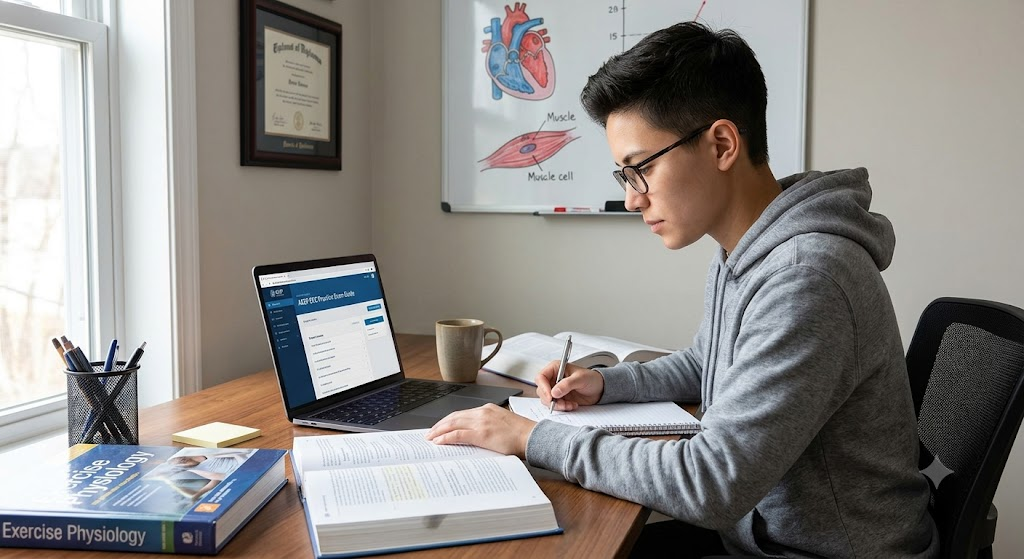
Additional Information
What the Course Entails and Exam Details
Preparing for the EPC requires a thorough understanding of advanced concepts in exercise science. The ASEP standards require candidates to be proficient in several core areas, which form the basis of the examination.
The knowledge and skills covered generally include:
Metabolic and Cardiorespiratory Physiology: Deep understanding of ATP production, respiratory exchange, and oxygen consumption during varied intensities of exercise.
Musculoskeletal Physiology and Kinesiology: Detailed analysis of muscle function, biomechanics, and human movement.
Exercise Prescription for Special Populations: Designing safe and effective exercise programs for individuals with chronic diseases (cardiovascular, metabolic, pulmonary), as well as older adults, pregnant women, and youth.
Fitness Assessment and Interpretation: Conducting and interpreting maximal and submaximal exercise tests, body composition, and other health-related fitness assessments.
Nutrition and Wellness: Applying principles of nutrition for performance and health optimization.
Professional Ethics and Standards: Understanding the scope of practice, code of ethics, and research methods in exercise physiology.
The certification is based on the professional standards and curriculum recommended by ASEP, and the examination process is the means of validating that an individual has met these professional standards.
What to Expect in the Final Exam
The ASEP EPC certification exam is a comprehensive assessment of both knowledge and practical application. Candidates can typically expect the following format and structure:
Format: The primary component of the examination is a computer-based test featuring multiple-choice questions. These questions range in difficulty, covering both foundational knowledge and complex case scenarios requiring practical decision-making.
Domains: The exam is divided into several primary domains, reflecting the key areas of competence (e.g., Exercise Physiology, Fitness Assessment, Exercise Prescription, Professional Issues).
Passing Score: A passing score must be achieved to earn the EPC designation. ASEP sets this standard based on psychometric analysis.
Time Limit: Candidates are usually allocated a specific timeframe (often around 3 hours) to complete the examination.
Exam Rules: The exam is proctored, whether taken at a testing center or via live remote proctoring. Strict rules regarding materials and assistance apply.
How to Study and Exam Centers
Effective preparation for the EPC requires a structured approach and dedication. Since there isn't a single "ASEP EPC course" you take before the exam, but rather a validation of your degree and knowledge, the focus is on reviewing core material. Actionable study strategies include:
Utilize ASEP Materials: Check the official ASEP website for any recommended study resources, candidate handbooks, or practice question sets that may be available.
Review Core Textbooks: Focus on standard academic textbooks on Exercise Physiology, Kinesiology, Exercise Testing, and Prescription.
Identify Weaknesses: Take a practice exam or review the detailed domain content to identify areas where your knowledge needs reinforcement.
Practical Application: Practice interpreting real-world fitness data, designing programs for specific case studies, and reviewing clinical guidelines.
Group Study: If possible, study with peers to discuss complex concepts and quiz each other on potential exam scenarios.
Where to Take the Exam: The ASEP EPC examination is typically administered through standardized testing procedures. Candidates may have the option to take the exam via:
Online/Remote Proctoring: Increasingly, professional exams offer secure live remote proctoring options, allowing you to take the test from your home or office on a computer with a webcam.
Physical Testing Centers: ASEP may use established testing center networks to administer the exam in person across various locations. Candidates will receive specific instructions on scheduling their exam appointment upon successful application and registration.
Job Opportunities from the Course
Earning the ASEP Exercise Physiologist Certified (EPC) designation significantly enhances career prospects and earning potential. This credential opens doors to advanced positions in a variety of settings:
Clinical Exercise Physiologist: Working in hospitals, cardiac rehabilitation centers, and outpatient clinics prescribing exercise for patients with chronic disease.
Corporate Wellness Director: Designing, managing, and evaluating health and fitness initiatives for large companies.
Fitness and Wellness Coordinator: Leading health programs in community centers, university recreation, or commercial fitness facilities.
Sports Performance Specialist: Developing performance-enhancing training programs for athletes and sports teams.
Researcher or Research Assistant: Contributing to scientific studies in exercise science, metabolic function, and human performance.
University Instructor or Lecturer: Teaching undergraduate courses in exercise physiology and related fields.
Private Practice Consultant: Operating a consultancy for health coaching, fitness assessment, or corporate wellness.
Frequently Asked Questions
Reviews
5.0
Based on 0 reviews
Leave a Review
No reviews yet. Be the first to review!