
ASE Mechanical and Electrical Components Certification (B5) Practice Test
$69.00
- Buy to unlock unlimited access to all Quiz questions.
- After purchase you can print a PDF of the whole quiz at any point. The PDF will contain the questions and the correct answers.
About this Exam
The ASE Mechanical and Electrical Components (B5) Certification Practice Test is an essential resource for automotive professionals seeking to validate their expertise in collision repair. This specific ASE exam focuses on the knowledge required to diagnose, service, and repair mechanical and electrical components damaged during a vehicular collision, distinguishing it from standard vehicle repair. It is designed for collision repair technicians who work beyond standard body panels, addressing critical systems like suspension, steering, brakes, and intricate electrical wiring that may have been compromised in an accident. Earning this certification demonstrates specialized proficiency, enhancing professional credibility and career advancement within the collision industry.
Ready to test your knowledge?
Buy Now to Access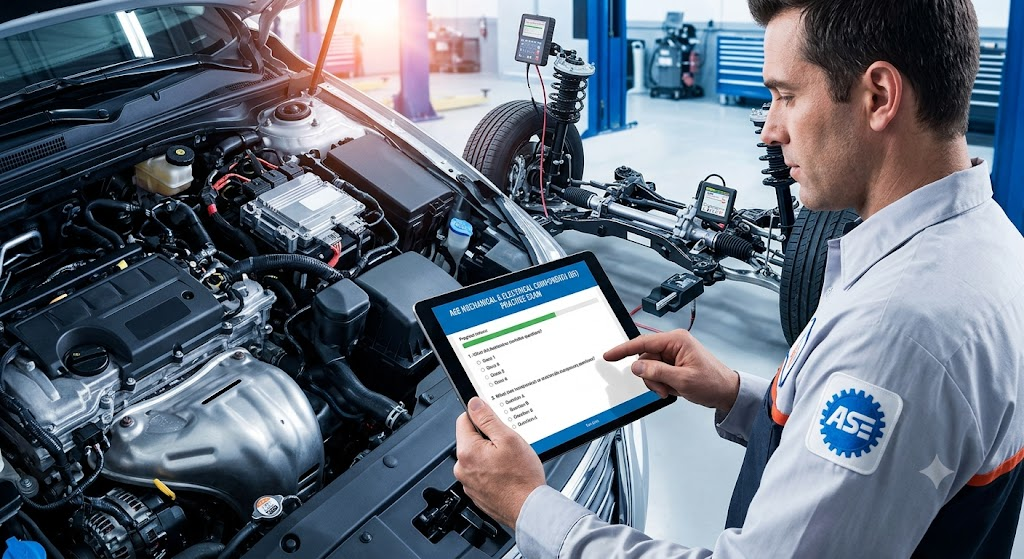
Additional Information
What the Course Entails and Exam Details
The B5 exam curriculum focuses specifically on the assessment and repair of mechanical and electrical systems after a collision. This involves intricate diagnosis of post-accident issues that might not be immediately visible, requiring a keen understanding of crash dynamics and system interactions. Key areas include:
Mechanical Components: Suspension and Steering (checking alignment and identifying bent or broken parts). Brakes (inspecting, diagnosing, and repairing affected systems). Drive Axles/Drivelines (assessing damage and restoring functionality).
Electrical/Electronic Components: General Electrical System Diagnosis (identifying open circuits, short circuits, and compromised wiring harnesses resulting from impact). Specific Systems (addressing lighting systems, starting and charging, and complex electronic modules).
Collision Damage Analysis: The test emphasizes the ability to analyze how collision energy transfers through these components, guiding accurate damage appraisal and comprehensive repair plans.
Technicians are evaluated on their ability to interpret dynamic and static alignment data, troubleshoot complex electrical faults post-crash, and execute repairs according to manufacturer specifications for collision scenarios.
What to Expect in the Final Exam
The actual ASE B5 Mechanical and Electrical Components Certification Exam is a computer-based assessment. You can expect around 50 multiple-choice questions, which include both scored questions that determine your final grade and unscored pre-test questions designed for future test development. The time limit is typically 1 hour. Achieving the status of ASE Certified requires both passing the specific test and meeting the required years of relevant work experience (typically two years for this certification, although educational background may substitute for some experience). Results are immediately available after completion of the exam, and a formal score report is provided.
How to Study and Exam Centers
Preparation for the B5 exam requires dedicated effort and a strategic approach. Consider these steps:
Official Resources: Utilize the official B5 Task List provided by ASE, which outlines all knowledge areas covered.
Practice Tests: This practice test is a crucial component of your study plan, mirroring the actual exam structure and content. Review both correct and incorrect answers to understand the underlying reasoning.
Study Guides and Training: Explore third-party study guides specifically tailored for ASE B5 and consider enrolling in relevant collision repair training courses that focus on mechanical and electrical diagnostics in post-accident scenarios.
Hands-on Experience: Apply knowledge in real-world scenarios. Focus on interpreting alignment printouts for collision vehicles and practicing intricate electrical circuit troubleshooting.
The ASE B5 exam is administered at secure computer-based testing centers nationwide, such as those operated by Prometric. Candidates must register and pay exam fees online through the official ASE website to schedule their testing appointment at a convenient location and time.
Job Opportunities from the Course
Earning the ASE B5 Mechanical and Electrical Components Certification significantly increases career opportunities and earning potential for collision repair professionals. The specialized skills validated by this credential make technicians highly sought after by modern, advanced collision centers. Examples of career paths include:
ASE Certified B5 Collision Technician
Lead Collision Repair Mechanic
Advanced Frame and Alignment Specialist
Accident Damage Appraiser (with emphasis on mechanical/electrical systems)
Collision Shop Quality Control Inspector
Foreman or Manager of a Certified Collision Repair Facility
Automotive Technology Instructor (Collision Specialization)
Frequently Asked Questions
Reviews
5.0
Based on 0 reviews
Leave a Review
No reviews yet. Be the first to review!